
Asian stock markets were under heavy selling pressure as investors reacted to rising geopolitical tension, surging crude oil prices, rising global bond yields and growing expectations of tighter monetary policy in Japan. More than $500 billion in market value was wiped out from Asian equities, reflecting the magnitude of the risk-off move sweeping through regional financial markets.
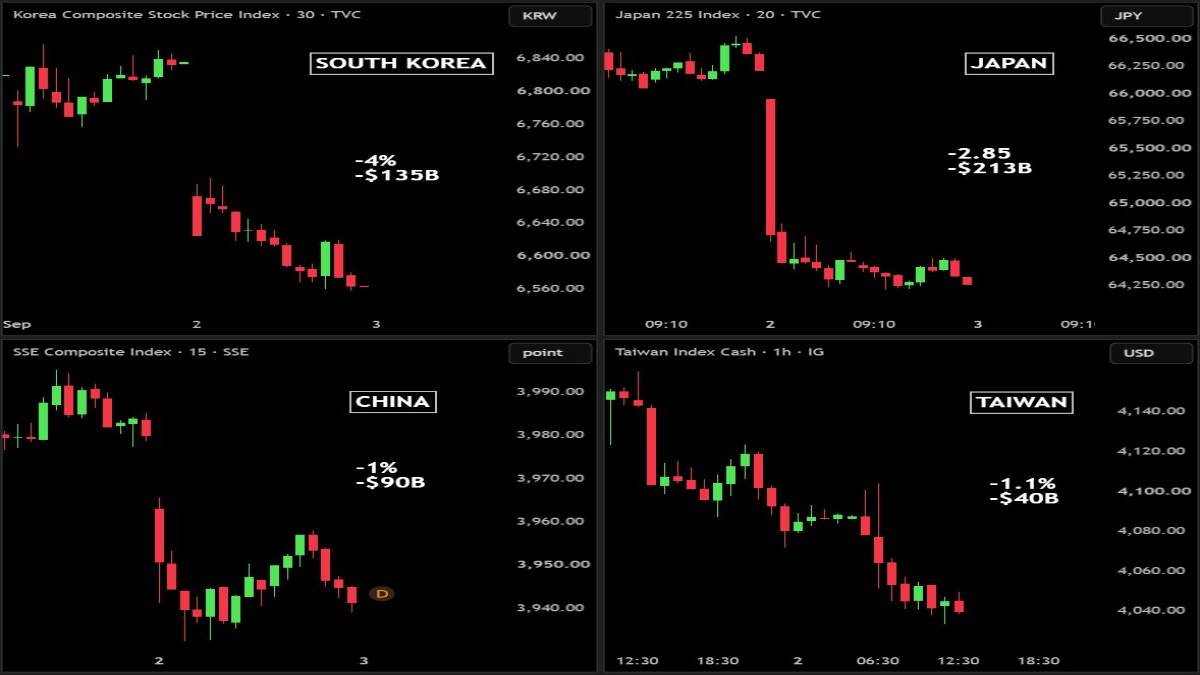
The sell-off has come as the conflict between the United States and Iran escalates with both sides launching strikes. The growing tension has triggered fears that the conflict could lead to a wider regional conflict and the disruption to global energy supply. Investors are particularly worried about the possibility of disruptions to oil production and transportation in the Middle East.
Oil prices surge above $90.

One of the big concerns for financial markets is the sharp rise in crude oil prices. Crude oil has gone above $90 a barrel on fears the war will disrupt the supply chain.
Higher oil prices can create problems for economies around the world. Expensive crude hikes transportation, manufacturing and energy costs and can make inflationary pressure more acute. For countries that depend on imported energy, a sustained oil rally could also put pressure on trade balances, currencies and corporate profits.
For investors, higher oil prices and geopolitical uncertainty are particularly uncomfortable because it could make it more difficult for central banks to reduce interest rates.
Global Bond Yields Add to Market Pressure
The sell-off in equities is also being amplified by a sharp move higher in global bond yields. The 10-year Treasury yield in the U.S. is up to 4.8 percent, and Japan's 10-year government bond yield is up to around 3 percent.
Higher government bond yields can make fixed-income investments more attractive than stocks. And, as long as the yield is rising, the discount rate on future corporate earnings will increase and that will weigh heavily on equity valuations.
Growth and technology companies are particularly sensitive to higher interest rates because most of their valuations are based on anticipated earnings in the future. Rising yields can cause a lot of selling in technology and other high-value sectors.
Japan Rate-Hike Expectations Rise
Japan is also under pressure. Market expectations for a Bank of Japan rate hike have risen sharply, reportedly reaching around 97%.
And the prospect of higher Japanese interest rates has implications for both domestic and global markets. Investors who benefited from Japan’s relatively low interest rates may begin reassessing positions as the return available on Japanese assets increases.
Japanese technology stocks are especially vulnerable when higher yields are combined with a global risk-off environment. Investors have been betting on tighter monetary policy, alongside elevated energy prices and geopolitical uncertainty, to have made it easier for them to cut exposure to riskier assets and buy less risk.
Why Asian markets are under pressure.
So the current market decline is the result of many interrelated things rather than one specific event.
The conflict in US-Iran is increasing geopolitical risk. The resulting uncertainty around energy supplies is driving oil prices up. Higher oil prices are putting inflation concerns in focus and global bond yields are rising. And the Japanese stock market is also facing pressure from expectations of a Japanese rate hike, which also makes Japanese stocks and technology stocks a bit more sensitive to what happens.
These developments have created a difficult environment for Asian markets.
Investors will now be monitoring developments in the Middle East, crude oil prices, US Treasury yields and central bank decisions in the weeks to come. A sustained increase in oil prices would bring inflation into play and may temper the possibility of monetary easing in major economies.
The question that is of greatest concern to global markets is whether the current geopolitical shock is temporary or a prolonged disruption to energy supplies. If tensions ease and oil prices come down, some of the pressure will fall off on equities. But slow-burning escalation could further deter investors as stocks, bonds, currencies and commodities all increase in value.
For now, the $500 billion-plus wipeout in Asian equity value shows how quickly geopolitical developments can escalate into financial-market stress. And with oil above $90, bond yields high and rate-hike expectations rising, investors are entering a period where inflation, interest rates and geopolitical risk are likely to be closely intertwined.





Comments
Please to leave a comment on this article.