
Asian stock markets have seen a sharp sell-off as semiconductor and technology shares were under intense selling pressure. South Korea and Japan have been among the worst hit markets as investors become more and more wary of overvalued technology and artificial intelligence-dependent stocks.
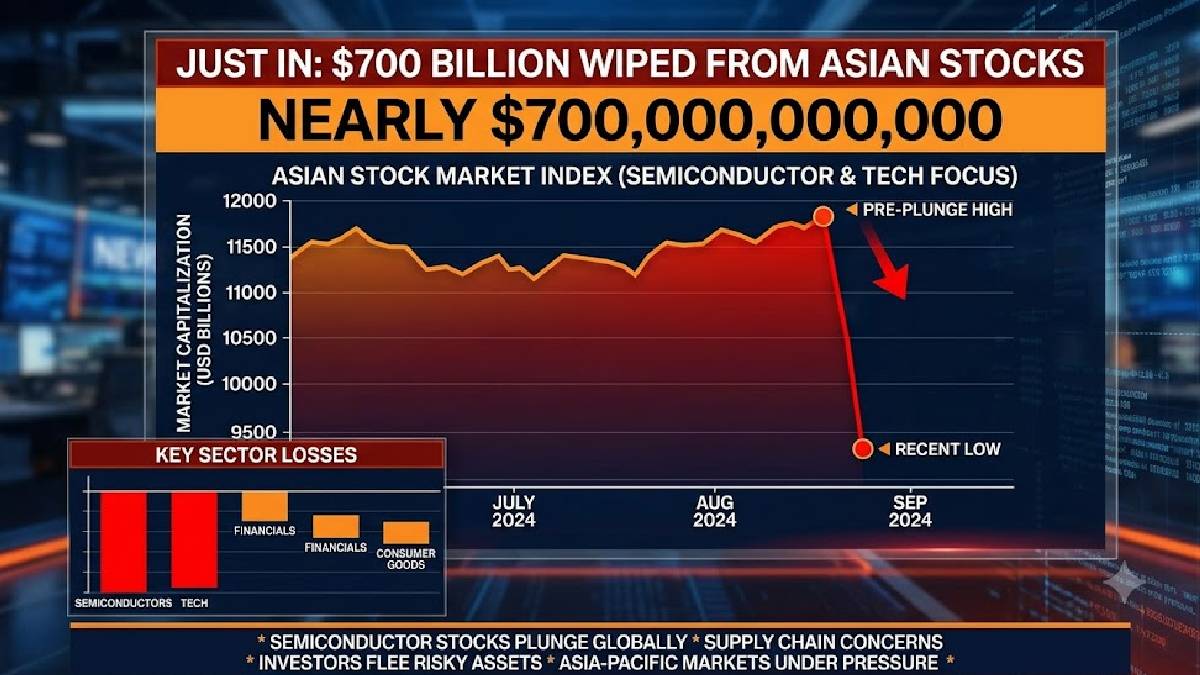
The scale of the slide has resulted in estimates of nearly $700 billion being wiped out from Asian stock market values, underscoring the depth and force of the latest tech-driven market collapse. The sell-off also follows an ugly day on Wall Street in which semiconductor stocks also tanked because bond yields have risen and the technology sector’s valuation is so high.
South Korea's Kospi index fell about 5.7 percent and semiconductor companies took the hardest hits. Samsung Electronics shed about 7.5 percent and SK Hynix about 8.8 percent, according to market reports. The market failure of the country’s tech giants was putting intense pressure on the rest of the Korean market.
Japan was also caught in the sell-off. The Nikkei 225 fell more than 3 percent and technology and chip-related companies were among those weighing on the index. Japanese investors also had to grapple with rising domestic bond yields with the 10-year Japanese government bond yield approaching levels not seen in decades.
The recent weakness in semiconductor shares is part of a bigger examination of the enormous investment in AI and related infrastructure. Semiconductor companies, memory-chip companies, data-centre companies and a lot of technology firms have enjoyed incredible gains from the expectation that demand for AI will only get stronger. But investors have recently started to ask if valuations have risen too fast.
And that concern is compounded by the global bond market. Long-term government bond yields are up substantially, driving up borrowing costs, and high-growth technology stocks are at risk. Higher yields also put pressure on company valuations, as investors are more willing to pay higher returns when the government is safer and stocks are more attractive.
The pressure was already evident in the US market on Tuesday. The Philadelphia Semiconductor Index fell around 5 percent and several major chip and memory firms fell sharply. Nvidia fell more than 2%, Micron dropped about 7% and Sandisk also dropped.
So the sell-off has spread across markets, with semiconductor companies in Asia especially exposed because of the vast exposure to global technology supply chains. Samsung Electronics and SK Hynix are major players in memory chips, Japan and Taiwan are major semiconductor manufacturers and equipment suppliers.
Investors are also watching China’s growing semiconductor capabilities. Market sell-offs earlier in the market had been largely caused by concerns that China’s chip manufacturing advancements could challenge established international semiconductor giants.
Another big concern is whether the huge investment in AI infrastructure will yield enough returns. Tech companies have poured money into data centres, advanced processors, and related infrastructure. Any suggestion that spending is reducing or returns may take longer to show up can immediately affect investor sentiment.
But a market decline doesn’t necessarily mean the end of AI investment in the long term. And the demand for computing power and advanced chips continues to be strong, analysts say. And the immediate sell-off seems to be caused by valuation problems, profit taking, interest rate expectations and risk aversion.
The rise in oil prices is adding uncertainty to that. Brent crude prices have risen above $90 a barrel and inflationary pressure is growing again. Higher energy prices make it more difficult for central banks to ease monetary policy, so they could keep borrowing costs high for longer.
Investors are already wary of concentrated exposure to technology stocks. Semiconductor companies have enjoyed huge gains during the era of AI but then their shares can also take a hit when expectations change.
The immediate focus is on whether the sell-off settles and spreads to global equity markets. Investors will be looking to bond yields, oil prices, corporate earnings and developments in the technology industry for signals for what will be the next direction of markets.
The reported loss of about $700 billion in value for Asian stock markets shows how quickly market sentiment can change. Investors today need to see more evidence that extraordinary valuations can be linked to sustainable earnings and cash flows after years of investment in AI and semiconductor stocks.
For Asian markets in particular, the next few weeks could be important. And if semiconductor shares recover, then the technology sector could be more balanced. But continued weakness in chipmakers will continue to weigh on major indexes across the region and potentially extend the global technology sell-off.






Comments
Please to leave a comment on this article.