
Indian stock markets on Wednesday went under heavy selling pressure with growing tension between the United States and Iran putting pressure on investors.
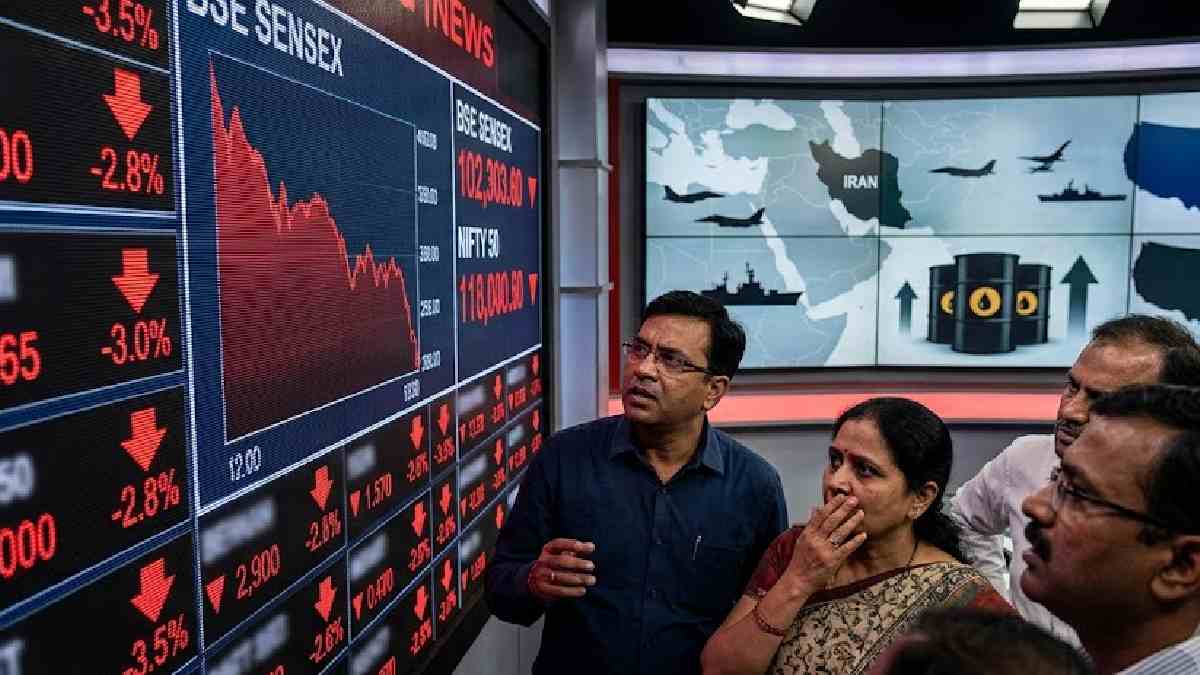
The rest of the global financial markets were rocked when the geopolitical situation deteriorated and the stock market lost a lot of money in quick succession of approximately ₹5 lakh crore after the opening bell.
The Sensex and Nifty fell sharply in early morning trade. The Sensex fell more than 750 points at one point and the Nifty fell below a key 23,800 level. Investors fled riskier assets as the market looked more uncertain.

The market decline was driven by the fact that the US and Iran were deepening their proxy war to the point that oil and energy supplies from the Middle East are at risk.
Crude Oil Becomes a Major Concern
The rise in crude oil prices added pressure to the Indian share market. Brent crude oil prices rose by $1.20 a barrel to around $95 a barrel and traders were worried about how the conflict could affect oil supplies.
The increase in crude prices is especially significant for India as the country depends heavily on imports to meet its energy requirements.

A prolonged rise in oil prices could further escalate India’s import bill, pressure the rupee and add to inflationary pressures.
Some heavy-weight industries that depend on fuel prices also showed selling pressure.
Airlines, tyre manufacturers, paint companies, and other oil-dependent businesses could see their costs rise if crude prices remain high for a long time.
Broad-Based Selling Hits Dalal Street
The weakness wasn’t limited to a few big stocks. Technology, automobiles, real estate, financial services, and consumer companies were among the sectors that were under pressure during trading early on.
The rest of the market was also in a cautious mood with mid-cap and small-cap stocks falling.
There was more market volatility as investors considered the economic damage a conflict could cause.
The rise in global bond yields exacerbated things. Higher oil prices might also lead to inflationary pressure and affect the expectations for interest rates and monetary policy.
Investors Remain Watchful
Market participants are now closely watching developments in the Iran-US conflict, crude oil prices, Indian rupee and foreign investor activity.
A bigger escalation could potentially put global markets under pressure, but de-escalation could bring some relief to investors.
In India, the duration of the oil price surge will be particularly important. If, for many years, crude prices stay high, businesses and consumers will have higher costs and can negatively affect corporate earnings and economic growth.
India's domestic economic fundamentals could provide some support to the market given the immediate volatility.
But the direction of trading in the near term is likely to be closely connected to geopolitical developments.
So Wednesday’s precipitous collapse once again illustrated how quickly international conflicts can impact Indian financial markets.
Investors know that the episode is a signal to consider global risks when dealing with market volatility during times of heightened market volatility.








Comments
Please to leave a comment on this article.