
Traders spend hours on end learning technical indicators, chart patterns and market strategies. But one of the most important tools for long-term success is often overlooked a trading journal. Whether you’re a novice or an experienced trader, keeping a trading journal can make all the difference in your performance and decision-making.
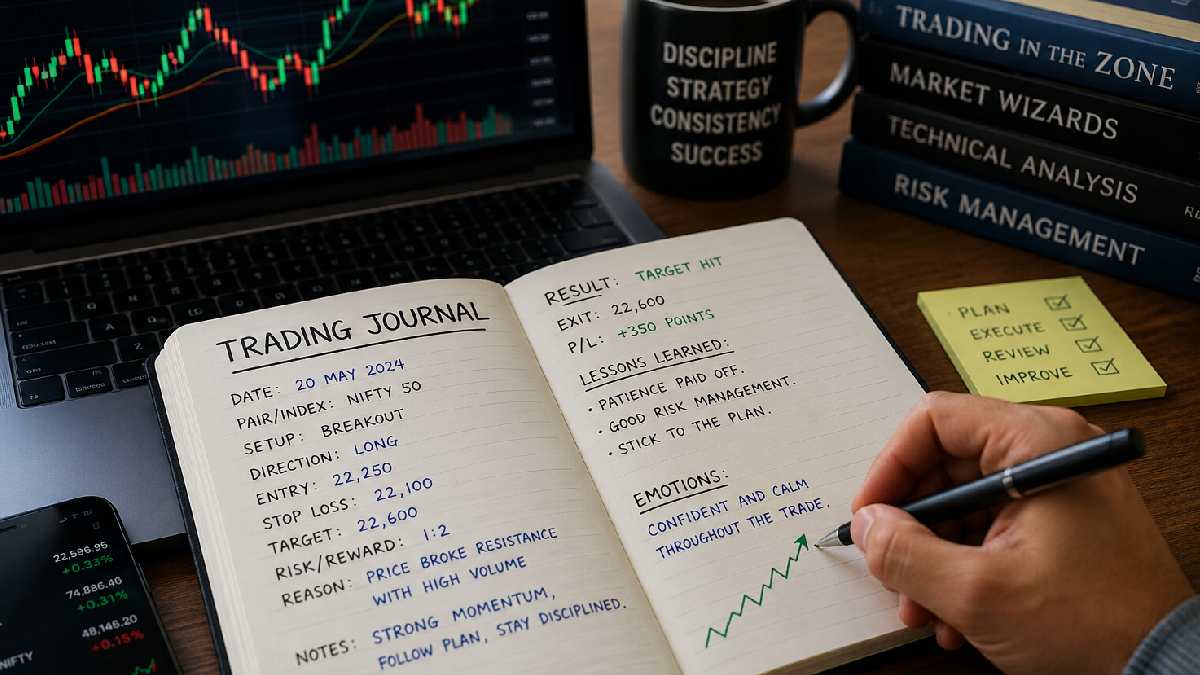
A trading journal is a detailed record of every trade you make. It contains entries and exits, position size, profit or loss, market conditions, and the reasons behind each trade. And more importantly, it captures your emotions and thought process during trading.
One of the most valuable benefits of a trading journal is that traders pick up on patterns in their trading. Most of our losses are not from bad strategy but from our emotions we fear, we are greedy, or we are just impatient.
Trading in past trades can identify mistakes traders make that will always surface again and again, and often we can do something to prevent that in the future.

A trading journal helps in discipline too. Good trading is to have a plan. When traders know that every trade will be recorded (and reviewed) and that they are being accountable, they are more likely to stick to their strategy and not get into a rush. That accountability breeds consistency and stability over time.
A second advantage is performance research. A journal gives traders an idea of what strategies are working and what are not. So traders may find some setups profitable and others not profitable. They can go to high-probability trades and get rid of the ones that do not work.
Risk management is one of the things trading journals are so useful for. Tracking stop-loss levels, risk-to-reward ratios and position sizes, and more is how traders manage risk effectively. Long-term and sustainable trading will be achieved with this model, which can lead to a more balanced and sustainable trading strategy.
Trading journals also help to monitor progress. The market changes constantly, and traders are forced to adapt. From a journal entry, the trader’s skills and also the skills that need improvement will be evident. We are going to succeed if we learn constantly.
There are various ways to keep a journal for modern traders. Traders might prefer traditional notebooks, spreadsheets, or specialized trading journal software. The key is consistency. Keeping records of every trade and checking the data very regularly is what will make a big difference in trading performance.
In today’s fast-paced financial markets, success is not only about finding winning trades. It’s about understanding your strengths, weaknesses, and habits. A trading journal is a personal coach that gives you real feedback and helps traders make better decisions.
For anyone with a trading career, keeping a journal is not a luxury but a necessity. Regular record keeping is not so much a luxury as a business need for trading careers.
The knowledge gained from keeping a journal is what separates repeatable mistakes from doing the same old thing forever and profitable profits in a long-term business.







Comments
Please to leave a comment on this article.