
The introduction of Closing Auction Session (CAS) has transformed the way closing prices are calculated for eligible stocks and indices in India's equity market. It is a way of making price discovery more transparent and less likely to be used for last minute price manipulation when derivatives contracts expire.
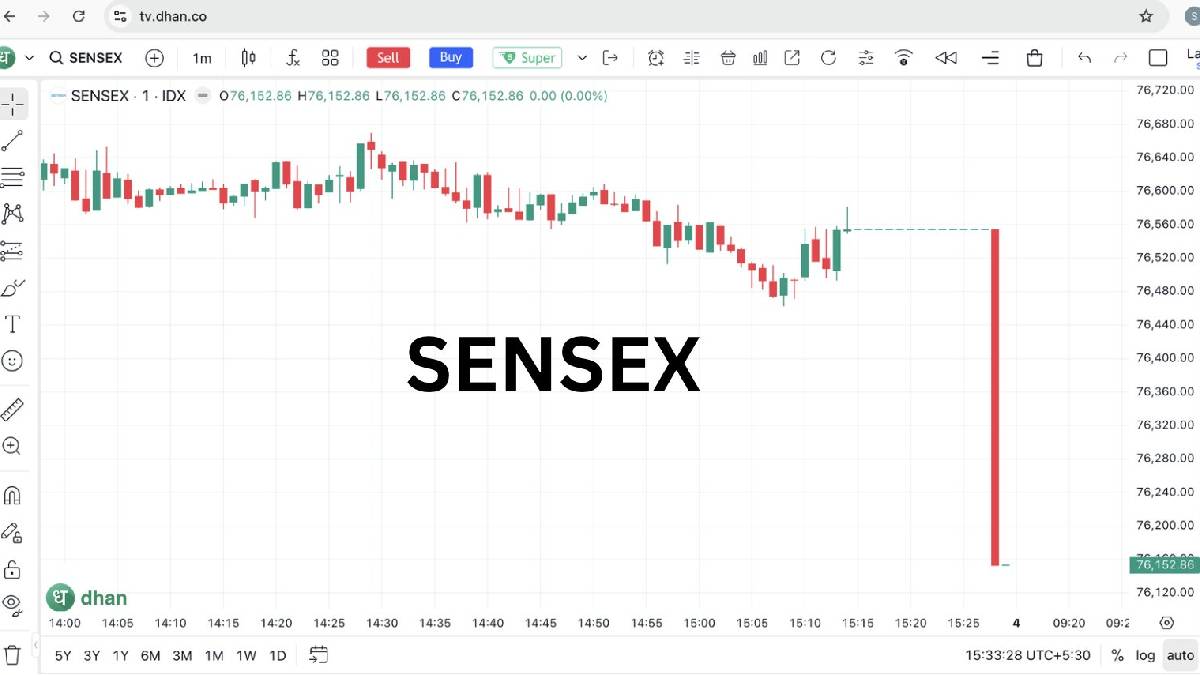
The new system was implemented on 3 August 2026 and was part of the regulatory framework set up by the Securities and Exchange Board of India (SEBI). This is a big change for the Sensex because weekly derivatives expiry can motivate huge trading volume and positioning in the last hour of the session.
In the previous system, closing prices were calculated based on trading activity towards the end of the regular market session. CAS, by contrast, creates a separate auction period where buy and sell orders are acquired and equilibrium prices are found.
The aim is to make the closing price more representative of the actual demand and supply while reducing the ability of individual traders or institutions to influence prices through activity concentrated in the last moments of continuous trading.
So the Sensex is very helpful because the closing level can be used as a settlement point of derivatives contracts. On expiry days even a small change in the index can be very important for traders who hold very large options or futures positions.
But the CAS rollout has also shown that changing the price-discovery mechanism does not automatically eliminate manipulation risks.
On August 13, 2026, a weekly Sensex derivatives expiry day, SEBI's surveillance system detected sharp spikes in indicative prices during the closing auction. The regulator then investigated trading activities involving Copthall Mauritius Investment and Mansi Share and Stock Broking. SEBI alleged aggressive orders and subsequent cancellations were used to influence prices of Sensex constituents during the auction.
At the same time, SEBI intervened and the two companies were prevented from having any role in the securities market and the regulator had also decided to keep them away from CAS. The episode was an early test of the new system and showed the need for strong surveillance controls and the auction framework.
The incident also illustrates why weekly expiry sessions are very sensitive. Traders with large derivative positions have an interest in the final settlement level. If the underlying stocks that affect an index can be moved significantly near the close, derivatives positions can potentially see large changes in value.
The CAS is meant to make the closing price discovery process more systematic. Rather than having the continuous trade decide the final price, the auction collects orders and aims to reach an equilibrium point where the maximum executable quantity can be matched.
For investors that means that the last minutes of trading can behave differently from what they were accustomed to before CAS was introduced.
The change has already made some of the participants more volatile and uncertain. In some reports, we have seen that the Sensex moves sharply during the auction period (the sharp fluctuations around derivatives expiry).
But in the end, the wider objective of CAS is not just to increase volatility. They have introduced the mechanism to increase price discovery, transparency and quality of closing prices in the market. Similar auction mechanisms are also used by major exchanges around the world.
One reason why the system matters more than individual traders is that closing prices are crucial for mutual funds, institutional investors, index products and derivatives markets, as well. In fact, it is quite common to choose the right closing price to buy and sell a portfolio or to settle financial contracts.
The challenge is to make sure that the auction has sufficient liquidity and appropriate safeguards. Recent market developments have raised some concern about the thin liquidity in some auction situations as a very small amount of trading activity can have a larger impact on the final price when participation is small.
A lesson for retail traders is that Sensex weekly expiry should not be taken as a routine trading session. It is quite clear to say that sudden changes in the prices of the options at the end of the auction can shake the market very much, especially when positions are heavily leveraged.
The introduction of CAS is a challenge and an opportunity. But if liquidity improves and market participants learn to adjust to the new mechanism, the system will eventually deliver more reliable closing prices. But the early episodes of extreme volatility tell us that surveillance and risk controls need to be taken into account.
SEBI has made it clear that manipulation of the new mechanism will be strictly dealt with. The regulator’s early enforcement action sends a clear signal that attempts to distort closing prices may trigger regulatory scrutiny and penalties.
For the Sensex, though, the objective is the same: to create a more transparent and robust closing price mechanism and reduce the chances that traders will be able to influence settlement prices in the derivatives expiry period.
The effectiveness of the system will ultimately depend on liquidity, order-book depth, surveillance technology and how quickly market participants adjust their strategies.
As traders get used to the new structure, the sharp movements in some early CAS sessions might moderate. But Sensex weekly expiry days are likely to be closely watched because of the huge financial exposure associated with the final index settlement.
So the Closing Auction Session is more than just a change in market timing. It is a major change to India’s market structure and represents SEBI’s overall objective of better price discovery and market integrity.





Comments
Please to leave a comment on this article.