
Indian aviation stocks fell sharply Tuesday as higher prices for Aviation Turbine Fuel (ATF) raised concerns about higher operating costs for carriers.
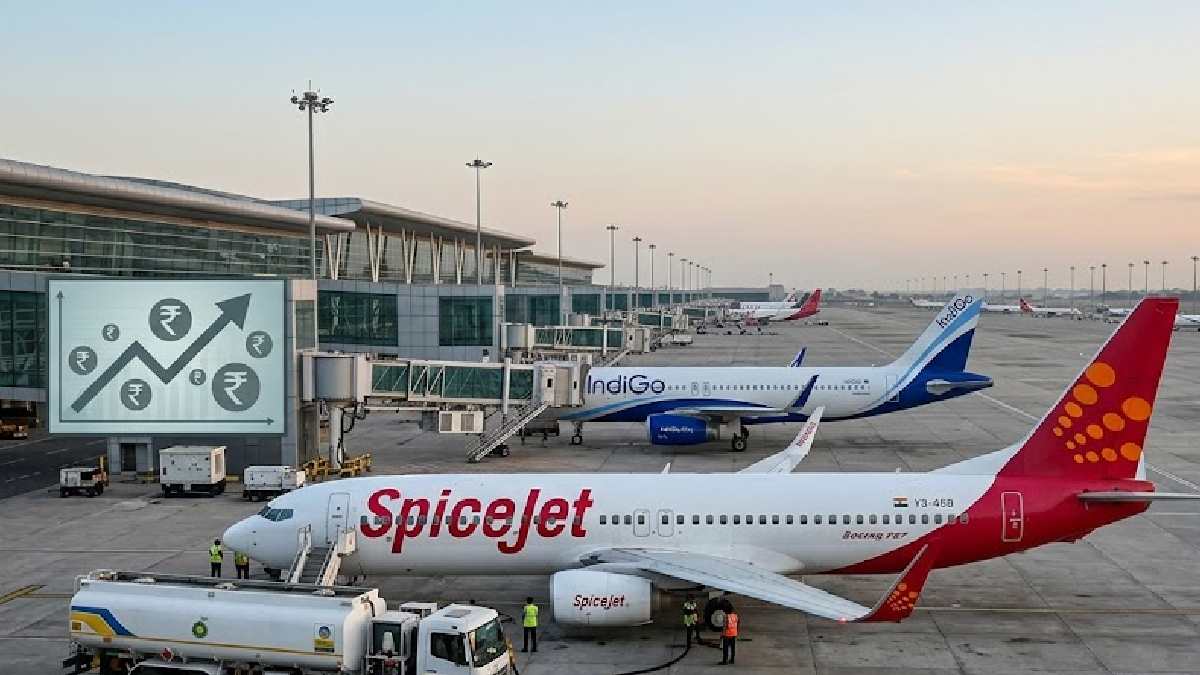
IndiGo parent InterGlobe Aviation and SpiceJet shares fell, and aviation stocks lost as much as 3.2 percent.
The ATF revision comes after another increase in August, putting the airline industry under renewed cost pressure.
The domestic ATF prices have been raised by 5.46%, translating into an increase of ₹6.28 per litre. The price has increased from around ₹115 per litre to ₹121.28 per litre.
The back-to-back increases are closely watched by investors because jet fuel is one of the biggest expenses for airlines.
Depending on market conditions and the airline's operations, fuel costs can account for roughly 35% to 40% of total operating expenses.
IndiGo And SpiceJet Shares Under Pressure
IndiGo parent InterGlobe Aviation was among the aviation stocks affected by the development. At 9:35 a.m., IndiGo shares were trading at ₹5,087.50 in the NSE, down by ₹146.50, or around 2.80%, from the previous close.
SpiceJet shares were in negative territory at the time. The stock was at ₹10.23, down by around 0.87%.
The reaction is in line with investor concerns that a prolonged rise in jet fuel prices will have a negative impact on airline margins.
But passenger traffic and capacity growth are still important to airline earnings, and a high fuel expenditure can affect profitability if higher costs cannot be passed on to customers.
Why ATF Prices Are Important
ATF prices are revised by state-owned oil marketing companies at the beginning of every month. Changes are influenced by international oil prices, currency movements, and other market factors. Prices can also vary from city to city in India because of local taxes, including VAT.
The rise comes as global energy prices are still volatile. If crude oil prices continue to rise again this year, aviation fuel prices would be further affected.
For airlines, managing these expenses will be crucial. Companies can try to absorb some of the increase, increase aircraft utilisation, or revise ticket prices depending on market conditions.
Will Airfares Become More Expensive
There are also questions about whether passengers will eventually have higher airfares with the increase in ATF prices. But a rise in fuel prices does not necessarily mean ticket price hikes.
Airlines consider many factors before changing fares: passenger demand, competition, available capacity, route economics, and other operating expenses.
A highly competitive market can make it difficult for carriers to pass the entire increase in fuel costs to passengers.
The next round of financial reports from airlines will then be watched to see if they manage the higher fuel bill.
With ATF prices rising for the second consecutive month, movements in crude oil and aviation fuel prices are likely to remain important triggers for IndiGo, SpiceJet, and other airline stocks.
The ability of carriers to protect margins while maintaining competitive fares could determine how the sector performs in the near term.





Comments
Please to leave a comment on this article.