
On Monday, shares of tech companies in India’s information technology sector were rocked by the stronger-than-expected employment data and a growing sense that the US Federal Reserve could raise interest rates in September.
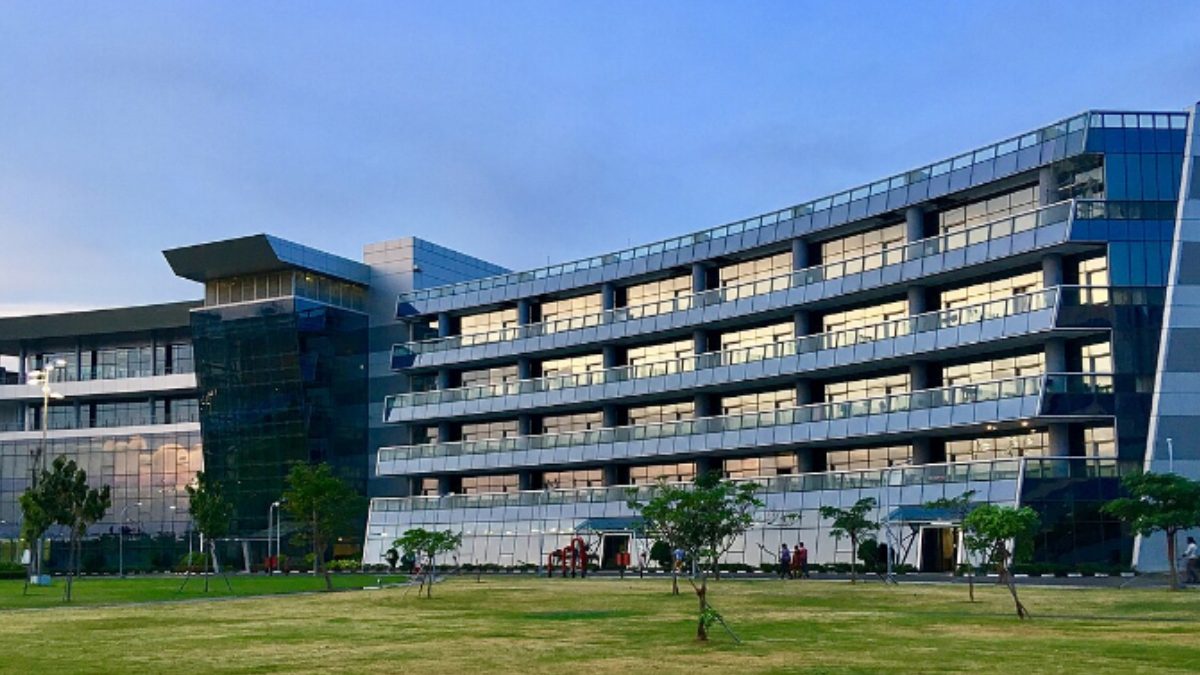
Infosys, HCLTech, Tata Consultancy Services (TCS), Wipro and other IT companies were down more than 3%.
The sell-off came on concerns that a stronger US labour market might give the Federal Reserve a lower justification to ease monetary policy. And last week’s employment figures showed that the US economy added 162,000 jobs in August, well above market expectations. Market expectations for a September rate hike were also on the rise, putting investors on edge as well, in the run up to the Federal Reserve's next policy decision.
The change in interest rate expectations is particularly important for Indian IT companies as the United States is a major market for their technology, consulting and outsourcing services. Infosys, TCS, HCLTech and Wipro all have a lot of international clients, and their revenue comes from abroad, in North America, for example. An extended period of higher interest rates in the US will make US companies cautious in terms of spending on technology and discretionary projects.
When borrowing costs are high, businesses may delay big technology investments, transformation projects and other projects which are not immediately important. This can affect the pace of IT service providers getting new contracts and extending existing engagements. Investors, therefore, tend to pay close attention to US economic indicators as they can give us the basis for the corporate spending of companies in one of the key markets for Indian tech companies.
The market reaction, though, was broad-based. The Nifty IT index dropped over 1% on Monday and several large-cap technology stocks also fell sharply. Infosys was among the stocks that came under intense selling pressure and HCLTech, TCS, Wipro, and other IT names fell. And Reuters reported that the IT sector was the weakest among India's broad sectoral indices, falling by around 2 percent as stronger US employment data increased expectations of higher interest rates.
As we reported from the session, Infosys fell by more than 3% at one point, while other big tech stocks also lost ground. All this was despite recent periods of strong IT sector performance, showing how much technology stocks are still sensitive to changes in global monetary-policy expectations.
The next batch of US economic indicators will give more clues for the Federal Reserve's direction. Inflation data will be especially important because the central bank has to balance employment conditions with price stability. Strong employment combined with persistent inflation could strengthen the argument for keeping monetary policy restrictive or considering another rate hike.
For Indian IT companies, the effect of US monetary policy extends beyond stock-market sentiment to the global IT market. Higher interest rates can impact corporate budgets, technology spending and investment decisions among American companies in the United States. If companies become more conservative about spending, Indian IT service providers would likely have slower growth in discretionary projects, although essential technology services and long-term digital transformation contracts may remain comparatively resilient.
Already those structural changes are happening in IT like the accelerating use of artificial intelligence, outsourcing models and the changing demand for traditional technology services. Investors will be looking not only at the current earnings, but also at IT companies’ ability to respond to changing technology needs and remain strong in a competitive world.
The recent market weakness also shows the impact that global factors have on the Indian share market. On Monday, the broader Indian market was under pressure as Sensex and Nifty fell as US rate expectations and concerns about global oil prices were on the rise. The Nifty 50 tumbled 0.25 percent to 23,838.65, while Sensex fell 0.24 percent to 76,335.07.
The Indian rupee and bond markets are also being affected by the developments in the United States. Rising US yields and speculation of a Federal Reserve action can affect global capital flows and currency movements, so US economic data is important for investors in emerging markets such as India.
Despite Monday's decline, analysts and investors are likely to distinguish between short-term market volatility and longer-term fundamentals of individual IT companies. Large Indian technology firms still have diversified global operations, long-term client relationships and exposure to areas like cloud computing, artificial intelligence, cybersecurity and digital transformation.
But the focus will be on the Federal Reserve and on other US economic news. Any change in expectations around the September policy meeting could cause even more volatility in technology stocks. A soft inflation reading or weakening employment could also reduce rate hikes, and more economic data would likely put pressure on rate-sensitive sectors.
For Indian IT traders and investors, the latest decline is a reminder that global monetary policy can have a significant impact on domestic technology stocks.
As much of the business in the US generates a large share of revenues, the outcome in American employment as well as inflation, interest rates and corporate spending will play a significant role in the future for Infosys, TCS, HCLTech, Wipro and its peers.
The Monday sell-off is a reaction to more than one economic report. It’s a reminder that India’s IT sector is still under the microscope because of investment and the global economy and Fed policy decisions.
Indian IT stocks will continue to be watched closely for signs that the recent weakness is a temporary dip or the beginning of a longer-term period of uncertainty.





Comments
Please to leave a comment on this article.