
The Bank of Japan (BOJ) is also expected to raise interest rates next month and markets are keenly watching for the central bank to raise its policy rate from the current 1% to 1.25% at its September meeting.
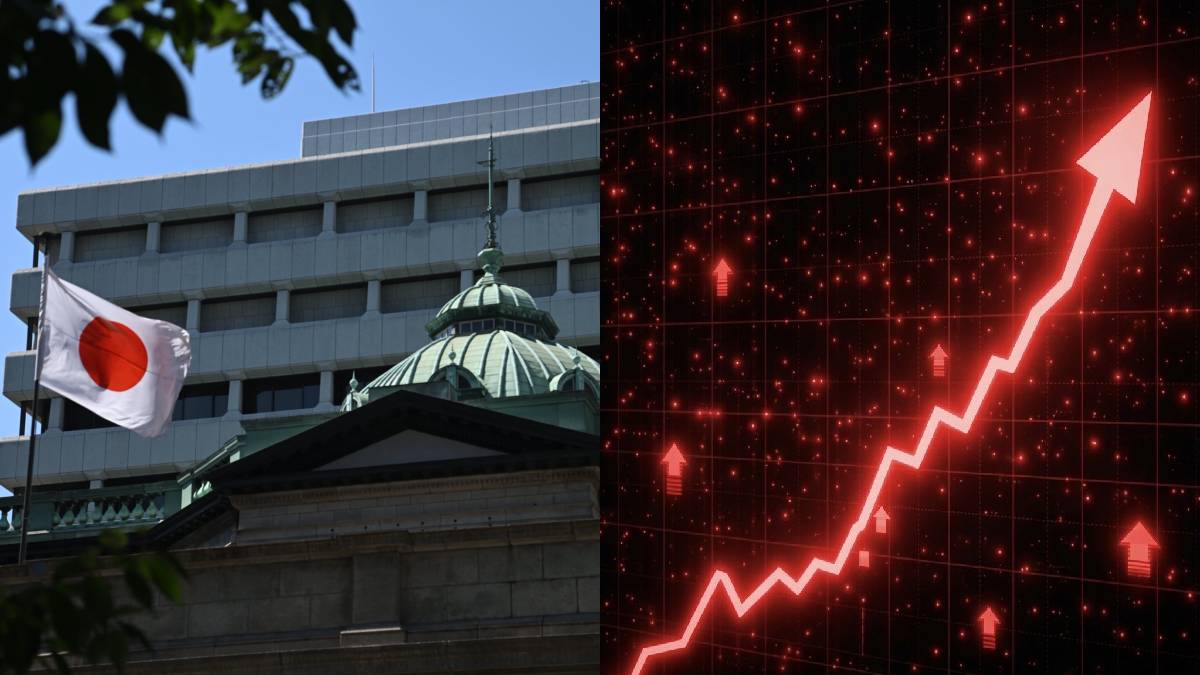
In recent weeks the possibility of a September hike has risen significantly in light of a series of hawkish signals from the Bank of Japan. Governor Kazuo Ueda said the central bank would seriously consider the possibility of a rate hike and board member Hajime Takata said monetary tightening should be more flexible.
The next monetary policy meeting will take place from 17 September to 18 September 2023, the central bank's official calendar says. Currently, the policy rate is about 1%, through the BOJ's June rate hike.
The possible move to 1.25% would be another step in Japan’s gradual departure from decades of exceptionally easy monetary policy. The BOJ has been carefully normalising interest rates as inflation conditions change and wage trends change.
One of the key reasons for the latest rate-hike expectations is inflation. Tokyo’s core inflation grew for the third consecutive month to a record high in August, and reached 1.8% year-on-year. A category excluding fresh food and fuel that is closely monitored for trends in inflation trends was at 2%.
The Japanese yen is also of importance. The currency has been very volatile in comparison to the U.S. dollar and policymakers are worried about the economic implications of excess yen weakness and so far they are concerned. A weaker yen increases the price of imported goods and energy, and that can increase inflationary pressure.
The yen strengthened sharply on Thursday as market players had been raising expectations of a BOJ rate hike and traders grew more confident in the market that the central bank would have a rate hike. The yen rose more than 1.5% to around 156.36 per dollar and market participants said much of the rise in the Japanese currency was driven by growing expectations of tighter Japanese monetary policy tightening and not by direct intervention by Japanese authorities.
It’s a key signal from the governor of BOJ Kazuo Ueda also has also been important for markets. During the central bank’s new policy talks, Ueda said in a speech on the week before that officials would look at whether the economy and prices were developing according to the BOJ’s own forecasts in line with the economy and prices according to the economy and prices according to Ueda’s forecasts. He also highlighted rising inflation risks due to the weak yen and geopolitical events.
Takata has also been among the hawkish voices in the central bank. He has said rate hikes should not necessarily occur on a regular basis and should be linked to domestic prices and economic conditions as well as export developments. His comments have increased expectations that the BOJ could accelerate its tightening cycle.
The potential September hike also has major implications for global financial markets.
For quite a long time, Japan’s low interest rates encouraged investors to borrow cheaply in yen and invest in higher-yielding assets elsewhere. This Japanese carry trade - often called yen carry trade - has been a big driver for global stocks, bonds and currencies at large.
A rise in the BOJ rate would increase the cost of yen-denominated borrowing and may result in some investors reducing their carry-trade positions. Investors might also worry about overseas investment financed by Japanese borrowings if the yen strengthens substantially.
Japan's government bond market is already responding to expectations of tighter monetary policy. The 10-year government bond yield now has touched 3%, the highest since 1996. Yields are rising as long as inflation and Japan’s fiscal position rise.
The global role has also become more significant. U.S. Treasury Secretary Scott Bessent has publicly called on Japan to raise interest rates and tackle yen weakness globally. Bessent had been speaking to Japanese officials on the issue, it added, and was not least a factor that could be part of the debate in the country’s monetary policy.
But a September rate increase is not certain. The BOJ will have to weigh inflation risks with the impact growth in spending on households, companies and government finances.
In the minds of investors, the September meeting could also be one of the most critical monetary policy events of the month. A move from 1% to 1.25% would probably strengthen the yen first, and Japanese bond yields are expected to be further higher.
The decision might also affect global markets through currency movements, bond-market moves and changes in the yen carry trade.
But the direction of travel seems to be in sight: the Bank of Japan is moving closer to another rate hike. The market is focused on the September 17-18 meeting, while recent comments by Ueda and Takata have raised expectations that the BOJ could raise its policy rate to 1.25%.
If the central bank follows through, it would be one more significant step in Japan’s monetary policy normalisation and could have repercussions well beyond Tokyo, particularly for global currencies, bonds and risk assets.





Comments
Please to leave a comment on this article.