Zomato, a food delivery service provider, has imposed a zero-tolerance policy against the listing of dishes containing analogue dairy products as a result of a food safety crackdown in Maharashtra.
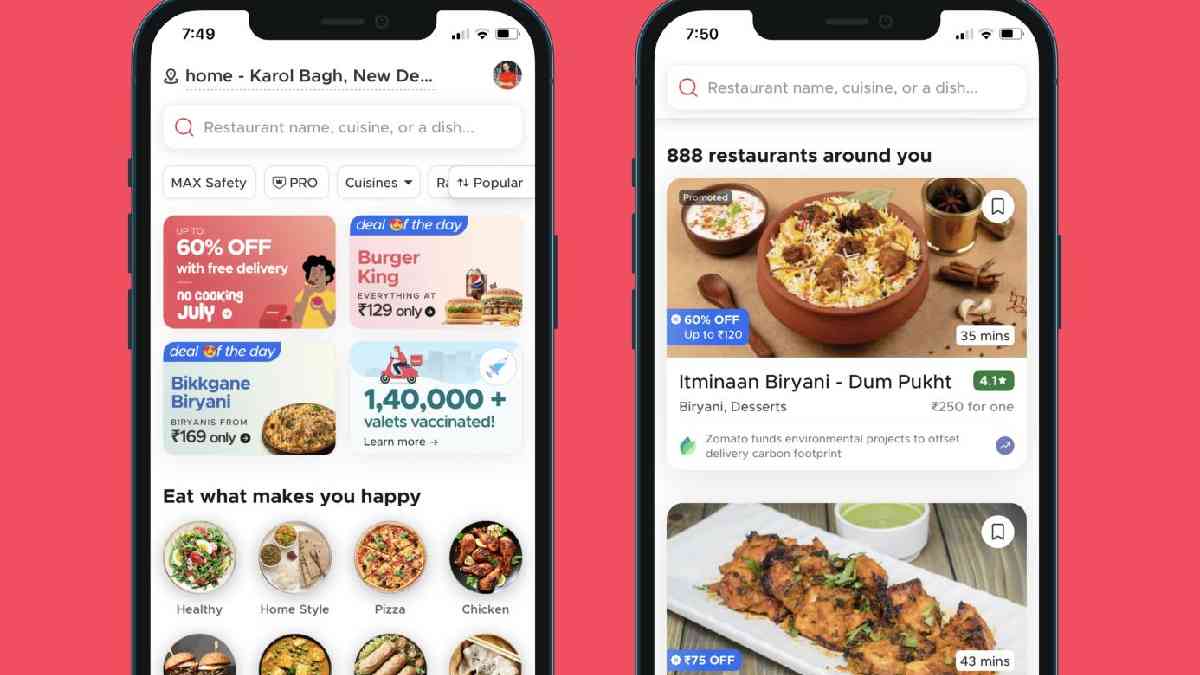
The move came as the state's Food and Drug Administration (FDA) continues inspections and enforcement actions against restaurants and food establishments over food quality, hygiene, and compliance. Zomato said dishes that restaurant partners have identified as containing analogue dairy products have been removed from its platform with immediate effect.
The company has also directed restaurants to replace analogue dairy products with natural dairy ingredients where possible. Those places that cannot quickly adopt this model are asked to remove such items from their menus.
Zomato has warned that restaurants failing to comply with the directions could be removed from the platform.
Zomato Introduces Zero-Tolerance Policy
According to Zomato's official announcement, it has a zero-tolerance approach for the sale of analogue dairy-based dishes through its platform.
That means listings that restaurant partners have declared as analogue dairy have already been delisted. The policy is aimed at giving customers more and even greater visibility into the food they’re getting and ensuring that restaurant partners are following the food safety requirements.
Zomato also said the move is part of its broader focus on healthier food choices and transparency.
The platform’s action could have a big impact on restaurants that serve dairy substitutes in popular dishes. Restaurant partners will need to consider their menus and ingredients very closely to make sure listed dishes are compliant with the platform’s rules.
In a few words, all restaurants are told to switch to natural dairy.
E.g., restaurant partners have been advised to switch to natural dairy products, Zomato said.
When a transition is not possible, restaurants will remove dishes containing analogue dairy from their menus rather than continue offering them through the platform.
The company has made it very clear that compliance will be important to restaurants in order to stay on Zomato.
"Restaurant partners who are non-compliant will be delisted from the platform," the company warned.
It adds layer of responsibility to restaurants by not only revealing the ingredients they have in their dishes but to what extent they have them in them.
CEO Aditya Mangla Highlights Customer Safety
In the case of Zomato, CEO Aditya Mangla said that the company’s objective is to provide better food while safeguarding customer health and keeping the site’s food listed on the platform well-defined.
Mangla said the policy is emblematic of Zomato’s commitment to working with restaurant partners that share the same standards.
At a time when food safety is a major public health problem in Maharashtra, there have been wide inspections made in restaurants, hotels, and other food establishments.
Maharashtra FDA Intensifies Crackdown
The Zomato decision follows an aggressive enforcement drive by Maharashtra's food safety authorities.
IAS officer Tukaram Mundhe, who has been leading the state's food safety efforts, has drawn much attention for the scale of inspections conducted since taking charge as Maharashtra's food safety chief.
According to the information cited in the report, authorities have conducted more than 3,000 raids since Mundhe took over in May. Several well-known food outlets have been investigated, including license suspensions in the case of a couple of them.
Among those that have been affected are places like Domino's, Pizza Hut, and Rustom's Ice Cream. The food safety department has also inspected cricket clubs, hotels, and restaurants.
The license of the Bombay High Court canteen was also suspended due to enforcement action.
Tukaram Mundhe Gains Public Attention
The crackdown has raised much public debate, with Mundhe being referred to as a “real-life Singham” and “Nayak” by some people, due to the intensity of the inspections.
The enforcement campaign has also drawn criticism from sections of the hotel and restaurant industry. But food safety officials maintained that inspections are necessary to ensure establishments abide by prescribed standards.
The latest development with Zomato shows how regulatory scrutiny is beginning to influence the food delivery ecosystem as well.
What The Zomato Policy Means For Customers
For customers, the policy would bring greater transparency in terms of what ingredients are used in restaurant dishes that are available through the platform.
Restaurants will need to ensure menu descriptions and ingredient declarations accurately reflect what is being served. If restaurants cannot or will not replace analogue dairy products with natural dairy, some dishes may disappear from menus.
The development shows that ingredient transparency is increasingly important in India’s rapidly expanding food delivery business.
In restaurants, the policy could mean changes in sourcing, recipes, and menu offerings. Businesses that do not meet Zomato’s requirements risk losing access to one of India’s largest food-ordering platforms.
With Maharashtra’s food safety authorities still performing inspections, this Zomato policy sets out to create a tighter compliance environment for restaurants operating through digital food delivery platforms.





Comments
Please to leave a comment on this article.