
Wheat prices in Delhi are at their highest level in more than 17 months and in a sense further strengthening the domestic wheat market in spite of the comfortable government stocks of India. The price action has attracted international attention on commodity markets as traders, flour millers and other bulk buyers monitor supply, demand and government intervention.
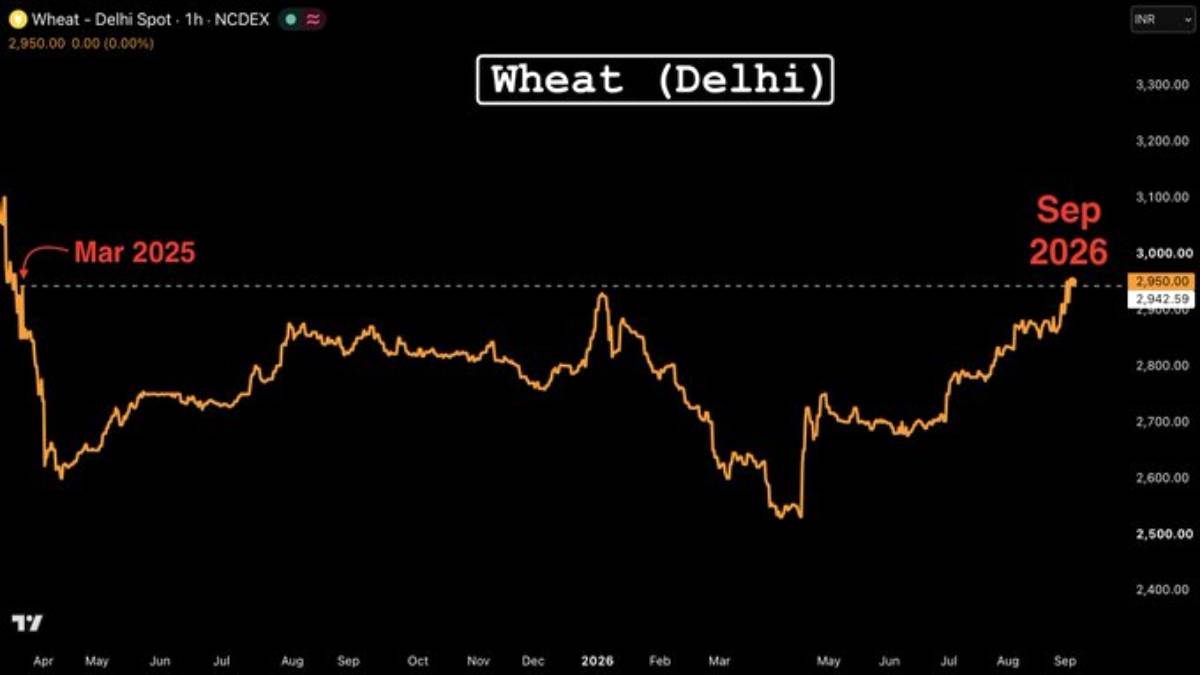
For the latest available market data, mill-quality wheat in Delhi was quoted as around ₹2,950 per quintal on September 3, 2026, according to National Commodity & Derivatives Exchange (NCDEX) spot-market data. The increase will come at a time when post-harvest arrivals have begun to ease and market participants are increasingly focused on the availability of wheat in the months ahead.
Wheat prices typically soften during the main harvesting season as fresh supplies enter wholesale markets in large quantities. But prices may remain steady in the later part of the year as market arrivals decline while consumer demand from households, flour mills, food processors and other end users remains steady. This seasonal phenomenon is reflected in market data, where wheat prices generally rise after the harvest season as arrivals slow down.
The latest price movement comes at a time when government wheat inventories are still high. India had 53.41 million tonnes of wheat as of June 1, 2026, the highest level since 2021, according to Reuters data. The government has also procured more than 35 million tonnes of wheat in the marketing season of 2026-27, which is more than 34.5 million tonnes.
The availability of these reserves gives the government an important tool to manage domestic prices. Open-market sales from government stocks can increase supplies when wholesale prices rise sharply, possibly limiting further price escalation.
But the rise in Delhi prices shows that market dynamics are still important. Wheat demand from flour mills and other bulk consumers will be strong even when government inventories are comfortable. Transportation costs, regional supply differences, procurement patterns and expectations regarding future government sales can also influence wholesale prices.
Global wheat markets have also been in quite a movement in recent weeks as well. International wheat prices have risen sharply over the past month, with wheat futures rising significantly from earlier. International developments can influence India’s commodity market even if domestic wheat prices are influenced by local conditions of supply-demand and policy in India.
The production outlook in India, meanwhile, is still very good. USDA's Foreign Agricultural Service has forecast 2026/27 wheat production at a record 120 million tonnes, supported by record acreage. A good harvest outlook and high government stocks could therefore offer some cushion from sustained price pressure.
But for consumers, the continued increase in wholesale wheat prices could eventually affect the cost of wheat flour and other wheat-based products if higher input costs are passed through the supply chain. Flour mills and food manufacturers will closely monitor whether the current price rise proves temporary or develops into a longer-lasting trend.
In the end, one of the challenges for policymakers will be how to balance adequate supplies for consumers with reasonable prices for farmers. With government inventories at comfortable levels, the government has the ability to respond if wholesale prices keep rising.
For India’s food and commodity markets, the 17-month high in Delhi wheat prices represents a significant development. While strong production and government stocks do provide some protection against a sustained shortage, which is evident from the recent prices of wheat, it shows that seasonal availability, demand and market expectations still have a strong influence on wheat prices.





Comments
Please to leave a comment on this article.