
The US housing market is under increasing affordability pressure as mortgage rates climb, driving more and more Americans to adjustable-rate mortgages (ARMs) in search of lower monthly payments.
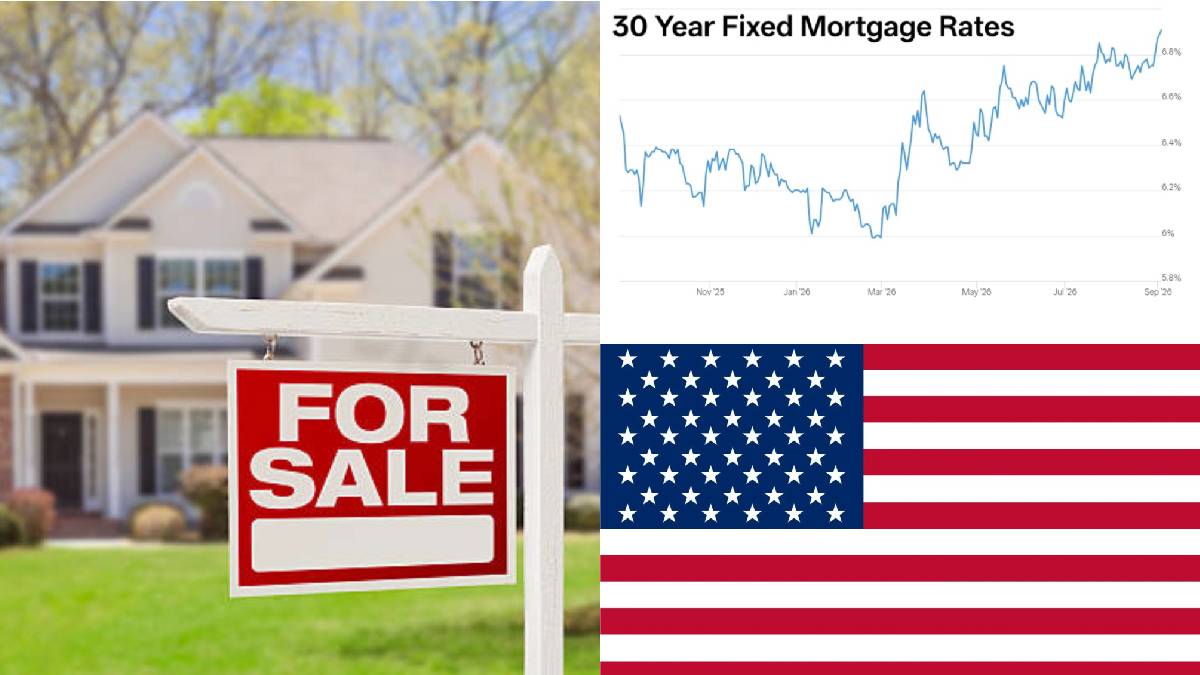
The average 30-year fixed mortgage rate rose to 6.79%, the highest since June 2025. Rising borrowing costs are making home purchases more expensive for many prospective buyers and they are looking for alternate ways of debt such as fixed-rate mortgages.
Mortgage rates are rising because bond yields are driven by inflation and the US fiscal deficit. Mortgage rates are very sensitive to movement in the bond market, particularly Treasury yields, so long as market yields keep rising, mortgage rates will go up and people will borrow money more.
Higher rates are also affecting mortgage activity. Mortgage applications were up only 0.8 percent in the week ending July 11, showing that demand isn’t exactly getting affected much by the tightening of the housing market.
The number of home purchase applications increased by 2%, but it was 0.2 percent lower than one year ago. These numbers indicate that prospective buyers still have major affordability issues because high financing costs add thousands of dollars to the long-term cost of purchasing a home.
Refinancing has been even weaker than that. Refinance applications declined 19 percent year-over-year as homeowners who have already accepted lower mortgage rates have little financial incentive to replace those loans with higher-cost borrowing.
With mortgage rates up 15 basis points from a year ago, many borrowers are looking at adjustable-rate mortgages as a means to reduce their initial borrowing costs.
ARM applications are up to about 8 percent of all mortgage activity and at a five-week high. This increase shows how borrowers are responding to the current rate environment by prioritising lower payments in the short term.
The appeal of ARMs is largely their initial interest rates. The rate on a 5/1 adjustable-rate mortgage now is 5.94%, much lower than what would be the rate on a 30-year fixed mortgage.
That difference can add up to a substantial monthly payment for buyers who are still struggling to buy a home at current fixed mortgage rates. Lower initial rates can be used to buy a property that even a conventional fixed-rate loan would be too much for a borrower to pay.
But adjustable-rate mortgages come with a price. And while borrowers get a lower mortgage rate in the first fixed period, the interest rate from the mortgage can be changed so that they can pay off the loan terms after that. If market rates rise when the mortgage resets, the monthly payments could get a lot higher.
That makes it very difficult for American homebuyers to make a choice. A fixed-rate mortgage is the better option for long-term payment certainty but at a much higher borrowing cost at present. An ARM could provide immediate savings but puts future interest rate risk on the borrower.
So the growing proportion of ARM applications is not just about consumer preference, but also evidence of the impact of high mortgage rates on household affordability.
For many Americans, it might not be possible for us to wait for mortgage rates to go down when home prices are high in regions where home prices are high. But with a fixed mortgage rate that can be high enough that buying with a fixed mortgage rate can drive up monthly housing costs drastically.
As a result, some buyers are willing to take on more future uncertainty in exchange for relatively manageable payments today.
The trend will ultimately depend on inflation, Treasury yields and Federal Reserve policy. If interest rates were to go down in the future, borrowers with adjustable-rate mortgages would get lower rates at resets. But if inflation is high and borrowing costs remain high, ARM borrowers may owe more at the end of their fixed periods.
The current mortgage data is indicative of the tough market conditions for homebuyers in the U.S. The price is rising and there is less demand and some borrowers are looking to buy into the market in the future (and not right now) for less payments now.
When Americans enter the housing market, the choice between a fixed-rate mortgage and an ARM has become a much more important financial consideration.





Comments
Please to leave a comment on this article.