
Mukesh Ambani’s Reliance is readying an entry into India’s highly competitive ice cream market as a mass market player with products priced as low as ₹10. It is yet another step in Reliance’s consumer-driven business expansion and one that could boost competition in one of India’s fastest-growing packaged food segments.
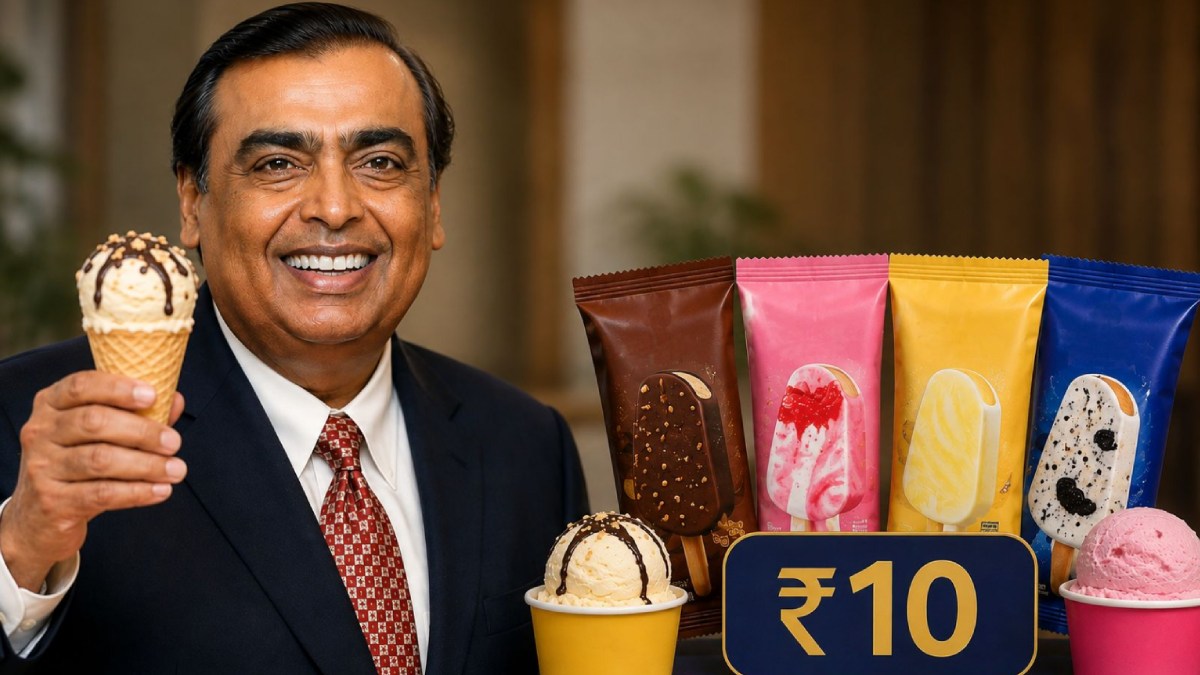
Reliance is trying to reach a broad audience of customers from urban and smaller markets with the low cost of the product to go for affordable retail pricing.
The reported ₹10 products may become a key aspect of Reliance’s ice cream strategy. Price is still a key factor in India’s consumer market and impulse purchases like ice creams. A ₹10 item can make a product more readily available to consumers that don’t want to pay much more for one serving. It might also be helpful for the company in neighbourhood stores, small retail stores, and high-volume points of sale where low-priced products can help drive high-frequency purchases.

Reliance’s entry has come at a time when India’s ice cream industry is dominated by national brands, regional manufacturers, and newer premium players. There are strong brands with wide distribution and seasonal demand in the market. Summer is still a very big time for ice cream consumption, and the shift of consumer habits and the rise of digital retail and food delivery platforms have made the category more than seasonal.
For Reliance, the biggest opportunity in terms of distribution is scale. It has already established itself as a major player in the retail and consumer space in India through various businesses. Its huge retail footprint and growing consumer goods presence on the fast track could be used to bring ice cream products to consumers in a variety of channels.
The reported ₹10 price point also fits into a wider strategy of making everyday consumer products affordable. Reliance has been expanding into categories where big distribution and competitive pricing can help to challenge established players. Ice cream with low-priced products could mean volume and market penetration instead of premium products with higher individual selling prices.
Competition is likely to be high. India’s ice cream market has a lot of famous brands that have decades of brand recognition and a very well-established cold-chain network. Ice cream is also a category in which the right temperature is maintained in transport and storage. An efficient cold chain and consistent availability across thousands of retail locations will be equally important as the price.
But the ₹10 strategy might also provide Reliance with an opportunity for differentiation. Affordable single-serve products are particularly suited to impulse buying, where consumers make purchasing decisions quickly based on price, availability, flavour, and brand familiarity. If Reliance can make use of a low entry price, good taste, and reliable distribution, its products might reach price-conscious consumers.
The branding of the company will be an important part of it. Consumer businesses of Reliance are becoming more and more focused on products for India's diverse customer base. There are cones, cups, sticks, and family packs in the ice cream category. Such entry-level products and higher-value products could help the company to compete in different parts of the pie.
The launch is also indicative of the increasing importance of FMCG in Reliance’s overall business. Consumer products give companies the ability to build long-term demand and build strong relationships with households. FMCG products are more commonly purchased than any big-ticket products, so successful brands may have huge volumes to sell through the wide market.
Increased competition will bring more choices and possibly price competition to consumers. Established ice cream companies may have even more pressure to maintain competitive pricing, introduce new flavours, and increase distribution as Reliance enters the market. Reliance will be impacted in different markets in different ways depending on how quickly it expands.
But price alone won’t be enough to be successful in ice cream. Taste, product quality, refrigeration, availability, and brand perception are all key in the ice cream business. From the outset, customers may be attracted by a ₹10 price tag, but repeat purchases will depend on whether the product delivers an experience that inspires customers to buy it again.
So Reliance’s reported move into ice cream is more than just the launch of another consumer product; it is more likely to be part of Mukesh Ambani’s larger expansion in India’s mass-market consumer market. Reliance could be a major competitor in the ice cream industry with a very low entry price and retail and distribution capabilities.
🚨 Mukesh Ambani's Reliance is entering India's ice cream market with Rs 10 products. pic.twitter.com/yfRAJPxZpq
— Indian Tech & Infra (@IndianTechGuide) September 2, 2026
If the ₹10 products are accepted in the market, then competition will be much harder in the very affordable ice cream segment of India. For consumers who are used to having a big player on the front row of food outlets, there will be more options on the shelves, and brands will have to respond to the pricing and distribution strategy of Reliance. The next few months will determine how aggressively Reliance expands the category and whether its low-cost approach can translate into a meaningful share of India’s huge ice cream market.





Comments
Please to leave a comment on this article.