
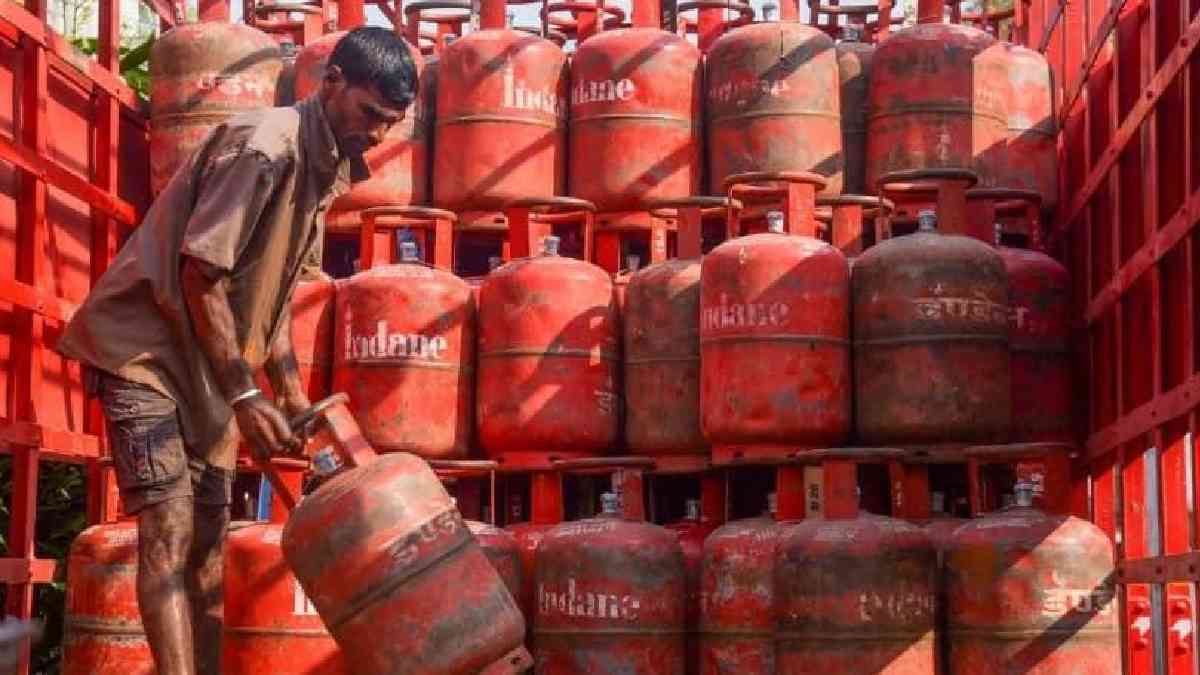
In India, consumers and businesses are facing higher cooking and transportation fuel costs, with the price of 19-kg commercial LPG cylinders going up by Rs 9.50.
The latest change in LPG price came shortly after the government took steps to shore up domestic cooking gas supplies. Last week, authorities set maximum LPG production targets for individual public- and private-sector refineries and upstream companies as part of efforts to create a domestic supply buffer.
And the move is more important at a time when there is constant conflict in West Asia, with India and the rest of the world in danger of losing its imported cooking gas flows.
Commercial LPG Cylinder prices have increased
The Rs 9.50 increase is for 19-kg commercial LPG cylinders which are widely used by restaurants, hotels, food businesses and other commercial establishments.
Commercial LPG prices are reviewed regularly and could influence operating costs for businesses depending heavily on cooking gas. If the fuel price goes up for a longer period of time, there could also be an indirect impact on food and service prices if businesses pass on higher input prices to customers.
The recent revision is just as global energy markets are experiencing turbulence caused by political tension in the Middle East.
Government Moves To Boost Domestic LPG Production
The increase in LPG prices is part of a government plan to increase domestic availability of cooking gas.
The Petroleum and Natural Gas Ministry issued an order on August 13 specifying maximum LPG production levels for 21 refineries and upstream companies.
The combined production potential under the proposed targets is 63,810 tonnes per day. That is more than twice India's domestic LPG output in the financial year ended March 31, 2026, which is equivalent to roughly 70% of the country's daily LPG consumption.
The government intends to develop a stronger domestic supply buffer so as to prepare for potential disruptions to international LPG supplies.
India relies heavily on imports to meet its LPG requirement, making international shipping routes, crude and gas prices and geopolitical developments important factors for the domestic energy market.
Mahanagar Gas Raises CNG, PNG Prices
The impact of higher international gas costs is also being felt in the city gas distribution sector.
Mahanagar Gas Ltd. (MGL) has announced increases in CNG and domestic PNG prices in Mumbai because of the escalation of the West Asia conflict and its impact on input gas prices linked to international indices.
According to the company's statement, CNG prices in Mumbai have increased by Rs 2 per kg to Rs 88 per kg.
The company has also raised the price of domestic PNG by Rs 1 per standard cubic metre (SCM).
The new rates will take effect from September 1
MGL said the revision was necessary because the ongoing Middle East crisis has resulted in a significant increase in input gas prices linked to international benchmarks.
Energy Costs In Focus
The increase shows the impact of geopolitical tensions on India’s energy costs.
International gas prices can affect the cost of imported energy, while disruption of supply routes can add more costs for countries that depend on imports to meet domestic demand.
For households, changes in domestic PNG and other energy prices can increase monthly utility expenses. For commercial establishments, higher LPG prices can directly raise cooking and operating costs.
CNG users in Mumbai will also have to pay more following MGL's latest price revision. The increase could affect running costs for taxis, commercial vehicles and private motorists using CNG.
Why The LPG Supply Buffer Matters
The government’s decision to target production of domestic refiners and upstream companies is aimed at ensuring that domestic producers can contribute more LPG when international supply conditions become challenging.
With the total targeted production capacity of the 21 companies reaching 63,810 tonnes a day, authorities are trying to create additional resilience in the domestic LPG supply chain.
The initiative comes as geopolitical uncertainty continues to impact global energy markets. Any prolonged disruption in major producing or transit regions would have a big impact on international prices and imported fuel availability.
And for India, a good domestic production mechanism and strategic supply buffers can reduce the impact of sudden external shocks.
What consumers and businesses should watch
The recent fuel price changes come at a time when households and businesses are already closely monitoring energy costs. Commercial LPG prices are now increasing in the direction of businesses that use 19-kg cylinders, and the CNG and PNG revisions announced by MGL will have a much more immediate impact on consumers and vehicle users in Mumbai.
The direction of international gas and oil prices, developments in West Asia and the government’s measures to strengthen domestic fuel supplies will be key factors to watch in the coming weeks.
With geopolitical tensions still affecting the global energy markets, further changes in domestic fuel prices will depend on international input costs, supply conditions and subsequent pricing decisions by energy companies.





Comments
Please to leave a comment on this article.