
The excess funds in India now stand at around ₹7.7 lakh crore, the highest level in more than four years. This extra cash is putting a lot of money in the banking system and would have a big effect on short-term interest rates, bank funding costs, and credit growth at the same time.
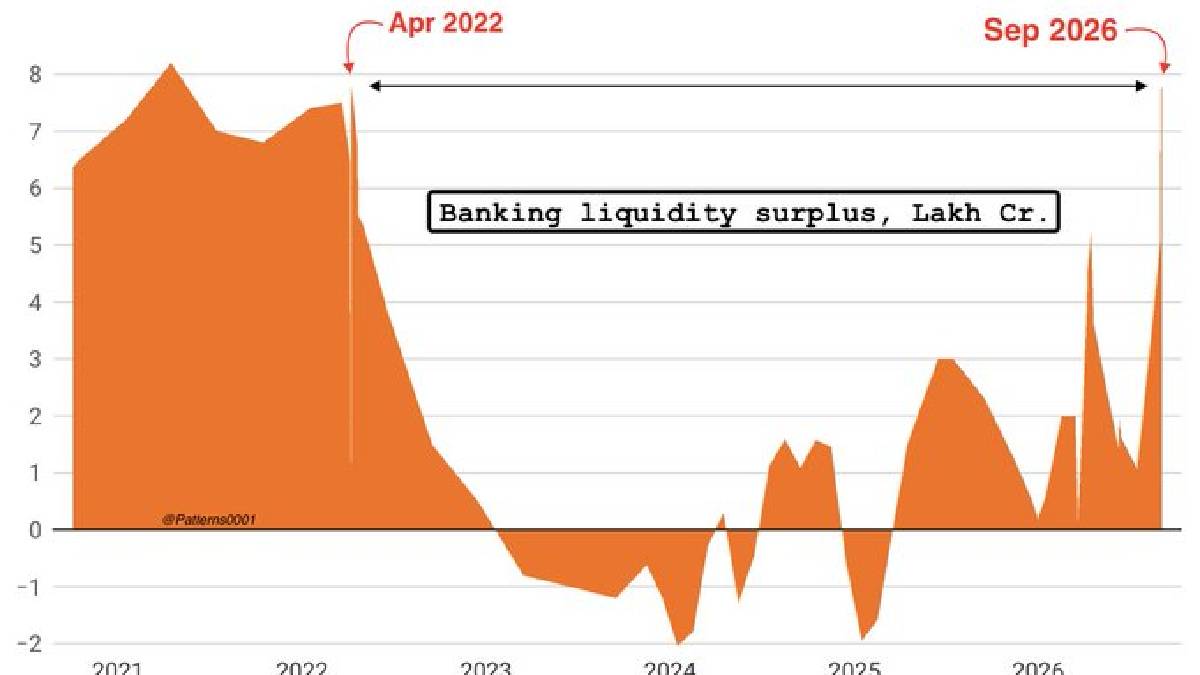
The data also showed that India's banking system liquidity surplus reached around ₹7.7 lakh crore in September with strong foreign-currency inflows driving it. An estimate of the surplus was at ₹7.76 lakh crore as of September 3, showing the scale of liquidity available to lenders.
A key reason behind the sharp increase has been the huge response to the Reserve Bank of India’s foreign-currency mobilisation measures. Indian banks attracted large Foreign Currency Non-Resident (FCNR-B) deposits, bringing a large amount of foreign exchange into the financial system. The special deposit mobilisation programme generated around $127 billion through FCNR(B) deposits, far beyond expectations.
The additional foreign-currency inflows have strengthened India’s external liquidity position while creating more rupee liquidity in the domestic banking system. India’s foreign exchange reserves reached a record high of around $729.33 billion as of August 21, according to Reuters.
Such abundant liquidity can cut the need for banks to spend so much of their funds on expensive sources of funding (such as certificates of deposit and other short-term market instruments) in the short term. The surplus liquidity has already helped to lower short-term funding costs and could be a boon for banks’ net interest margins, Financial Express said.
The effect is also visible in money market rates. The weighted average call rate has fallen below the RBI’s repo rate due to the huge surplus and the availability of funds in the banking system.
But an unusually large liquidity surplus also presents a challenge for the RBI. Excess money in the financial system can push short-term interest rates lower than the central bank may want, potentially complicating monetary-policy transmission and liquidity management.
The RBI has therefore been using such instruments as variable rate reverse repo (VRRR) auctions to absorb excess funds from banks. VRRR auctions have recently attracted a huge amount of bids as the central bank steps up efforts to deal with the liquidity surplus.
The central bank could continue to use liquidity-absorption tools as the situation evolves. And market participants will also watch for Treasury-bill operations, forex-related instruments, and other measures to help avoid the surplus becoming excessively persistent.
In the case of borrowers, abundant banking liquidity could potentially foster greater competition among lenders. If banks are comfortable with their funding, there could be a bit more room to lend, but credit growth will be contingent on loan demand, risk appetite, and broader economic conditions.
Such a scenario will also be a different one for depositors and investors. Lower short-term funding rates can influence deposit pricing and returns on fixed-income instruments over time.
The liquidity surge also comes against a backdrop of more global financial market uncertainty, with oil prices, US Treasury yields, and currency markets surging. As external pressures increase, the RBI is actively managing the rupee and foreign-exchange liquidity.
The liquidity surplus of ₹7.7 lakh crore in the system as a whole is a change in the banking system in India. The additional money will give banks a greater pool of funding and may support lending, but managing such a large surplus will continue to be a key task for the RBI.
The next months will show if the excess liquidity gradually normalises or remains elevated, and how banks convert the money into credit while the central bank balances liquidity management with its broader monetary-policy objectives.





Comments
Please to leave a comment on this article.