
The new cryptocurrency regulation is to take effect on September 1, 2026 in Russia, marking a seismic shift in the way digital currencies are treated. Under the new regulation, “On Digital Currencies and Digital Rights,” cryptocurrency trading, investor access and cross-border transactions will be regulated in a formal manner but bitcoin will still not be accepted as a regular payment method at home.
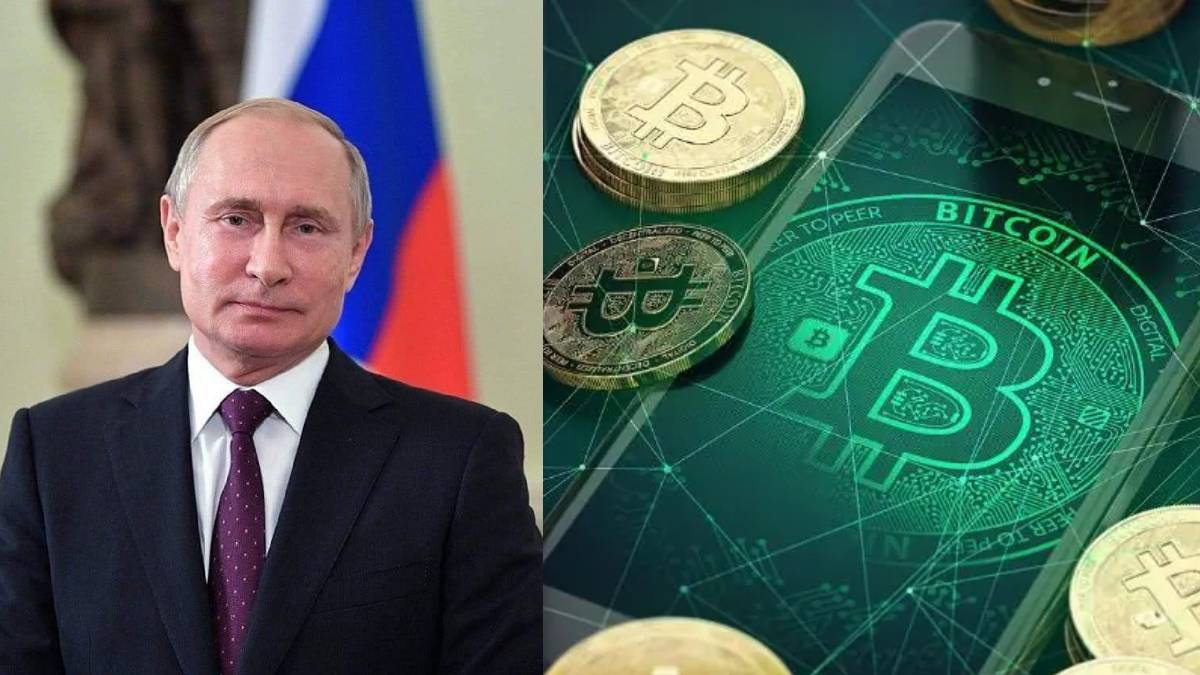
The new framework also introduces a tier system for cryptocurrency investors. For ordinary, but non-qualified, retail investors, annual purchases of approved cryptocurrencies are capped at 300,000 Russian rubles through each intermediary, which is roughly $3,600-3,700 at current exchange rates. Investors must also pass a suitability or knowledge test before getting into the market.
The restrictions for qualified investors are much lighter. They can trade cryptocurrency without the retail purchase cap, subject to all regulatory and testing requirements. The two-tier system is meant to offer experienced investors more access to the market but, at the same time, to limit the exposure of the average investor to the volatility of digital assets.
Bitcoin, Ethereum and USDT Lead the Approved List
One of the most important developments is that we have now discovered the cryptocurrencies that ordinary Russian investors can buy from regulated channels. Bitcoin (BTC), Ethereum (ETH) and Tether's USDT are approved by the Russian government for regulated public trading. The criteria were liquidity, trading activity, and historical market data.
That means retail investors will initially have a much narrower choice than players in many other global cryptocurrency markets. The approach is consistent with the Russian central bank's focus on limiting retail exposure to less-liquid and possibly more volatile digital assets.
Stronger Bank of Russia oversight
The new system also puts cryptocurrency market infrastructure under tighter regulatory supervision. Crypto-related exchange activity is now regulated by the Bank of Russia, and regulated intermediaries are at the heart of retail access.
The legislation would replace the fragmented regulatory environment with more in-depth rules of circulation and trading of digital currencies. The framework also sets a framework for market players and digital-asset infrastructure providers.
Cross-border Crypto transactions get a large opening.
Another important aspect of cryptocurrency in international commerce is the treatment of cryptocurrency in international trade. Russian companies can use digital currencies to settle cross-border trade and establish the regulatory framework for crypto-based international trading.
This is particularly significant because Russia is still exploring alternative financial channels for international commerce in the face of restrictions on access to parts of the global financial system. But this should not be taken as Russia accepting cryptocurrency for everyday domestic use.
And although the ban on using cryptocurrency as payment for everyday goods and services in Russia is still in place.
P2P Transactions Face Greater Scrutiny
The peer-to-peer cryptocurrency activity will also be monitored more closely. P2P transactions have not disappeared but we expect that financial institutions will put stronger controls in place for anti-money laundering and will monitor transactions related to cryptocurrency activities.
Greater bank monitoring might raise questions of unusual transaction patterns, particularly where crypto-related transfers raise questions about the source or destination of funds.
A new era for Russia’s Crypto Market
The September 1 launch marks a major milestone for Russia’s digital asset industry. Moscow has not taken a stance on cryptocurrency entirely (and not even completely banned it) but it is a controlled model that keeps regulated investment and cross-border transactions separate from everyday domestic payments.
For retail investors, the system means limited access to BTC, ETH and USDT, a 300,000-ruble annual purchase ceiling through each intermediary and mandatory testing. Qualified investors are much more flexible, while exchanges and market infrastructure get more regulatory scrutiny.
The result is a distinctly Russian approach to cryptocurrency regulation: digital assets are being brought into a formal financial framework, but with strict supervision and with clear limits on their role in the domestic economy.
As the new rules come into effect on September 1, how Russia will balance investor protection, financial oversight and the use of digital currencies in international trade will be demonstrated in the coming months.





Comments
Please to leave a comment on this article.