
The Reserve Bank of India (RBI) has kept the repo rate at 5.25% and the policy rate unchanged in line with market expectations after the Monetary Policy Committee (MPC) of Governor Sanjay Malhotra held its first meeting on Friday. The six-member committee voted unanimously to hold the policy rate and to keep it neutral as the global situation is becoming more uncertain.
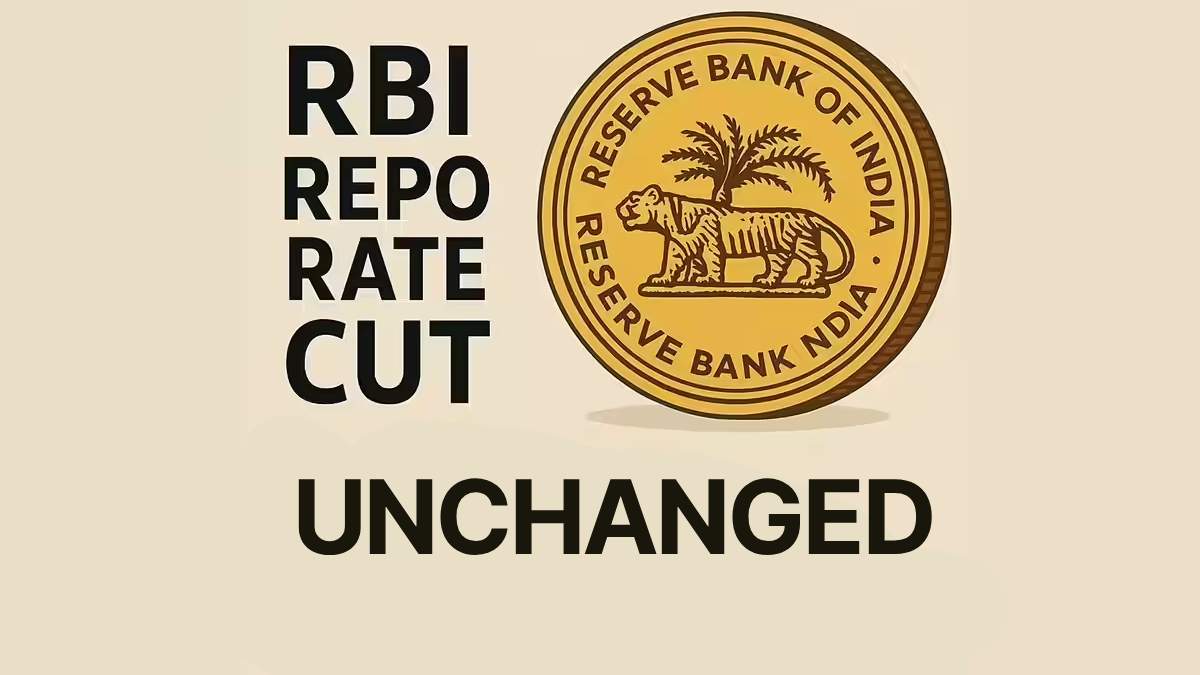
The decision is in line with inflation in the RBI's tolerance regime at 2% to 6% but rising fuel costs and geopolitical tensions have been adding to inflation. The central bank will be closely watching the domestic and global economy before making changes to interest rates, it said.
Why did the RBI keep the repo rate unchanged?
The MPC opted to maintain the status quo in order to maintain price stability of the economy and to maintain growth. Although inflation has been relatively benign, global uncertainties - such as volatile crude oil prices and geopolitical events - have led the RBI to take a wait-and-watch approach.

A neutral stance enables the central bank to raise or lower interest rates in future meetings according to inflation, growth, and external events.
What does this mean for Borrowers?
Borrowers could say the RBI's decision is continuity rather than relief.
Home loan EMIs linked to the repo rate are likely to remain unchanged. Car, personal, and business loans will also stay stable in the near term. Existing floating-rate borrowers are unlikely to see any immediate changes in monthly repayments.
Bankers can still review lending rates according to liquidity and funding costs, but little will change in the very short term based on RBI's new policy.
Impact on Fixed Deposits
For depositors, the unchanged repo rate suggests that fixed deposit (FD) interest rates are also likely to remain broadly stable for now. Banks may also change their deposit rates according to liquidity requirements, but analysts do not expect significant changes immediately after the policy announcement.
The markets have a focus on RBI's outlook.
Apart from the rate decision, investors are closely watching the RBI's outlook on:
Inflation path. GDP growth prospects. Crude oil prices. Global economic conditions. Rupee movements and liquidity.
These will be very important in the direction of future monetary policy.
What is the repo rate?
The repo rate is the interest rate at which the RBI lends short-term funds to commercial banks.
A lower repo rate generally reduces borrowing costs and encourages spending and investment, while a higher repo rate helps control inflation by making loans more expensive.
Outlook
Inflation remains benign but global risks persist; the RBI was less inclined to implement the rate hike to respond with a quick response and policy changes.
Economists think future MPC decisions will be influenced by the inflation environment, economic growth, global commodity prices, and financial markets over the next few months. Interest rates will remain stable, so for now, borrowers, businesses, and investors can expect to see interest rates remain in check, while the RBI is at work on the economy.






Comments
Please to leave a comment on this article.