
The RBI is preparing plastic-based ₹10 and ₹20 banknotes as part of its efforts to make currency products more durable and cost-effective. But the central bank insists the move does not signal the end of paper currency. The current paper notes will be circulated alongside the new polymer notes in the pilot phase.
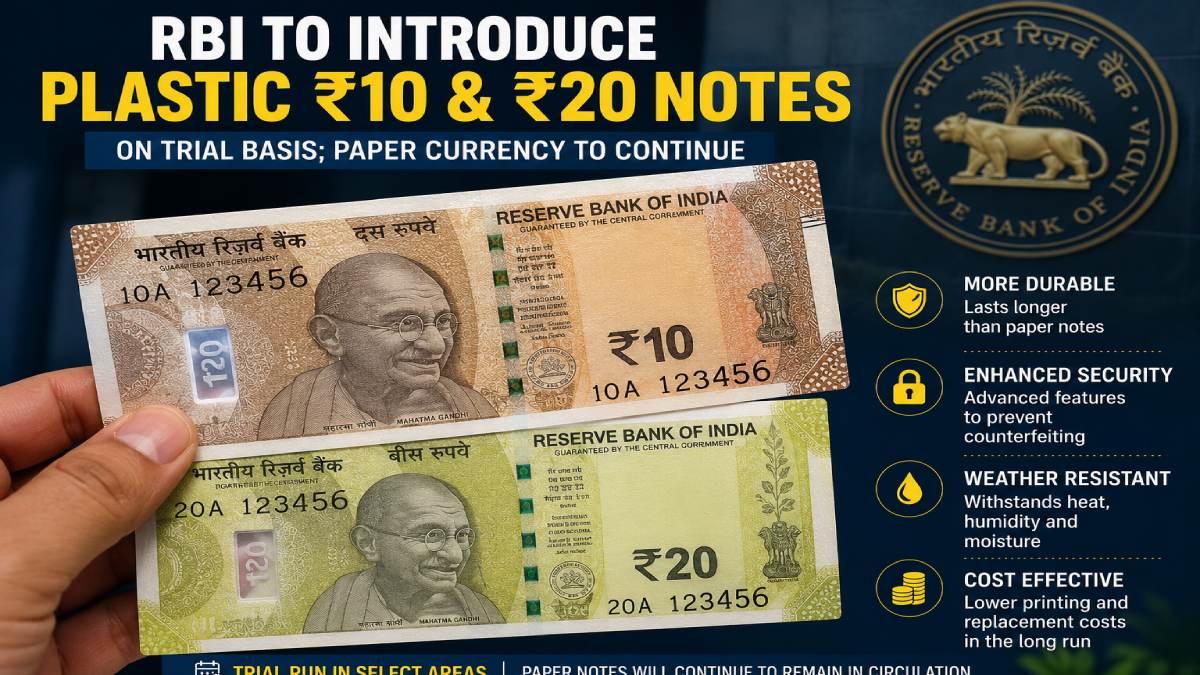
The plastic banknotes proposed are designed to test their performance for Indian use. Polymer notes with a special type of plastic substrate are already being used successfully in a number of countries, such as Australia, Canada, New Zealand, Singapore, and the United Kingdom.
The RBI is likely to launch polymer ₹10 and ₹20 notes in selected regions initially, according to officials who are familiar with the initiative. The pilot project will give them an idea of how the notes can withstand India’s climate in different situations of extreme heat and humidity as well as heavy rainfall and dust, and will help make sure polymer notes can be circulated in general in the future.
One of the advantages of polymer currency is that it has a longer life than paper notes. Traditional banknotes are often torn, dirty, and damaged after use and, in particular, lower denomination banknotes are traded constantly. Polymer notes are more resistant to wear and tear and therefore can last far longer in circulation. Central bank printing costs can be lower.
The other big benefit of plastic currency is security. Polymer banknotes can have sophisticated anti-counterfeiting features, transparent windows, holographic features, and intricate designs that are hard to copy.
As polymer banknotes have been investigated in the past, the RBI has considered polymer banknotes in the past. Some studies and discussions have been done regarding their feasibility and cost-effectiveness for years. With the current state of currency printing technology and successful implementation in various countries, the central bank is now ready to try polymer banknotes out in practice in the real world and get a real-world case study of real solutions in order to get real lessons from it to make any policy decisions.
Despite the excitement of the move, the RBI has said that paper currency is not to be eliminated; it will not be replaced. The polymer notes are for testing, and there is no intention to withdraw the current ₹500 and ₹1000 notes from circulation. The public can use the legal tender banknotes as usual without any worry about their validity.
Financial experts believe the trial could offer valuable data on polymer notes, as it is a huge population and a country with a huge amount of cash transactions. Digital payments have become a big part of the Indian economy recently, especially in rural areas and small businesses. So it is the purpose of the policymaking that guarantees that banknotes are durable, safe, secure, and cost-effective.
The success of the pilot program might allow for polymer notes in other denominations as well. But it would depend on the success of the trial, public acceptance, operational efficiency, durability, and overall cost.
For now, citizens can expect the new plastic ₹10 and ₹20 notes to appear in selected regions as part of the RBI’s experimental rollout. And this is one more step in the reform of India’s currency system while maintaining the old paper currency system.





Comments
Please to leave a comment on this article.