
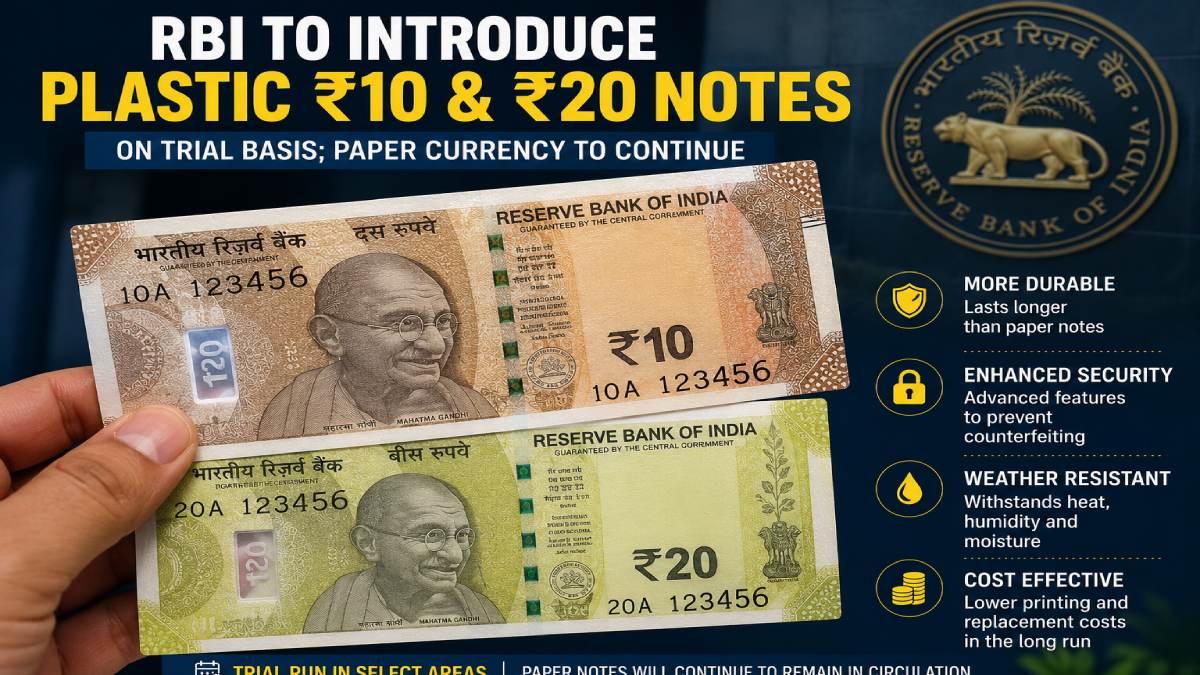
India is on the verge of a major step forward in its currency system and the RBI plans to introduce plastic (polymer) currency notes in the first half of the next financial year if successful field trials are conducted. The launch, by RBI Governor Sanjay Malhotra, is subject to continuous evaluation, he said.
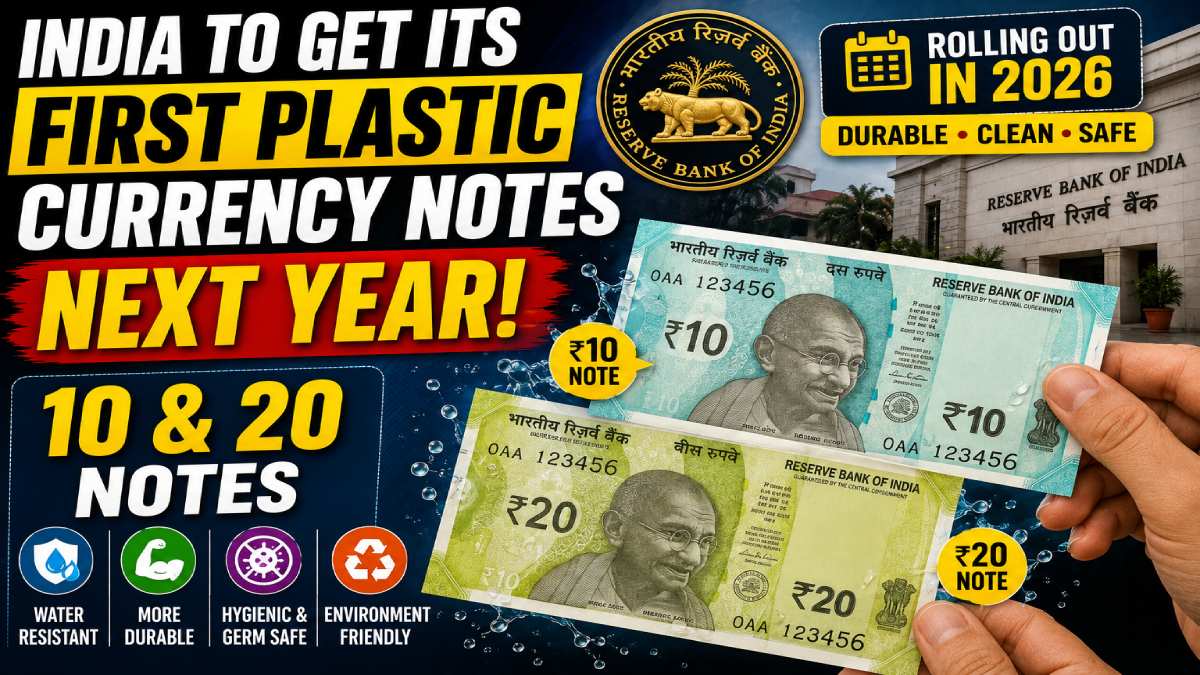
The move has revived a long-discussed call to replace some paper banknotes with polymer notes which have already been adopted by Australia, Canada, the United Kingdom, and Singapore.
What are polymer notes?
Polymer notes are made from plastic rather than cotton-based paper. They last much longer and are protected with new security features that help in counterfeiting less.
The RBI has started preparation for a pilot project by inviting global suppliers to provide polymer substrate for testing before any wider rollout is considered.
Why did RBI introduce plastic notes?
At the RBI, polymer notes offer several advantages over paper currency:
Longer lifespan: Polymer notes have a longer lifespan than paper notes and so are much more cost-effective to replace. They are water and tear resistant: they can handle moisture, dirt, and frequent handling better than paper notes. Cleaner currency: polymer notes are less susceptible to dirt and they are in better condition during circulation. Lower long-term printing costs: while polymer can be more expensive to manufacture, the longer-term life of polymer notes helps reduce replacement costs.
Which Notes Will be Introduced First?
According to media reports, the pilot project will start with ₹10 and ₹20 denomination notes, which are the ones with the highest circulation and wear since they are widely used by common people. The RBI has not yet officially confirmed the denominations for the pilot.
Will Paper Notes be Withdrawn?
No. The RBI added that the introduction of polymer notes does not mean existing paper currency will become invalid. Paper and polymer notes are anticipated to circulate together over the course of this transition and paper notes will be phased out gradually with their wear.
What would happen after that?
The central bank will first evaluate the performance of polymer notes under Indian climatic and usage conditions. Based on the results of the pilot, the RBI will decide whether to expand polymer currency to additional denominations and larger circulation.
The introduction of India’s first polymer currency notes is a step in the right direction towards making India’s cash system more modern. Plastic notes could have higher durability and anti-counterfeiting properties, lower long-term maintenance costs, and also would be able to be accepted as conventional currency in the long run.





Comments
Please to leave a comment on this article.