
Infosys co-founder and technology visionary Nandan Nilekani has said that the future of employment in India is likely to be driven by millions of small businesses while large corporations could emerge as net job losers as artificial intelligence (AI) and automation reshape the workplace.
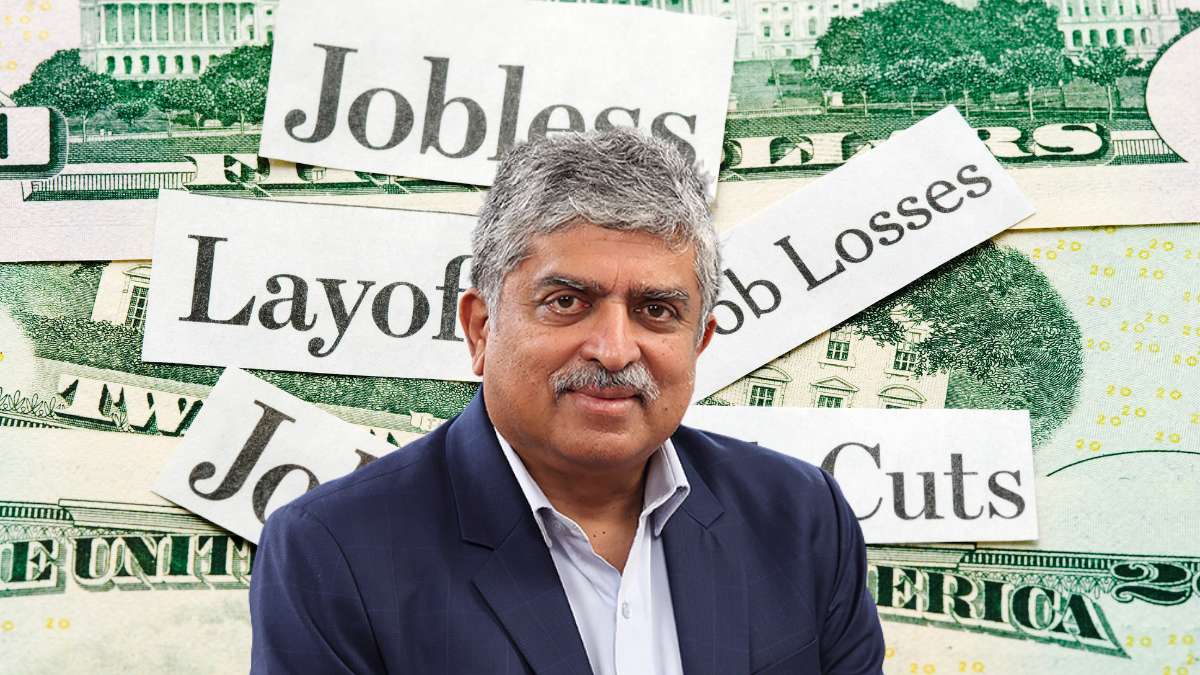
Nilekani said that rapid advancements in AI have changed the economics of business. Large companies with a well-established approach to routine work and a lot of repetitive processes will start to embrace AI-driven automation at a much faster rate, which in turn would lower the need for large workforces.
Nilekani said India’s long-term economic strength is not based on the size of big businesses but on the wide variety of micro, small, and medium enterprises (MSMEs). These businesses—in manufacturing, retail, services, agriculture, and digital entrepreneurship—will be more resilient to AI-driven disruption because they are reliant on local knowledge, customer relationships, and scalable business models.
He also stated that India’s entrepreneurial ecosystem has the potential to create employment at scale because millions of small businesses can thrive using digital technology, access to finance, and better market connectivity.

Artificial intelligence is already transforming various industries worldwide and automating tasks while improving productivity. This technological change will not only create new jobs in AI development, data science, cybersecurity, robotics, and digital services but will also reduce jobs in traditional roles—particularly in large businesses.
Nilekani believes that instead of viewing AI solely as a threat to jobs, policymakers and businesses should contribute to creating entrepreneurship, innovation, and workforce reskilling. Digital infrastructure, simplified regulations, access to credit, and skill development could be helpful for small businesses and could therefore also boost India's employment landscape.
India's MSME sector already plays a key part in the economy and has a significant impact on GDP, exports, and employment. With digital platforms, e-commerce, fintech, and artificial intelligence becoming more accessible to small businesses, we expect productivity growth and market access to be better achieved without replacing human labor on a large scale.
Industry experts have been emphasizing the need for continuous upskilling as AI changes the nature of work. Digital, technical, and problem-solving skills will give workers better knowledge about changing job requirements in the coming few years.
Nilekani’s comments confirm the growing view that India’s future employment growth may be less about growing payrolls at large companies and more about enabling entrepreneurs and small businesses to create sustainable jobs. By marrying technology adoption with entrepreneurship and skill development, India has the chance to build a more inclusive and resilient economy in the AI era.







Comments
Please to leave a comment on this article.