
Elon Musk has once again caused a new debate about the future of work in how to make money in the future of human work as he says fast advances in artificial intelligence (AI) could transform the way people earn a living. The old model of exchanging time for a salary may soon become a more difficult one with AI systems being able to automate more and more tasks, according to Elon Musk, as AI systems are going to automate a huge number of tasks.
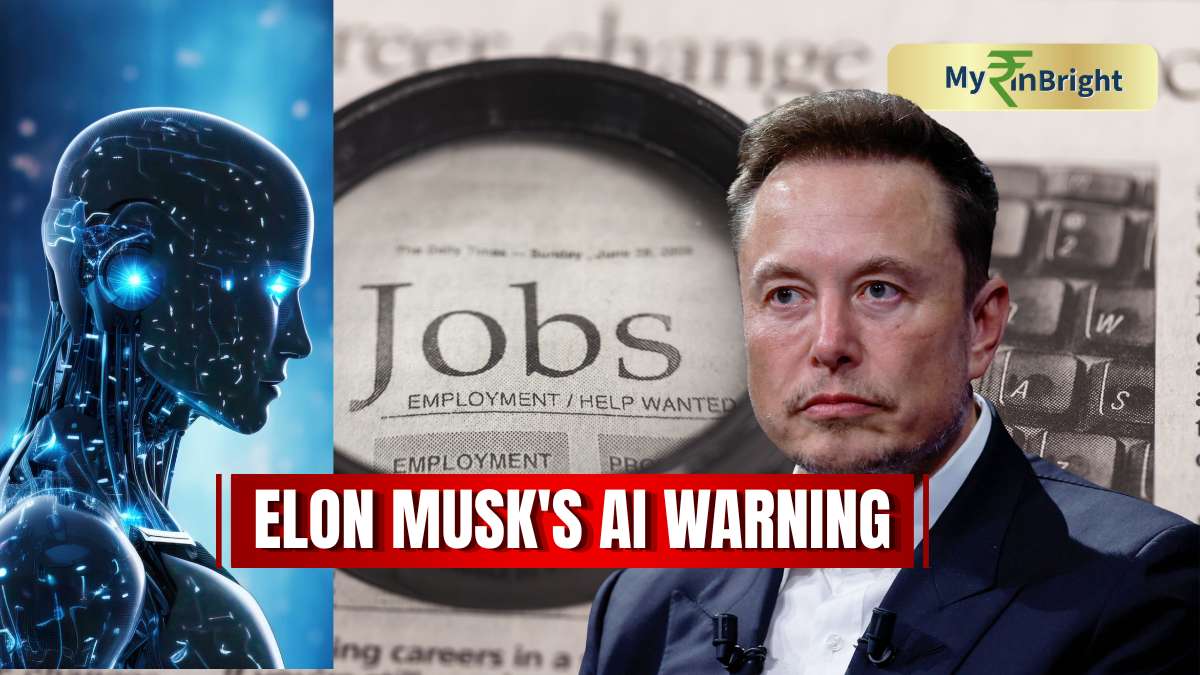
Musk thinks the next three years could be a critical time for workers and businesses in the near future as AI capabilities continue to expand. He thinks most routine and knowledge-based jobs will be done better and more efficiently by machines, which will reduce the need for human labor in some industries—there will be less time for humans to do these jobs that are so much more accurate in future human labor-intensive work.
For nearly two centuries, the dominant economic model has been simple: people sell their time and skills for wages. Musk believes this approach could eventually give way to an economy in which ownership of valuable assets is much more important than just earning a salary.
From this point of view, people may benefit from building assets that AI cannot replicate or replace. Investments in businesses, infrastructure, intellectual property, energy projects, land, digital networks, and even digital assets like cryptocurrencies, for example, are widely cited in discussions about the future economy. And ownership can still create value even as automation changes the labor market.

Musk has frequently referred to AI and its potential to be transformative in many ways as one of the most powerful technologies ever created. He has praised AI’s potential to accelerate innovation and productivity, but he has warned governments, businesses, and society that they should expect massive changes in employment and economic structures.
While many economists agree that AI will automate some tasks, they also note that technological revolutions historically created new industries and job opportunities alongside disruption. Even as AI becomes more capable, roles requiring creativity, emotional intelligence, leadership, complex decision-making, and human interaction are expected to be key.
Experts are cautioning against looking at the future as a replacement of humans by machines. They see AI transforming work, and they expect far more people to use it to do what they do as a result, and not just for the time being that we won’t change things completely but for the better.
The more general perspective is that changing market conditions require adaptation. It has come to be widely accepted that continuous learning, new skills development, diversification of income sources, and investing to keep up with the times are all realistic ways to navigate an AI-driven economy.
How realistic and accurate is Musk’s three-year timeline? His comments have reignited debate on automation, wealth creation, and the future of work. AI technology is rapidly evolving, and businesses, policymakers, and people alike will have to be ready to navigate an economic landscape that is likely to be drastically different in the next decade.









Comments
Please to leave a comment on this article.