
IBM had one of the biggest single-day declines in its history on July 15, 2026, after the technology giant’s preliminary second-quarter financial results fell short of Wall Street’s expectations. The company’s shares fell by more than 25% and wiped out billions of dollars in market value and set off a tech sell-off across the board.
The news came one day after IBM reported that second-quarter revenue was expected to be about $17.2 billion and adjusted earnings of $2.93 per share, both below analysts’ expectations. Market expectations for revenue of about $17.86 billion and adjusted earnings of about $3.01–$3.02 per share were expected, so the early results were not as good as expected.
IBM management said the weak performance reflected a shift in customer spending priorities. Most enterprise clients had shifted their technology budgets to servers, storage systems and AI memory infrastructure to the company’s software and infrastructure, and so demand for IBM’s software and infrastructure was slower than expected, said CEO Arvind Krishna. Several large business deals didn’t close on time during the quarter, which IBM said was no surprise.
The company’s infrastructure business suffered particularly and revenue would be down around 7 percent and software growth was not in line with market expectations. IBM, which is still investing heavily in artificial intelligence using its Watsonx platform and hybrid cloud, but the results are in line with its optimism that such spending has not yet translated into the financial growth that investors expected, it said.
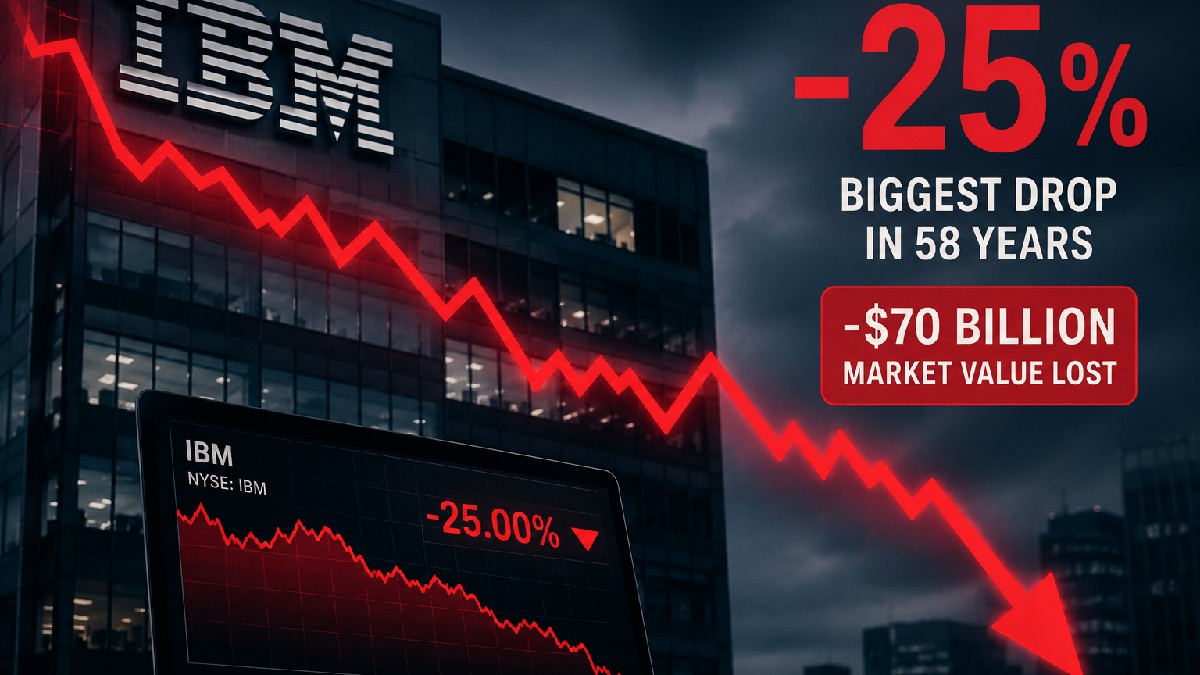
The disappointment had immediate impact on global technology stocks. Shares of several of the world's biggest software companies— Microsoft, Salesforce, ServiceNow, etc— also came under pressure as investors became concerned about the spending trends of enterprise IT companies globally. And as the business world’s AI infrastructure is becoming more important than software spending, it is creating new challenges for established enterprise technology companies.
In a letter to shareholders, Arvind Krishna admitted that IBM had not reacted fast enough to changing market conditions. The company underestimated the extent of its customers’ spending changes and described the quarter as one where execution fell short of expectations. But IBM kept doing what it was doing in artificial intelligence, hybrid cloud computing and enterprise digital transformation.
Despite the historic decline, many analysts believe that IBM is still an important player in enterprise technology. The company continues to generate billions of dollars in annual revenue and has strong positions in software, consulting, cybersecurity, cloud services and mainframe computing. But investors are now looking for stronger proof that IBM’s AI strategy can generate more revenue in a technology that is becoming more and more competitive.
The big sell-off is a sign of how sensitive today’s stock market is to earnings surprises. Artificial intelligence is changing the way we spend money on technology; companies need to show not only innovation but also consistent financial performance. IBM’s next official quarterly earnings report and future guidance will be closely watched by investors who want to know that the company’s long-term transformation is on track.






Comments
Please to leave a comment on this article.