
AI has become one of the most influential technologies of all industries and the financial sector is no exception. AI is also helping investors, traders, and financial institutions to analyze vast amounts of market data in stock market trading, find trading opportunities, manage risk, and automate investment strategies.
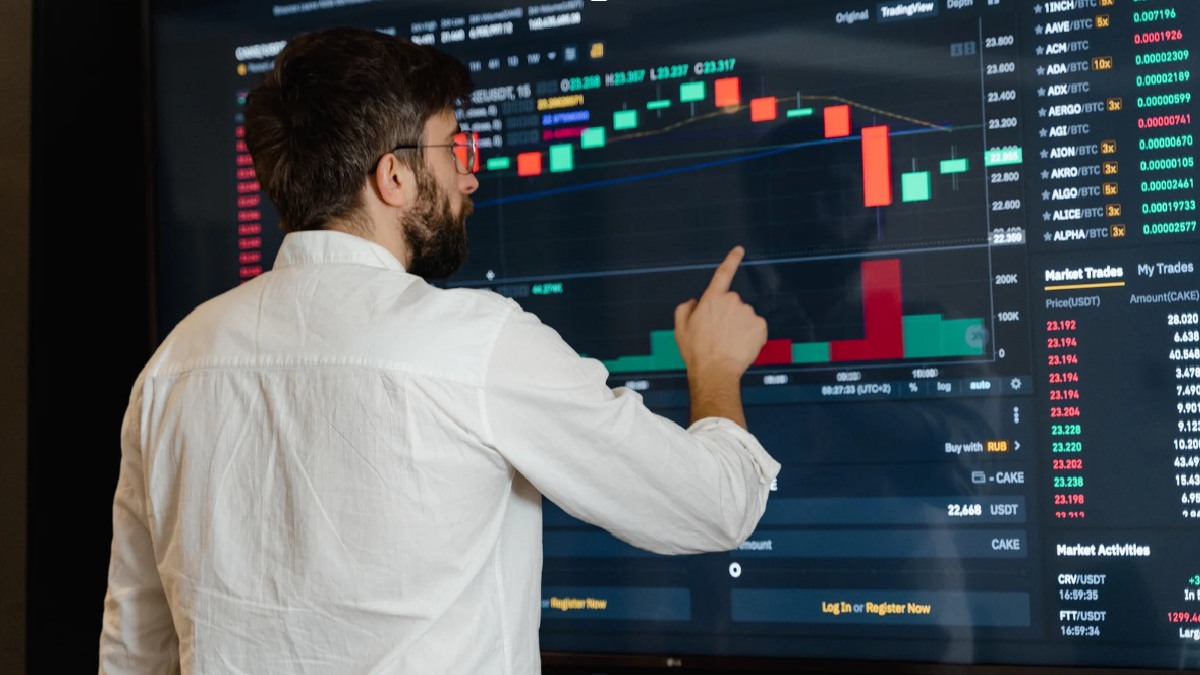
AI is transforming how financial markets work; from algorithmic trading to predictive analytics. And while AI is quick and data analysis is a gamechanger, it comes with its flaws (for investors) and a lot of risks that I think investors should be aware of before using AI based tools.
What is AI in stock market trading
AI in stock market trading: Machine learning, natural language processing (NLP), and predictive analytics are used to research and make the market decisions.
Unlike traditional trading models which follow fixed rules, AI models can find patterns, adapt to market conditions, and continuously improve on data driven approaches and make better decisions based on new information. Some AI systems offer insights to human investors and others can make trades automatically with the help of a predefined strategy.

How AI is used in stock market trading
1. Algorithmic Trading
Algorithmic trading relies on computer programs to automatically trade based on market conditions such as price movements, trading volume, or market trends.
AI enhances these systems to learn from the historical and real-time market data and adjust the strategies to the market changes.
2. Predictive Market Analysis
AI can analyze large datasets:
- Historical stock prices
- Trading volumes
- Economic indicators
- Company financial reports
- Market sentiment
- Industry trends
With the help of patterns in these datasets, AI can analyze them to predict the potential movement in the markets. However, the predictions are probabilistic rather than guaranteed.
3. Sentiment Analysis
Financial markets are also affected by news, earnings announcements, and investor sentiment.
Using Natural Language Processing (NLP), AI can evaluate information from:
- Financial news
- Company press releases
- Regulatory filings
- Social media discussions
- Analyst reports
This helps traders to gauge market sentiment, but online discussions may not be indicative of the overall market mood.
4. Portfolio Management
Many investment platforms use AI to recommend diversified portfolios based on the goals of the investor, time horizon, and risk tolerance.
AI-assisted portfolio management can help with:
- Asset allocation
- Portfolio rebalancing
- Risk assessment
- Performance monitoring
Human oversight is an important aspect, especially in times of unusual market volatility.
5.Fraud Detection and Market Surveillance
Financial institutions also employ AI to monitor transactions for suspicious activity and detect unusual trading patterns that may indicate fraud or market manipulation.
Benefits of AI in stock market trading
faster data processing
AI can analyze vast amounts of financial information much faster than humans and respond therefore faster to market changes.
Reduced Emotional Bias
Human emotions such as fear and greed can affect investment decisions. AI systems follow predefined strategies consistently without emotional reactions.
Improved Efficiency
AI automates repetitive tasks like market scanning, technical analysis, and trade execution, allowing traders to focus on strategy and risk management.
Enhanced Risk Management
AI tools can help monitor market conditions, make accurate forecasts of portfolio exposure, and support more informed risk management decisions.
Continuous Market Monitoring
AI systems can monitor markets at all times and alert investors to significant developments, unlike human traders.
Challenges and Risks
Despite its advantages,AI is not infallible.
Market Uncertainty
The financial markets are affected by unexpected events such as geopolitical developments, regulatory changes, economic shocks, and natural disasters. These events can lead to lower accuracy of AI driven forecasts.
Data Quality
AI models depend heavily on the quality and completeness of the data they receive. Inaccurate, outdated, or biased data can produce unreliable outputs.
Overfitting
Some AI models may be too closely tuned to historical data and therefore are less effective when market conditions change.
Lack of Transparency
Some advanced AI models can be difficult to interpret, making it difficult to understand why a particular recommendation or trade was generated.
Regulatory Considerations
Financial regulators will monitor the increasing use of AI in trading, and firms and investors should ensure compliance with applicable securities laws, market regulations, and data privacy requirements.
AI for Retail Investors
AI-enabled investment tools are increasingly available to individual investors through online brokerages and financial technology platforms. These tools may provide features such as:
- Market insights
- Stock screening
- Portfolio recommendations
- Automated investing
- Risk analysis
- Educational resources
While these features can facilitate decision-making, investors should do their own research and understand the risks associated with any investment.
Best practices for using AI in trading
To use AI responsibly:
- Treat AI-generated insights as decision-support tools rather than guarantees
- Diversify investments instead of relying on a single strategy or asset
- Monitor portfolios regularly and adjust when appropriate
- Understand the costs and limitations of AI-powered platforms
- Consult a qualified financial professional if you need personalized investment advice
The future of AI in stock market trading
AI is expected to play a larger role in financial markets. Advances in machine learning, cloud computing, and data analytics will lead to more advanced tools for market analysis, portfolio optimization, and risk assessment.
But successful investing will probably continue to involve technology and human judgment. Experience, sound financial planning, and disciplined risk management are essential regardless of what kind of tools are used.
Artificial Intelligence is transforming stock market trading by enabling faster analysis, automated execution, improved portfolio management, and enhanced risk assessment. These technologies can help investors process complex information more efficiently and identify potential opportunities.
At the same time, AI cannot eliminate market risk or accurately predict every price movement. Market movements are not random, and no trading strategy is guaranteed to turn a profit. Investors who combine AI based analysis with independent research, diversification, and sound risk management are generally better positioned to make wise investment decisions in today’s fast paced financial landscape.







Comments
Please to leave a comment on this article.