
Shares of many Tata group companies came under pressure after N Chandrasekaran announced that he would step down as the chairman of Tata Sons at the end of his current term. The sell-off wiped tens of thousands of crores from the total value of listed Tata group companies as investors worried about the company’s leadership succession process.
The market reaction was broad-based with Tata Consultancy Services (TCS) among the biggest losers. And TCS shares fell almost 4% in morning trading while Tata Motors fell around 2.5%. Other major Tata companies, like Titan Company and Tata Steel, were falling around 2%. At one stage, the total market-value loss of Tata Group stocks was around ₹44,000 crore; but market moves pushed this to about ₹46,000 crore.
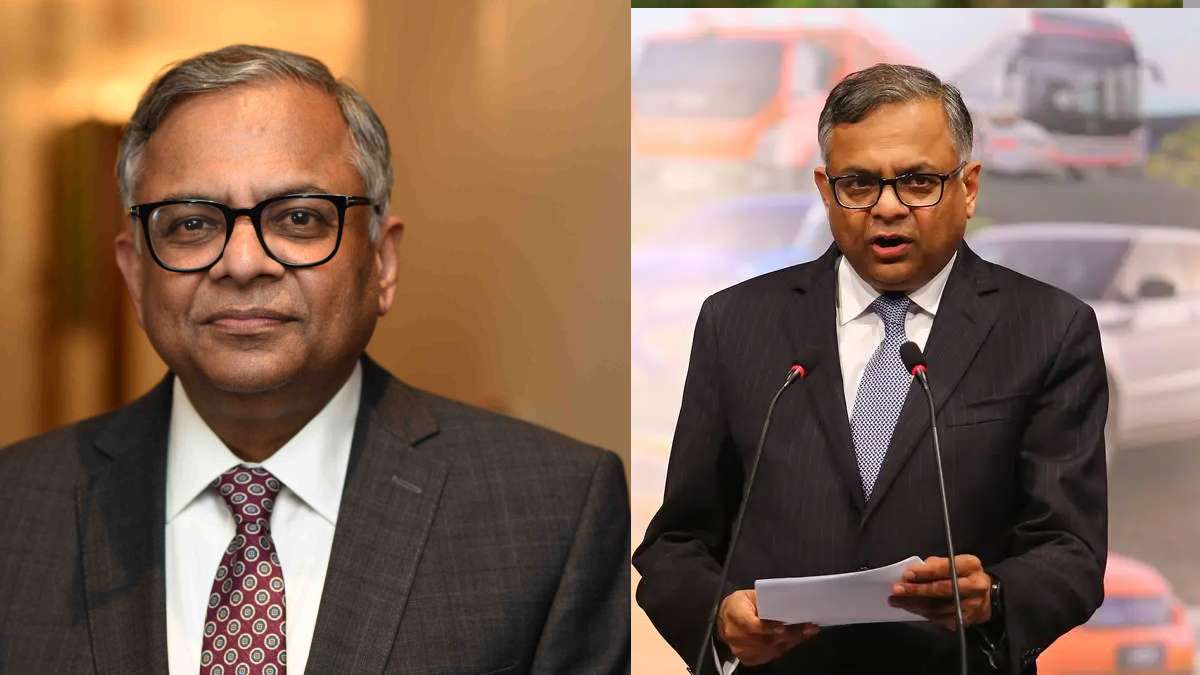
Chandrasekaran's immediate reaction underlines the critical role Chandrasekaran played in the company’s corporate strategy. He became chairman of Tata Sons in 2017 after having been Chief Executive of TCS in the past years of his career. Tata Group has aggressively expanded into new business lines including aviation, semiconductors, electronics, batteries and digital companies and is still doing big business in IT, automobiles, steel and consumer goods.
Chandrasekaran's announcement comes after months of uncertainty over whether he would remain chairman of Tata Sons. He said he would not be looking for re-election past February 20, 2027. He has asked the Tata Sons board to begin the process of finding his successor, so the group is in crisis.
The news also comes at a time when Tata Sons and Tata Trusts, which owns about 66% of Tata Sons, are at odds at board meetings and strategic direction at some of the group’s newer businesses. The uncertainty of Chandrasekaran’s reappointment had been one of the top corporate governance problems for Tata Sons before its August 18 AGM.
In the eyes of investors, what does the leadership change mean for the group’s capital allocation strategy, investment plans and execution of major projects? But the fall in the listed Tata stocks doesn’t necessarily mean that the underlying businesses are suddenly doomed. The market reaction most definitely is driven by uncertainty about leadership and future plans.
Investors have also pointed out the extent of Chandrasekaran’s contribution to the company. From his 2017-2026 tenure, Tata Group’s overall market capitalisation increased more than threefold, according to market expert Deven Choksey.
The next few months will therefore be closely watched for Tata Sons as it works on succession planning. Obviously, until a successor is identified and the group’s strategic direction becomes clear, Tata Group stock will be highly sensitive to leadership-related developments.






Comments
Please to leave a comment on this article.