
In a significant ruling reinforcing the rights of senior citizens, the Bombay High Court has held that parents who gift property to their children on the condition that they will be looked after in their old age have the legal right to reclaim the property if that condition is not fulfilled. The court further clarified that this protection applies even if the parents are financially independent, emphasizing that the obligation to care for parents goes beyond financial support.
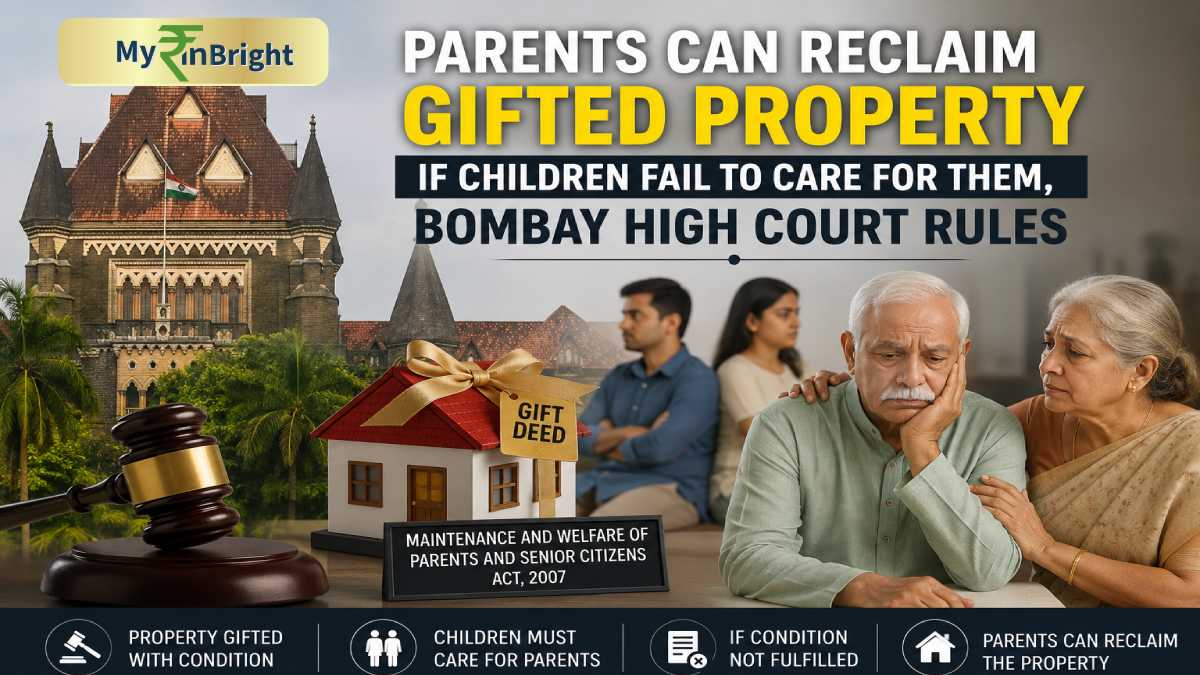
The judgment is based on the Maintenance and Welfare of Parents and Senior Citizens Act, 2007, a law enacted to safeguard the interests of elderly citizens and ensure that they receive proper care and maintenance from their children or legal heirs. The Act also empowers authorities to cancel property transfers made by senior citizens if the recipient fails to fulfill the agreed responsibility of providing care.
The High Court observed that when a property is transferred as a gift with the expectation that the children will provide care, support, and emotional well-being to their parents, the transfer is conditional in nature. If the children neglect or refuse to fulfill these responsibilities, the parents have the legal right to seek cancellation of the gift deed and reclaim ownership of the property.
Importantly, the court clarified that financial independence does not take away a parent's legal protection under the Act. Even if elderly parents have sufficient income, pensions, or savings to support themselves, they are still entitled to love, care, dignity, and emotional support from their children. The court stressed that the legislation is intended to protect the overall welfare of senior citizens, not merely their financial security.

Legal experts believe the ruling strengthens the rights of elderly parents who often transfer their homes or other assets to their children out of trust, expecting care and companionship in return. In some cases, parents have alleged neglect, abandonment, or mistreatment after gifting valuable property, leaving them with limited legal options. The latest judgment reinforces that such transfers can be challenged if the agreed conditions are violated.
The ruling also serves as a reminder to families that property transfers involving senior citizens should be approached responsibly. Children who receive property from their parents must recognize that such gifts often carry an implicit or explicit expectation of care and respect. Failure to meet those obligations could result in legal consequences, including cancellation of the property transfer.
For senior citizens, the judgment highlights the importance of documenting the conditions attached to any property transfer and understanding the legal remedies available under the Maintenance and Welfare of Parents and Senior Citizens Act, 2007.
The Bombay High Court's decision is expected to have a wider impact on similar disputes across the country, reaffirming that the law prioritizes the dignity, welfare, and emotional well-being of elderly parents. It sends a clear message that property gifted in exchange for care is not unconditional, and parents retain the right to reclaim it if the promise of support is broken.








Comments
Please to leave a comment on this article.