
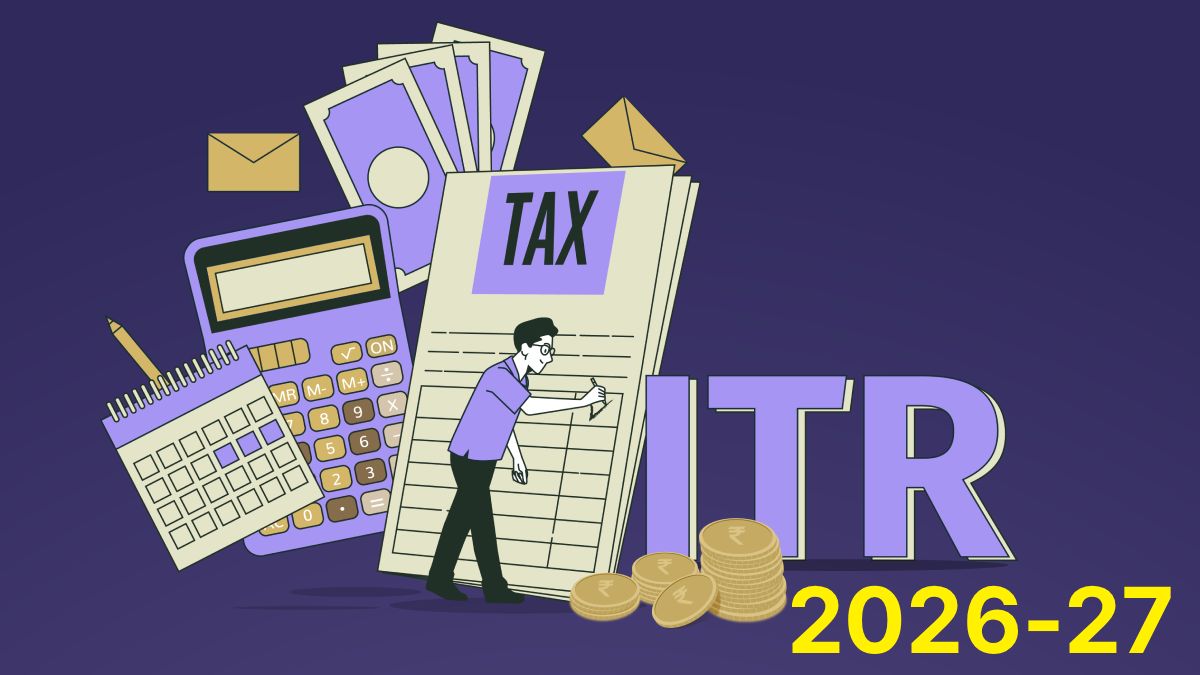
The Income Tax Department of India has now issued filing utilities for Income Tax Returns (ITR) for Assessment Year 2026‑27. This will be the start of the annual tax compliance cycle and millions of taxpayers are going to file their returns in the next few weeks.
Key Highlights
CBDT just released updated ITR forms and e‑filing utilities on its official portal. Taxpayers can now access those utilities to prepare and submit their returns online. It is essential to have accurate information and the department has advised you to get the financial data in order and reconcile your financial information before filing.
Pre‑Filing Checklist
Tax experts suggest that taxpayers have to ensure that they read the following before submitting the form:
Form 26AS: Make sure that all the tax credits, including advance tax and self‑assessment tax, are reflected correctly.
Annual Information Statement (AIS): Verify income sources such as interest, dividends, securities transactions, or high-value purchases.
TDS Details: Cross‑check tax deducted at source against employer and bank records.
Reconciling these documents prevents mismatches that could lead to delays in refunds.
Market & Policy Context
The government has been calling for more transparency and digital compliance. With AIS and pre‑filled ITR forms now in place, taxpayers have easier filing procedures. The department has also warned that discrepancies could be harder to find, especially when high-value transactions are involved.
Benefits of Early Filing
As a result, filing returns early has several benefits:
Faster refunds.
Reduced risk of last‑minute errors.
Avoiding penalties for late submission.
Predictability, accessibility, and ease of access for loan or visa applications.
The launch of ITR filing utilities for AY 2026‑27 signals the start of the tax season in India. As data integration continues to increase and filing is more and more digitalized, it is important to have a good mix of Form 26AS, AIS, and TDS details for filing a tax return not only to avoid penalties but also to establish credibility in an ever-more transparent tax landscape.







Comments
Please to leave a comment on this article.