
Capital is the energy to get businesses to be able to take off and grow and compete.
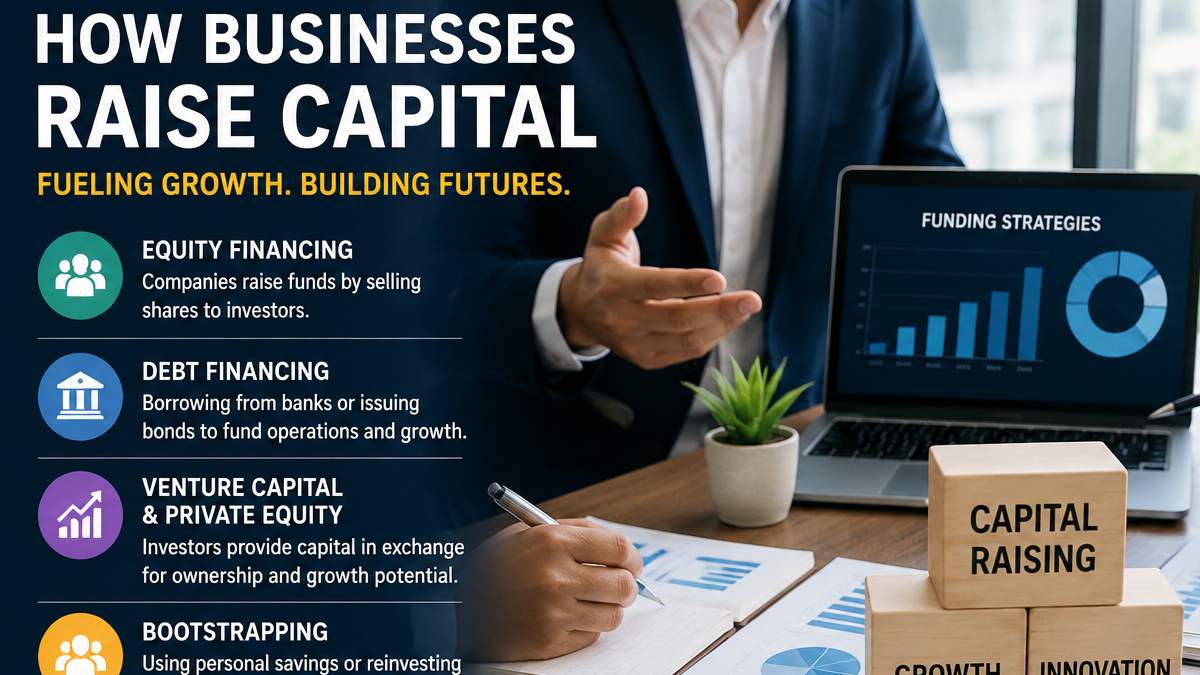
A startup needs funding to launch a new product, expand into new markets, get equipment or to run a business in the middle of their daily life, and how quickly it can do so can be driven by money.
For a company with a start-up business, how much funding will be available to raise capital depends on the size, finances, growth plans, and risk appetite of the business plan and how much capital will you need to raise?
Equity is the most common way businesses raise money. A company sells a portion of its ownership to investors for capital. A startup often relies on angel investors, venture capitalists, and private investors during its early stages.
A company can also raise capital when they first go public by issuing equity shares they call that an IPO. So the business doesn’t have to repay the capital like a traditional loan, but the existing owners need to sell off some of their ownership.
Debt financing is also one of the other major sources of funding. Businesses can borrow money from banks, financial institutions, or other lenders and pay off the money after the interest over a fixed period of time, usually at a fixed rate.
Debt-based financing is a common source of financing, such as business loans, working capital loans, bonds, and debentures.
Debt is also a way of ensuring that the business owner can still hold onto ownership of the business, but one of the risks is borrowing too much, which can increase financial pressure because interest and principal payments need to be met regardless of business performance.
In addition to private equity, businesses can also raise capital from venture capital and private equity firms. Venture capital is particularly important for startups that have high-growth potential.
Investors typically provide funding in exchange for ownership and may offer strategic advice. Private equity firms invest larger amounts in established companies and can help them scale, reorganize, or strengthen operations.
Smaller businesses can still go with bootstrapping. Entrepreneurs can tap personal savings, reinvest business profits, or use friends and family for financial support.
This way, founders get more control and are less dependent on outside investors, but the amount of available capital is limited.
Crowdfunding has also become a popular source of funding in recent years. Businesses have the ability to promote their ideas and products online and get donations from a wide variety of people.
Depending on the model, contributors can be rewarded, receive products, or have a stake in the product.
Government grants, subsidies, and specialized business-development programs can be another source of capital, particularly in priority sectors such as manufacturing, technology, renewable energy, and research.
The right funding strategy is key. For companies, the cost of capital, loan payments, dilution in ownership, expectations of investors, and long-term goals are all part of how they will be funded.
A sound funding strategy can give a company the resources for sustainable growth.
At the end of the day, businesses rarely depend on a single source of capital. Many rely on equity, debt, retained earnings, and other sources of funding to create a financial structure appropriate to their growth phase.
Knowing these options helps entrepreneurs and investors to better understand how companies finance their ambitions and create long-term value.






Comments
Please to leave a comment on this article.