
Artificial Intelligence (AI) is a big technological revolution in the financial world. AI technology is transforming how we invest in the stock market, from finding potential for investment to making trades in milliseconds. Investors have a big question on these technologies that are all about: Can AI be better than human traders
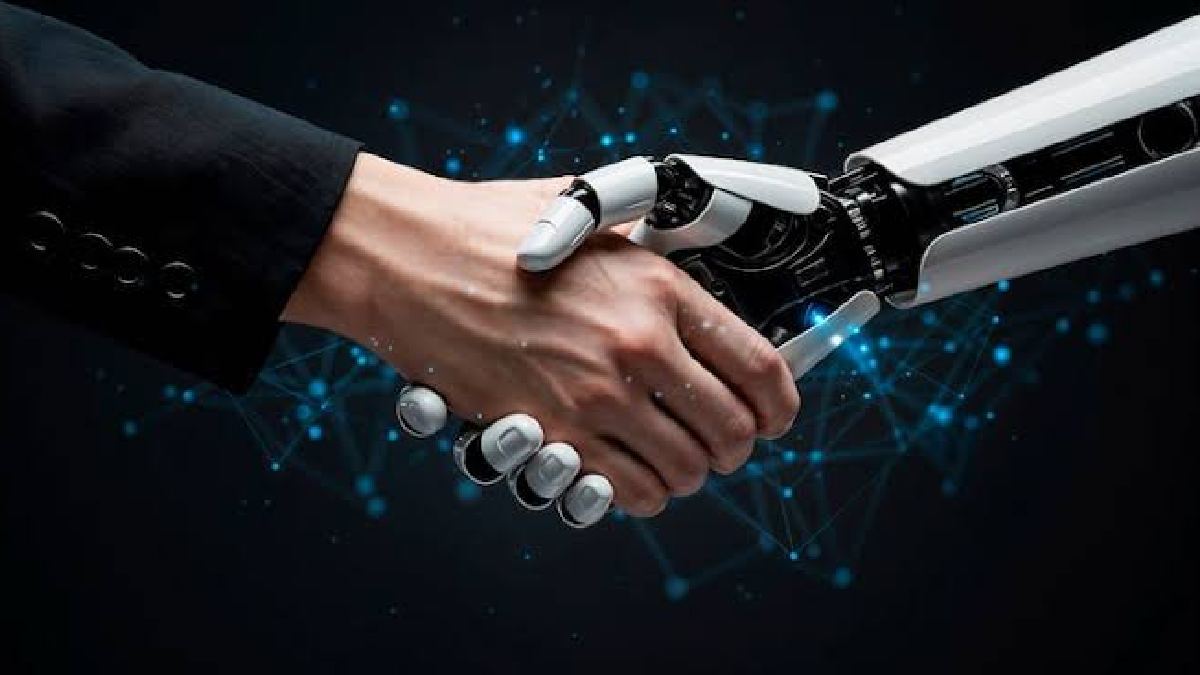
AI has a clear edge in terms of speed and data. Today, AI systems can analyze so much financial information stock prices, company earnings, economic reports, market trends, and breaking news in seconds.
They can also monitor social media and global events to pinpoint signals that could affect stock prices. That is why AI-powered trading platforms can react much faster than a human investor does.
Another strength of AI is that it can eliminate emotions from decision-making. Humans can make mistakes to the very least and in volatile markets from fear, greed, and overconfidence, we know that human traders can. AI is based on pre-determined strategies and data rather than emotions to make its decisions more consistent with discipline and reason; it is not emotion-driven.
Machine learning has made AI even more powerful. Instead of taking the same rules into account, better AI models are now trained on the history of the market, and they will learn and adapt to the market and trade more intelligently as time progresses.
AI is now a critical piece of hedge funds, investment firms, and even individual investors looking for the analytical edge.
Even after all this, AI is not a perfect replacement for human expertise. Financial markets are affected by very unpredictable events such as political developments, regulatory changes, natural disasters, and sudden shifts in investor sentiment. These are events that don't reflect the past, and AI systems cannot predict them.
Human traders have specific skills that machines cannot do at the moment. Experienced investors tend to rely on judgment, intuition, and a deeper understanding of economic and business context when making investment decisions.
They can read qualitative information like leadership changes, consumer behavior, or industry trends in ways that algorithms might not be able to read.
Data quality is just as important as the quality of data. AI systems are only as reliable as the data they are trained on. Incomplete, outdated, or biased data can provide the basis for bad investment decisions and wrong predictions. Professional investors use AI as a decision-making tool for making decisions instead of a tool for decision-making without human control and not only to be able to operate the AI without human supervision.
Today, a lot of successful investment firms use AI technology along with human expertise to build an investment model to integrate human knowledge. AI can analyze data and identify market trends and risk analysis, and professionals can help assess the full picture before investing. That hybrid approach is more likely to yield better results than if we rely on humans or machines.
AI technology will be even more important in financial markets in the future. But AI will be a more powerful partner to help human traders not replace them in the end.
AI-powered investing in the financial markets of today will be the most effective if the investors are able to integrate AI with sound judgment, patience, and a long-term approach to investing; the modern world of finance needs a lot more than a single kind of solution.




Comments
Please to leave a comment on this article.