
China has been steadily increasing its gold reserves, with its central bank reporting 10 consecutive months of gold purchases. The continuous buying has created a lot of global interest and it’s very much a question why is China accumulating so much gold? There is nothing to be said in terms of a single answer but it is a mixture of financial security, geopolitical planning, and long-term economic aims.
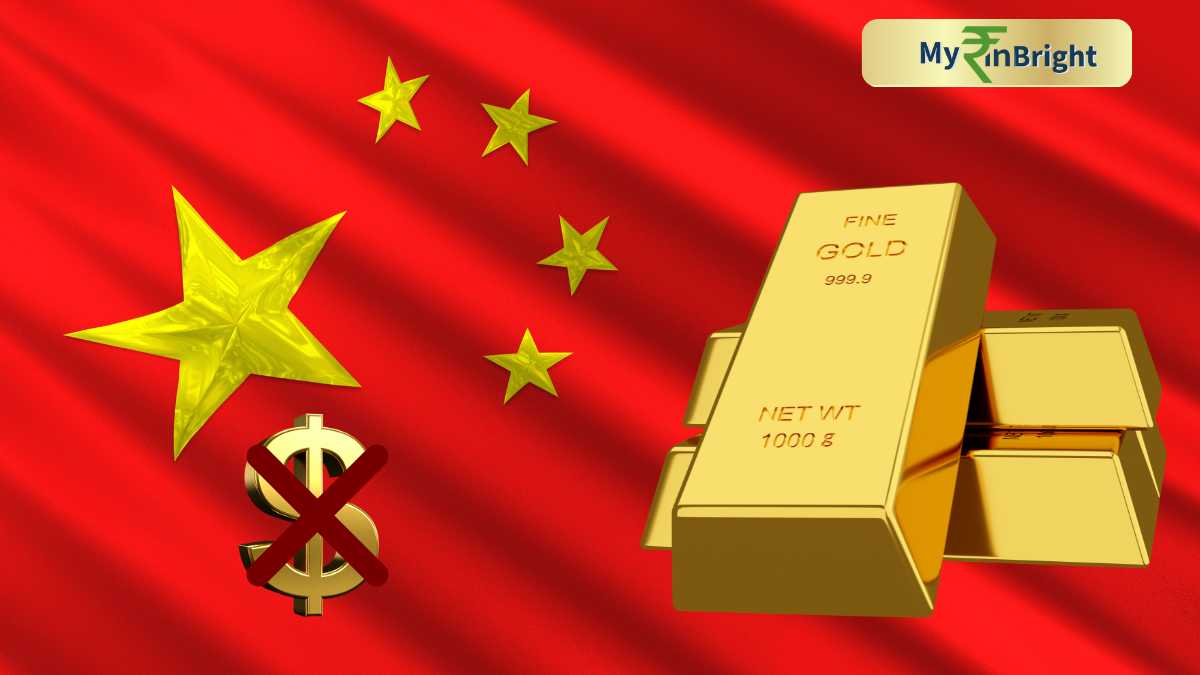
One of the reasons is diversification away from the US dollar. For decades the US dollar has been the world’s dominant reserve currency with many countries holding large quantities of US Treasury bonds and dollar-denominated assets. But recent geopolitical tensions, economic sanctions and concerns over the mounting US debt have led many countries—including China—to lessen reliance on dollar-based reserves.
Gold is one of the safest assets in times of economic uncertainty. Gold is not made on paper, and therefore is not issued by governments or central banks, so is a good and reliable store of value when inflation comes along or financial crises occur or currency can fluctuate. China is also strengthening its foreign exchange reserves and reducing exposure to fluctuations in the US dollar.
Another factor is geopolitical risk. Russia’s foreign reserves were frozen after the Ukraine war showed that foreign currencies could be used for the storage of reserve assets should there be global sanctions. The response of many countries was to re-evaluate their strategy for reserves. Gold, which can be stored locally and does not depend on another country’s financial system, is becoming an attractive asset for central banks hungry for more financial independence.

China’s long-term plan to increase the international role of the Chinese yuan (renminbi) may also be an influence. And although the yuan still lags behind the US dollar in global trade and reserves, stronger gold holdings could help boost Chinese confidence in the financial system. Gold does not directly support the yuan, but larger reserves may strengthen perceptions of financial stability and support China’s overall goal to increase the use of the currency abroad.
Importantly, China is not alone in this. Central banks globally have been buying gold at an exponential rate in decades. We know that India, Poland, Turkey, and a few emerging countries have also increased their gold reserves. And this global trend is a global trend to diversify reserve assets and lessen dependency on a single currency at a time of increasing geopolitical and economic uncertainty.
But for individual investors, China’s gold-buying strategy doesn’t necessarily mean that gold prices will keep going up forever or the US dollar will lose its dominance overnight. Global financial markets are heavily intertwined still and the dollar plays a key role in international trade, finance, and central bank reserves.
But longer-term central bank demand can support gold prices and support the view of policymakers that gold is still a strategic asset. Investors often take these purchases as evidence of a more uncertain global economy.
And China's continued accumulation of gold, in all its gold-eating, long-term economic security-oriented nature, appears to be part of a wider strategy of financial resilience, reserve diversification, and stability in the long term. And if it won’t change the world’s global monetary system completely, that’s a good thing because it’s not a revolution that will change from a moment here on the horizon but shows a gradual shift in the way countries are managing their reserves in an ever-more complex and multipolar world. Gold will be around the world’s top central banks for many years to come as central banks continue to diversify their assets but will be an important part of global financial security in general.






Comments
Please to leave a comment on this article.