
The Indian rupee is still undervalued, even as the country's external financial position is growing thanks to sustained foreign currency flows and investor confidence.
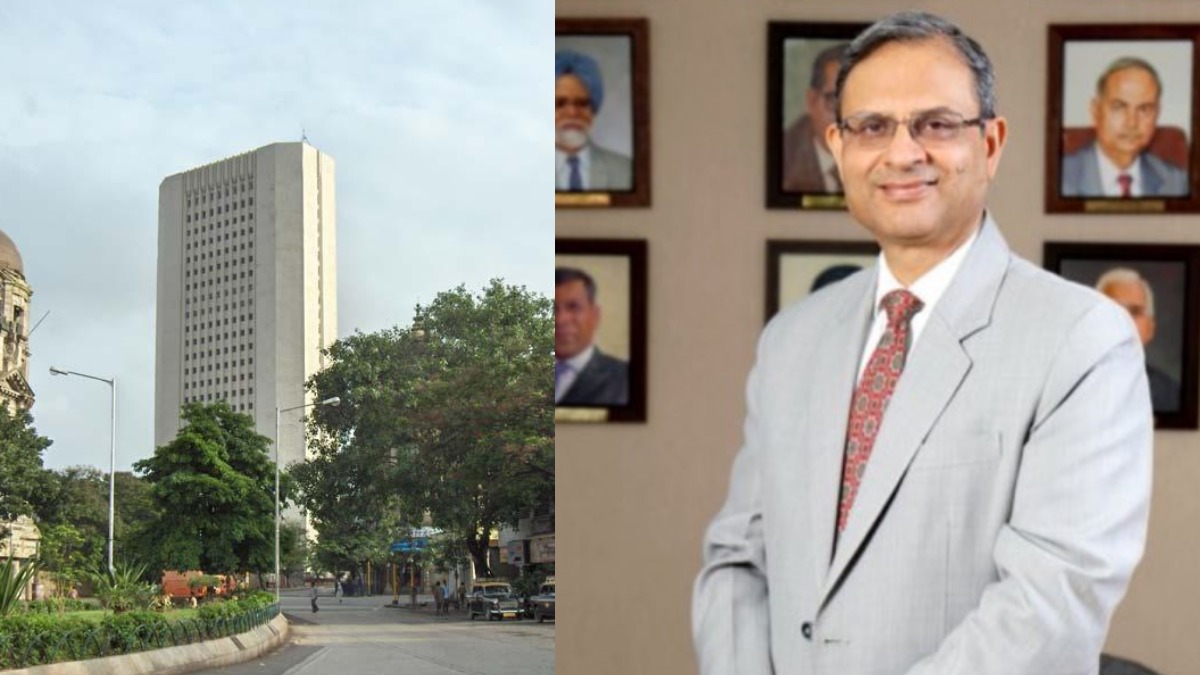
RBI Governor Sanjay Malhotra said that inflation control is the bank’s primary purpose and that foreign currency non-resident (FCNR(B)) deposits and growing foreign investment in government securities have supported India’s external sector significantly.
Governor's speech comes at a time when the Indian economy is undergoing uncertainty, commodity prices are fluctuating and geopolitical conditions are changing. But the core of India's macroeconomic fundamentals have remained robust, supported by good foreign exchange reserves, steady capital flows with appropriate monetary policy.
Rupee Considered Undervalued
According to RBI Governor, the Indian rupee is currently viewed as undervalued when viewed against India’s economic fundamentals. An undervalued currency usually means that the value of a currency is lower than what economic indicators like productivity, growth prospects, trade performance, and purchasing power suggest.
The relatively competitive exchange rate can be beneficial also for exporters and make Indian goods and services available in international markets. But policymakers also want to avoid too much volatility as sharp currency swings can increase import costs and create uncertainty for businesses.
The RBI has always maintained that it does not target a particular exchange rate, but to keep the market in an orderly way and not to see excessive swings in the foreign exchange market.
FCNR(B) Deposits Are Almost $32 Billion
The RBI Governor’s major highlight was the significant growth in FCNR(B) deposits, which he claimed to have reached nearly $32 billion.
FCNR(B) accounts allow Non-Resident Indians (NRIs) to deposit foreign currency in Indian banks without exchange rate risk on the principal amount. These deposits help attract stable foreign currency inflows into India's banking system while strengthening the country's foreign exchange reserves.
Higher FCNR(B) inflows improve liquidity in foreign currency, enhance investor confidence and contribute positively to India’s balance of payments.
Foreign Investment Supports External Stability
Apart from FCNR(B) deposits, the RBI also highlighted increased foreign investment in Government Securities (G-Secs) as another positive development for India's external position.
Foreign institutional investors are still showing interest in India’s sovereign debt market as the country’s stable economy and relatively attractive bond yields and good global recognition of Indian government securities is continuing to attract foreign investors for the reason of stable economic prospects in India’s economy, attractive bond yields have been well recognised internationally and the stability of the country as well as the fact that Indian government securities are seeing high interest from foreign investors.
Greater investment from overseas investors strengthens demand for Indian financial assets, stimulates capital flow and thus the confidence of the market.
Inflation Control is RBI’s Number One Priority
Governor Sanjay Malhotra also spoke about the economy and said maintaining price stability is the RBI’s highest priority.
Inflation directly affects household purchasing power, savings, business investment and long-term economic growth. The central bank is monitoring food prices, fuel costs, global commodity prices and domestic demand along with its monetary policy decisions.
The RBI is in a position to keep inflation under control as sustainable economic growth is not supported by inflation and price increases.
Moderate inflation in general is a positive factor for investment and consumption; high inflation can erode consumer confidence and raise borrowing costs.
India's External Position Strengthens
The combination of healthy foreign exchange reserves, stable capital inflows, growing FCNR(B) deposits, and increased foreign investment has helped to strengthen India's external financial position.
A better external sector is more likely to support the country in response to global financial crises, to manage currency volatility, to finance imports and to maintain investor confidence.
India’s diversified economy, services exports, digital transformation and investment in infrastructure have also helped the country’s resilience amid slower global economic growth.
Positive Outlook for Investors
Financial experts said the RBI's assessment is a sign of confidence in India’s macroeconomic fundamentals. Stable inflation, prudent fiscal management, banking sector health and a stable foreign investment are still making India one of the most attractive emerging market destinations.
Governor's comments will also ensure to reassure investors that the RBI is committed to maintaining inflation management and financial stability and economic growth as the central bank is in balance.
As global financial markets are seeing interest rate movements, geopolitical changes, and capital flow dynamics and global financial markets are moving in response to interest rate changes and global financial markets change, the RBI will continue to be cautious and data-driven policy-oriented.
The central bank is going to keep track of inflation trends, exchange rate movements, liquidity and other economic developments and will also monitor inflation trends, liquidity conditions and the global economic situation before making a decision of monetary policy.
With FCNR(B) deposits at over $32 billion, the increase in foreign investment in government securities and a stable macroeconomic context, India's external sector is well-positioned to support continued economic resilience.
In the future we will keep inflation in the right range while also encouraging investment to be sustained and financial stability will be at the core of our policy framework as well. The Governor’s words in the new year speech also show that India is building a solid economic base that is capable of managing both domestic and world issues.






Comments
Please to leave a comment on this article.