
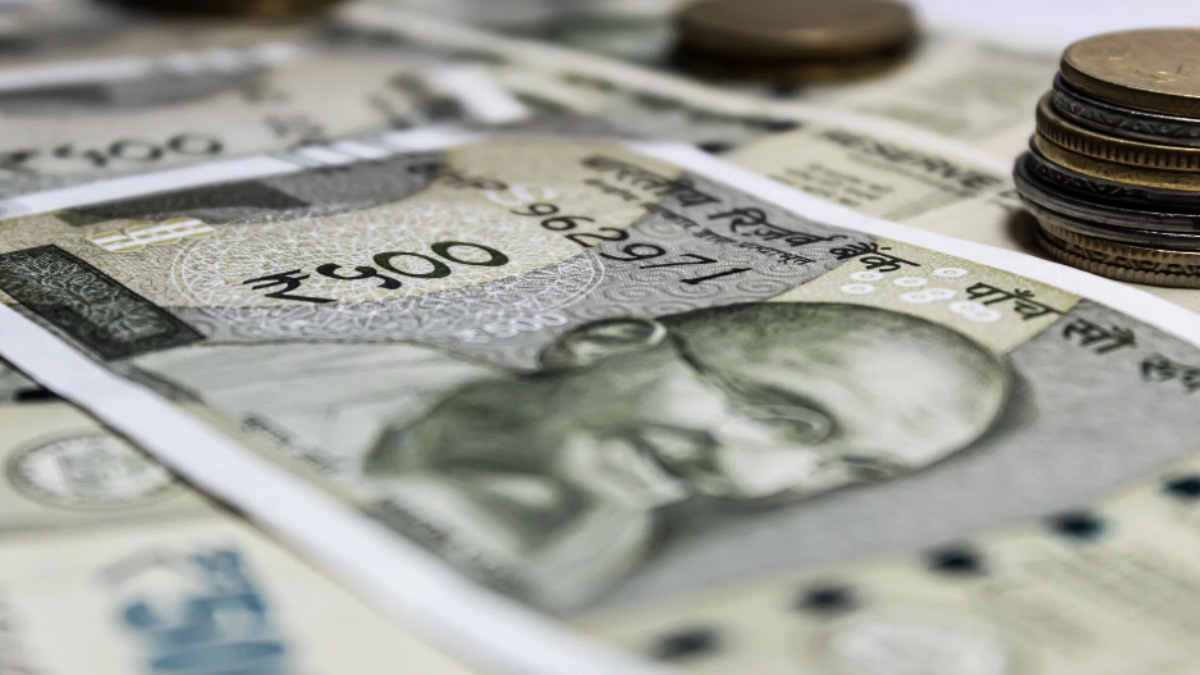
The Indian rupee gained 35 paise to 95.64 against the U.S. dollar on Monday, in response to the better sentiment in the domestic foreign exchange market. The domestic equity market has had a lot of support from foreign capital flows, lower crude oil prices and a sense of confidence in India’s economic performance. The currency traders say the currency was positive in the beginning and still up in the first hour as demand for the U.S. dollar was not that strong.
The rise in the rupee was attributed to continued foreign institutional investors (FIIs) investing in Indian equities and debt markets. Foreign inflows generally boost dollar supply in India and help the Indian currency. Investor optimism in India’s economic growth and monetary policy stability also helped the forex market to be positive.
Another important factor supporting the rupee is the recent moderation of international crude oil prices. As India imports a large part of its crude oil requirement, lower oil prices reduce the country’s import bill and lower demand for the U.S. dollar by oil marketing companies. This can help with the domestic currency and the country’s current account position.
Some analysts also cited India's healthy foreign exchange reserves and improving external sector indicators as reasons for the resilience. Reserves are strong enough that RBI is more inclined to respond to such high levels of volatility in the foreign exchange market (with a bit of risk management and hedging) whenever required. Investors generally view strong reserves as a sign of good macroeconomic stability and that is what will most likely boost confidence in the Indian currency.
The rise in the rupee comes at a time when global financial markets are closely following developments in the United States (economic data, inflation trends and interest rate expectations of the Federal Reserve). If the Federal Reserve's monetary policy outlook changes, the dollar will be strong against the euro and in other currencies including the rupee.
In early trading, domestic stock markets were also supportive as investor sentiment was so good that foreign portfolio investors were attracted to it. A stronger stock market often draws foreign investors and this encourages the dollar to flow into the country which is good for the rupee. But market experts warned that currency prices are influenced by multiple domestic and global factors including geopolitical developments, commodity prices and investors’ risk appetite.
Exporters and importers are monitoring exchange rate fluctuations very closely as small fluctuations in the value of the rupee can affect business costs and profitability. A stronger rupee mainly benefits the importers in the form of cheaper goods priced in U.S. dollars, such as crude oil, machinery and electronic components. In exchange for this, exporters also still end up earning less in rupee terms when making money abroad.
Financial experts say even though the short-term effects of market sentiment and capital flow determine the long-term movement of the rupee, the long-term direction depends on broader economic fundamentals including inflation, fiscal discipline, economic growth, trade balance and productivity improvements. With the focus on infrastructure development, manufacturing expansion and digital transformation, investor confidence in India's long-term economic prospects is growing.
The RBI is still closely monitoring the currency market and keeping the exchange rate moving smoothly without targeting any single exchange rate. The central bank has repeatedly stressed that it intervenes only to minimize the extent to which the market is volatile and to maintain financial stability in order to avoid a particular currency level. Such interventions help to balance exchange rate movements so as to keep the economy stable.
Currency traders expect the rupee to continue to be influenced by global economic indicators, crude oil prices, foreign institutional investment flows and policy signals from major central banks. Investors will also be watching domestic inflation data and other macroeconomic indicators that could influence expectations on future monetary policy.
The rise of the rupee to 95.64 against the dollar in early morning trades reflects India's growing confidence and an improving external environment in the financial landscape. The currency market is dynamic and can change very rapidly and the recent movement shows that strong economic conditions, healthy foreign investment, and prudent monetary management are important to keep the foreign exchange market stable.






Comments
Please to leave a comment on this article.