
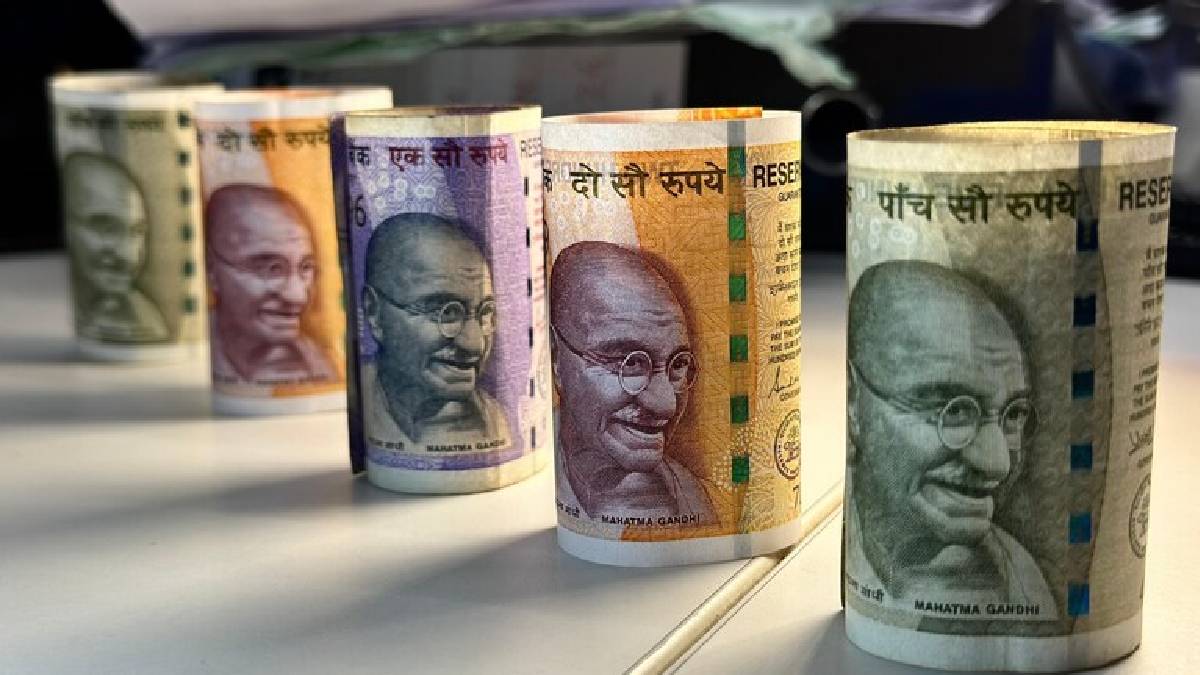
The Indian rupee pared its early gains and ended lower against the US dollar, settling at 95.34 per dollar, down 18 paise from its previous close.
The domestic currency had opened on a stronger footing after the US dollar fell overnight and crude oil prices were softer. But the dollar demand from importers and corporate hedgers and foreign fund outflows weighed on the rupee during the trading session.
The rupee started at 94.95 against the US dollar and moved in a range of 94.90-95.40 during the session before settling at 95.34 on a provisional basis.
The decline came a day after the rupee had weakened by 60 paise to 95.16 against the US dollar.
Why did the Rupee fall today?
Forex traders said the rupee initially benefited from an overnight decline in the US dollar after relatively less hawkish comments by US Federal Reserve Chair Kevin Warsh.
Lower crude oil prices also helped support the Indian currency at the beginning of the session. Lower crude prices are generally good news for India because the country relies on imports to meet its energy needs. A lower import bill would reduce the demand for US dollars.
But these supportive factors were offset by dollar demand from importers and corporate hedgers.
Foreign portfolio investor outflows also put pressure on the domestic currency as overseas investors continued to sell Indian stocks and repatriate funds.
Dollar Index Declines
The US dollar was still weaker against a basket of major currencies.
The dollar index, a measure of the dollar's strength against six major currencies, was at 101.00, down 0.38 percent.
A weaker dollar can generally provide some support to emerging-market currencies, including the Indian rupee. However, domestic demand for dollars and foreign capital outflows can override this external support.
Market participants are also watching US economic data as well as the Federal Reserve's policy outlook, both of which could affect dollar flows in the near term and global dollar movements.
Crude Oil Prices Provide Some Support
Global crude oil prices also declined during the session.
Brent crude was down 1.43% at $70.55 per barrel in morning trading.
Consequently, lower crude prices are especially important to the Indian rupee as India is a major importer of crude oil. If oil prices fall, the country's import bill could be reduced, thus reducing the demand for dollars to pay for energy imports.
Even so, the rupee is under pressure as other market forces dominate the trading.
USD-INR May Remain Volatile
As per Anuj Choudhary, Research Analyst at Mirae Asset Sharekhan, the rupee is expected to maintain a negative bias given the uncertainty surrounding the US-Iran relationship and not only that but also that of the economy.
He said any further softening in the US dollar following less hawkish comments from the Federal Reserve could support the rupee at lower levels.
The low crude oil prices could also be a relief to the Indian currency.
Choudhary expects traders to monitor upcoming US economic indicators like weekly employment claims and non-farm payrolls data for further direction.
The USD-INR spot rate is expected to remain within a 95.00-95.60 range, the brokerage's assessment showed.
FII Outflows Continue to Pressure Rupee
Foreign fund flows remain one of the biggest concerns for the Indian currency.
In June, foreign investors extended their selling activity by pulling out Rs 49,340 crore ($5.16 billion) from the Indian stock market.
The outflows were due to global risk aversion, preference for developed markets, high US bond yields, and concerns over relatively stretched valuations in Indian equities.
According to Central Depository Services (India) Ltd., total withdrawals by foreign portfolio investors from Indian equities have reached about Rs 2.7 lakh crore in 2026.
That amount has already exceeded the Rs 1.66 lakh crore withdrawn during the entire calendar year 2025.
Persistent foreign outflows can put pressure on the rupee as investors selling Indian assets typically need to convert their rupee proceeds into foreign currency.
RBI Intervention Offers Some Cushion
Market participants are also watching the role of the Reserve Bank of India in the foreign exchange market.
RBI intervention, along with softening global crude prices, has provided some support to the rupee and helped to keep some volatility at bay at times.
But risks of geopolitical uncertainty and strong dollar demand and substantial foreign portfolio outflows will keep the currency under pressure.
The balance between central-bank intervention, oil prices, global dollar movements, and capital flows will determine the near-term direction of the rupee.
Indian Equities Rally Despite Rupee Weakness
The weakness in the rupee came despite a strong performance in the domestic equity market.
The Sensex jumped 579.48 points to 77,502.12, while the Nifty gained 169.85 points to finish at 24,175.70.
But foreign institutional investors remained sellers. They sold Indian equities worth Rs 1,140.50 crore on a net basis on Wednesday, according to exchange data.
In currency markets, the divergence between strong domestic equity performance and continued foreign selling is a key factor.
What Investors Should Watch
The near-term outlook of the rupee will be determined by several competing factors.
The decline in crude oil prices and the softening in the dollar could help, while RBI intervention can help to contain excessive volatility. On the other hand, persistent FII outflows, corporate dollar demand, and geopolitical uncertainties will keep the currency under pressure.
Traders are likely to monitor upcoming US employment data and Federal Reserve commentary for clues about the dollar's direction.
For now, the 95.00-95.60 range remains an important near-term reference point for USD-INR, and the rupee is still under pressure despite some favorable external factors.






Comments
Please to leave a comment on this article.