
The RBI has already declared that polymer currency notes will be introduced by the beginning of FY28, which is a huge step for the currency system of India.
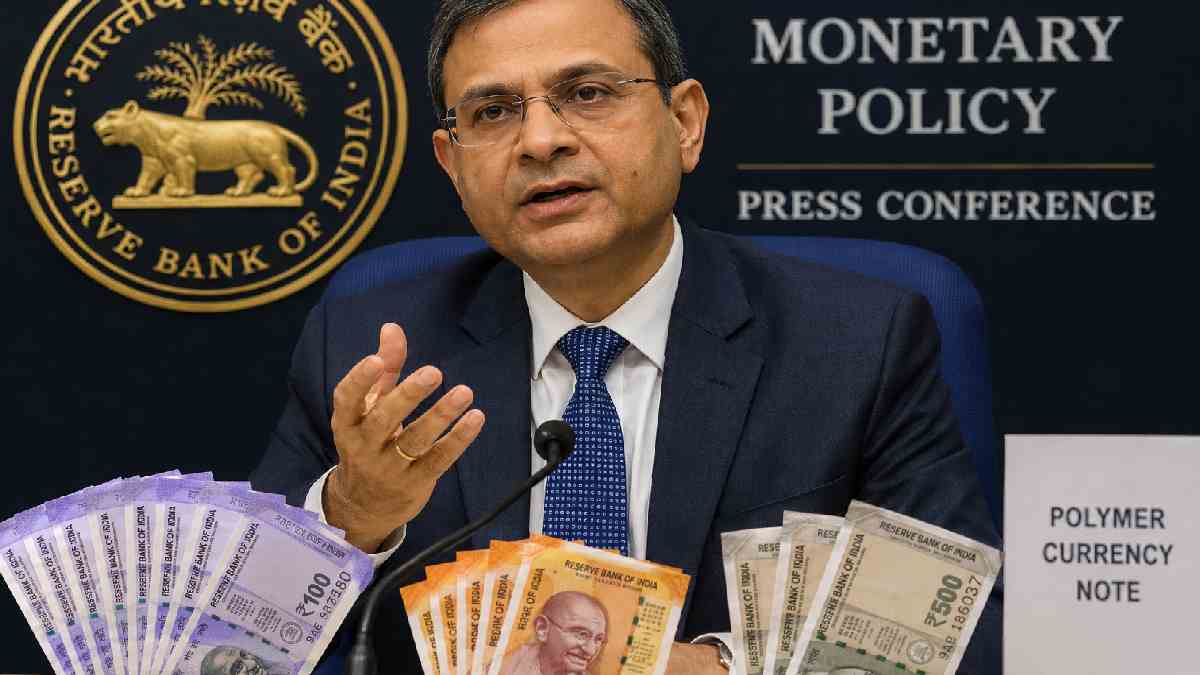
Speaking at the post-Monetary Policy Committee (MPC) press conference on August 5, RBI Governor Sanjay Malhotra said the central bank will conduct extensive testing of polymer banknotes before their nationwide rollout.
"We will test polymer banknotes in various conditions. Polymer banknotes increase durability and lifespan," the RBI Governor said in front of the media.
The announcement confirms previous reports that the RBI was preparing for the first pilot phase of polymer currency notes.
The Pilot Rollout to Begin with Rs 10 and Rs 20 Notes
The RBI is expected to launch the pilot system with Rs 10 and Rs 20 denomination notes, the official said. Since smaller denominations are used in daily transactions, these notes are ideal for testing the durability and performance of polymer currency in a variety of climatic and handling conditions.
Based on the results of the pilot project, the RBI is expected to gradually expand the use of polymer notes, with a wider rollout planned from 2027 onwards.
Paper Notes Will Continue Alongside Polymer Notes
The RBI emphasized that polymer banknotes do not mean the old paper currency will be discontinued.
Instead, paper and polymer banknotes will coexist during the transition period. Polymer notes will be introduced in phases while current paper notes will continue to be legal tender and circulate across the country.
The gradual approach to the transition is meant to make sure that no disruption to the daily business of financial transactions occurs.
Global Tender for Polymer Substrate Issued
The rollout is already at an advanced stage as RBI's currency printing arm invited global manufacturers to participate in an Expression of Interest (EOI) for providing polymer substrate sheets.
These specialised polymer sheets will include advanced security features aimed at:
Improving durability
Reducing counterfeiting
Extending the life of banknotes
Enhancing print quality
The deadline for bids under the global tender has been set at August 18.
Why Polymer Notes?
Polymer banknotes are already used successfully in several countries, including:
Australia
Canada
United Kingdom
New Zealand
The polymer notes provide several advantages over conventional paper currency:
Significantly longer lifespan
Greater resistance to moisture and humidity
More resistance to dirt and wear
Better protection against counterfeiting
Lower replacement costs over time
Although polymer notes are more money-intensive to manufacture initially, their longer circulation life often reduces the cost of currency replacement in general.
The RBI Keeps Repo Rate Unchanged
In the lead-up to the currency announcement, the RBI also released its latest monetary policy decision.
The Monetary Policy Committee (MPC) unanimously decided to hold the repo rate at 5.25%, marking the third consecutive policy meeting without a rate change.
Governor Sanjay Malhotra said it was due to uncertainty on the global stage and the volatile energy prices and supply chain disruptions due to the ongoing geopolitical tensions in West Asia.
The RBI has also maintained its neutral policy stance, and future policy decisions will be flexible if inflation and economic growth are at a certain level.
What It Means for the Public
For consumers, polymer notes will not require any action. Existing paper currency will continue to be valid, and both types of banknotes will circulate simultaneously.
The move will also enhance the quality and lifespan of Indian currency and enhance security features to prevent counterfeit notes. If the pilot proves successful, polymer currency could become an everyday part of transactions across the country by FY28.





Comments
Please to leave a comment on this article.