
Bank lending to India’s industrial sector rose sharply in June 2026, with industrial credit growing 19.2% year-on-year, more than three times the growth seen in the same period last year, according to the latest data released by the Reserve Bank of India (RBI).
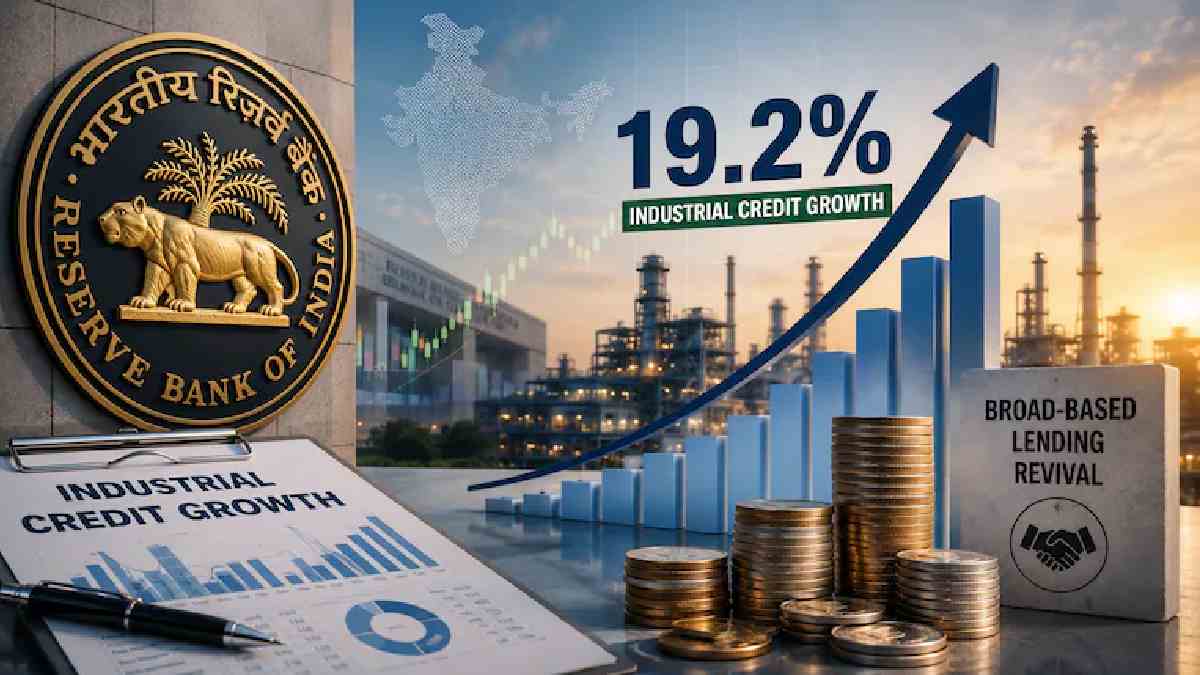
The data reflects good borrowing by small, medium and large businesses in the country, driven by higher demand from the manufacturing, infrastructure and services sectors.
Outstanding credit to industry reached ₹47.72 lakh crore as of June 30, 2026, compared to a growth rate of 6.3% a year earlier.
But overall non-food bank credit grew 18.3%, up from 9.3% in June last year, taking the total outstanding non-food credit to ₹217.96 trillion.
Medium Enterprises Lead the Growth
Industrial lending expanded in all sectors of businesses.
- Medium enterprises: Credit growth of 30.3%.
- Micro and small enterprises (MSMEs): 23%.
- Large industries: 16.6%, compared with just 2% growth a year ago.
The sharp increase in lending to large companies signals renewed investment activity and improved business confidence.
Manufacturing Records Strong Borrowing
We see that several manufacturing sectors experienced huge growth in bank credit during June.
Key sectors included:
- Petroleum, coal products & nuclear fuels – 48.5%.
- Engineering - 37.6%. Gems & jewellery -- 32.7%.
- Vehicles, auto parts & transport equipment -- 26%.
- Chemicals & chemical products -- 21.3%.
- Basic metals & metal products – 20.9%.
Industries such as engineering, food processing, infrastructure, construction, textiles, chemicals and metals collectively contributed to the broad-based rise in industrial credit, the RBI said.
Infrastructure Lending Remains Healthy
Infrastructure continued to be the largest share of industrial lending.
Outstanding infrastructure credit is at ₹15.12 trillion, which was 10.9% annual growth.
Within the sector:
- Power sector loans rose 23.2%.
- Telecommunication credit declined 11.6%.
- Road sector lending fell 0.8%.
- Airport financing declined 14.2%.
Services and Agriculture Also Gain Momentum.
Credit growth continued to be strong beyond the industrial sector
The services sector grew at 21.4 percent, and outstanding credit had increased to ₹61.53 trillion.
Major contributors included:
NBFC lending: 32.2%
Commercial real estate: 22.1%
Trade-related credit: 18.6%
On the other hand, agriculture and allied activities witnessed 16.8% growth, and outstanding loans reached ₹26.94 trillion.
Gold loans saw the highest growth
Retail credit increased 15.8% year-on-year, and total retail loans are now at around ₹71.14 trillion.
Among retail loan categories:
- Gold loans: 93.8% growth to ₹5.36 trillion.
- Vehicle loans: 17.3%.
- Housing loans: 11%.
- Credit card outstanding: 1.9%, showing slower growth in unsecured consumer lending.
Positive Economic Signal
The RBI data point to a general improvement in credit demand in India's economy. Rising borrowing by industries, MSMEs, infrastructure companies and households indicates sustained investment and consumption momentum.
Continued credit expansion will support manufacturing output, infrastructure development, employment generation and overall economic growth in the upcoming quarters, according to economists.





Comments
Please to leave a comment on this article.