
Narendra Modi's cabinet has approved the Pradhan Mantri Surya Sarovar Yojana (PM-SSY), a ₹5,070-crore program that will increase the floating solar power capacity of India by putting in place advanced battery energy storage technology.
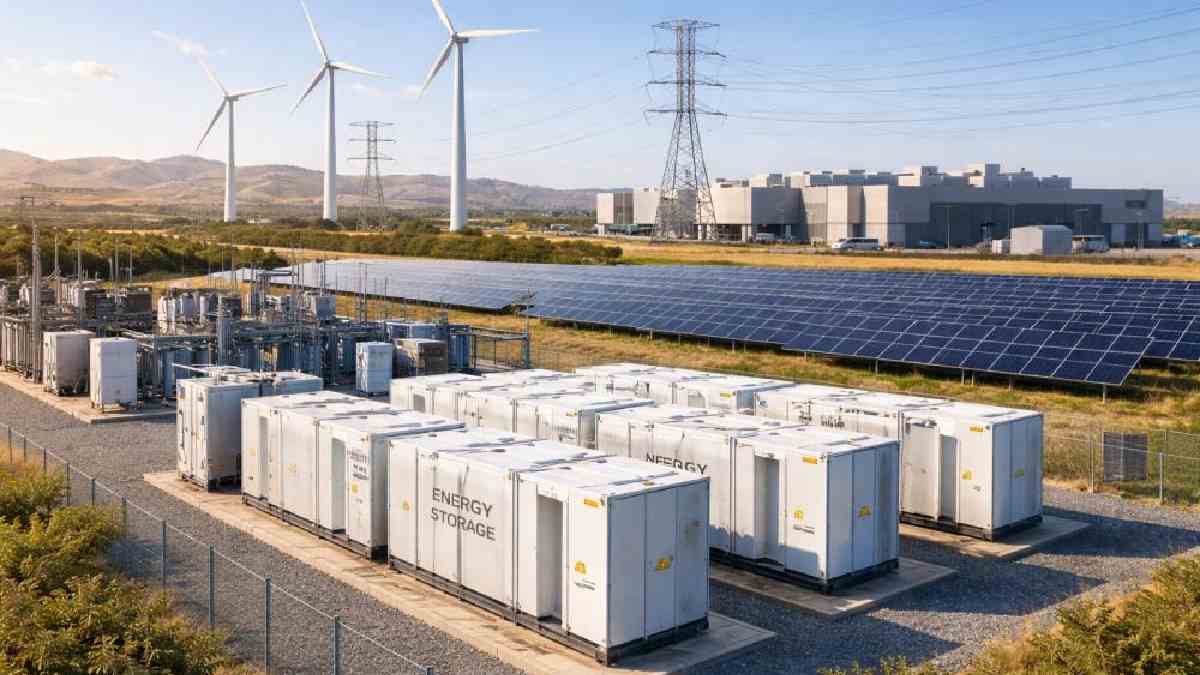
The initiative will also enhance India’s renewable energy sources and make the inland water bodies more productive and reduce reliance on conventional sources of energy.
5,000 MW Floating Solar Target
Under the new scheme, the government aims to develop 5,000 MW of Floating Solar Photovoltaic (FSPV) projects between FY27 and FY31.
Each project will include a co-located Energy Storage System (ESS) with a minimum storage capacity of two hours and a total storage capacity of 10,000 MWh.
The assistance in the scheme will continue in FY33.
Financial Support for Developers
To encourage project development, the Centre will provide Central Financial Assistance (CFA) of:
After successful commissioning, ₹1 crore per MW for eligible floating solar projects. Up to ₹50 lakh for feasibility studies.
The feasibility support will cover:
Bathymetry surveys
Hydrography studies
Environmental impact assessments
Other technical and preparatory work needed before construction. India's Huge Floating Solar Potential.
According to the National Institute of Solar Energy (NISE), India has an estimated floating solar potential of about 102.18 GWp across reservoirs, dams, lakes, and other suitable inland water bodies.
Currently, India has only about 700 MW of installed floating solar capacity.
With a new 5,000 MW capacity, the country's floating solar capacity will increase by more than sevenfold.
Better Use of Water Bodies
Unlike traditional solar parks that require large tracts of land, floating solar projects will be installed on:
Reservoirs
Irrigation tanks
Industrial ponds
Other inland water bodies
This approach can conserve valuable land while making use of existing water resources.
Battery Storage to Improve Grid Stability
The integration of Battery Energy Storage Systems (BESS) will allow solar power generated during the day to be stored and supplied when sunlight is unavailable.
This is expected to:
Improve grid stability
Enhance renewable energy integration
Reduce fluctuations in electricity supply
Increase overall energy reliability
Environmental and Employment Benefits
As for the government, the PM Surya Sarovar Yojana is expected to have environmental and economic benefits.
Key expected outcomes include:
Reduction of around 10 million tonnes of carbon dioxide emissions a year
Creation of 16,000-17,000 full-time equivalent jobs
Increase in domestic manufacturing of:
Floating platforms
Solar PV modules
Photovoltaic cells
Battery energy storage systems
The initiative also fits with the Aatmanirbhar Bharat mission by promoting indigenous manufacturing and decreasing import dependency.
Supporting India's Clean Energy Goals
The Cabinet concluded that the PM Surya Sarovar Yojana will play an important role in growing India’s renewable energy capability, climate commitments, energy security and our country’s long-term vision of Viksit Bharat through sustainable and clean energy development.





Comments
Please to leave a comment on this article.