
The Indian government has approved the Reserve Bank of India’s proposal to conduct field trials of polymer banknotes in ₹10 and ₹20 denominations, a significant potential change in the material used for frequently circulated low-value currency notes.
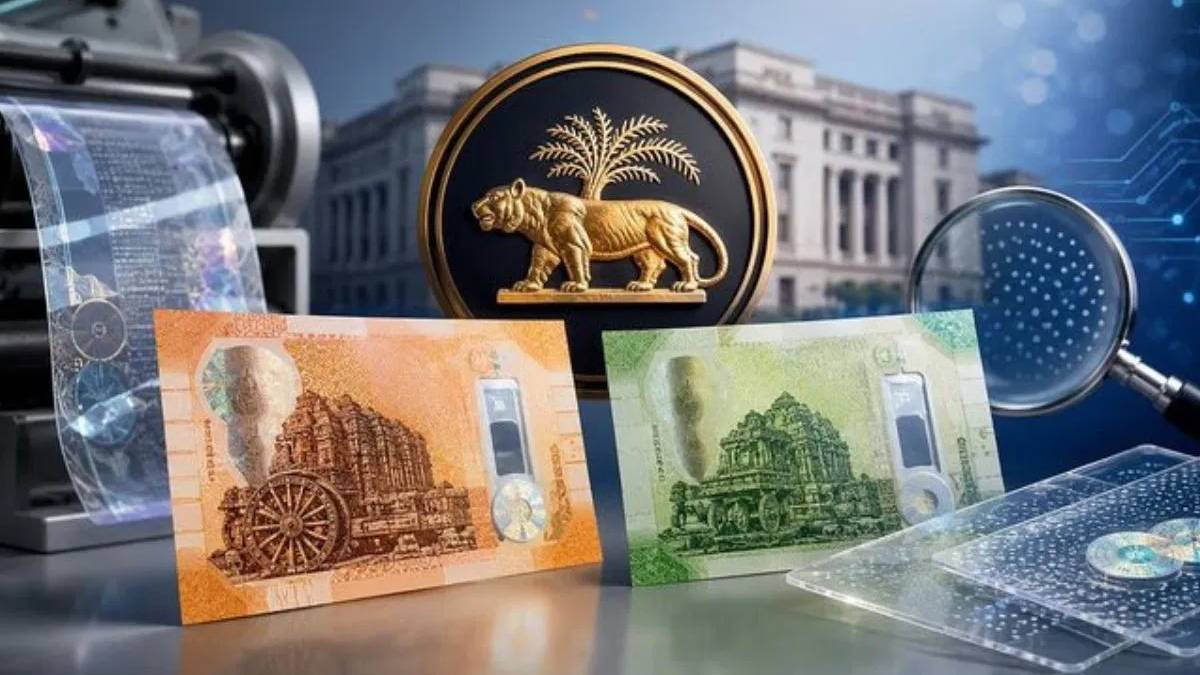
Finance Minister Nirmala Sitharaman told the Rajya Sabha through a written reply that the government approved the RBI's proposal to introduce one billion polymer notes each in the ₹10 and ₹20 denominations for field trials.
The proposal was submitted by the central bank following a recommendation from its Central Board and is based on Section 25 of the Reserve Bank of India Act, 1934.
One Billion Notes of Each Denomination
Under the approved plan, RBI will conduct trials with one billion pieces of ₹10 polymer notes and another one billion pieces of ₹20 polymer notes.
The field trials are meant to help the central bank to see how polymer currency works under actual circulation conditions.
The testing phase will be important before any decision is taken on wider or regular issuance.
Importantly, the approval does not mean that polymer ₹10 and ₹20 notes are being launched nationwide immediately. The RBI will first evaluate the notes through the pilot process.
Polymer Notes to Coexist With Paper Currency
The polymer banknotes are not intended to replace existing paper-based currency.
The polymer notes will be issued alongside paper-substrate banknotes, the government said.
The existing ₹10 and ₹20 paper notes can continue to circulate while the RBI evaluates the performance of the polymer versions.
The central bank would be able to compare durability, handling and circulation characteristics before going on a wider rollout.
Why is RBI considering polymer currency?
The lower denomination notes like ₹10 and ₹20 often change hands and so have a high degree of wear and tear.
Polymer banknotes have been generally considered more durable than paper-based currency. They can be used for longer periods of time under heavy circulation.
Longer-lasting currency could reduce the frequency at which worn-out notes need to be replaced.
For a country with a huge cash-based transaction ecosystem, extending the usable life of frequently circulated denominations could potentially give operational benefits for the currency management system.
RBI Procurement Still at an Early Stage
The project is still in its embryonic stage, even with the approval of the government.
The Finance Minister said that the RBI's procurement process has not progressed sufficiently for the government to provide a definite timeline for the notes to enter general circulation.
The government also does not currently have a final estimate of the total cost of the exercise.
So consumers should not expect the new polymer ₹10 and ₹20 notes to be widely available immediately.
The field trial process must be completed first and the results evaluated.
RBI Governor Says Testing Is Underway
RBI Governor Sanjay Malhotra has previously said that the central bank is working towards polymer currency after completing the pilot programme.
The governor has stressed that the notes would be tested before they are introduced more widely into the market.
The testing is very important because currency has to withstand the strain of intensive handling in different environments across the country.
From everyday retail transactions to cash withdrawals, transport payments and small-value purchases, ₹10 and ₹20 notes are among the denominations that can experience extensive circulation.
Possible Rollout by FY28
The RBI has indicated that it is targeting polymer notes by FY28, subject to the outcome of the pilot programme and other necessary processes.
But the latest parliamentary response makes it clear that there is no firm nationwide launch date at this stage.
The timing will depend on procurement, field testing and RBI's evaluation of the notes.
Polymer Currency is already used globally
Polymer banknotes are not a new concept internationally.
Many countries have adopted polymer currency for its durability and suitability for high-circulation denominations.
The RBI has also mentioned the long lifespan of polymer currency in some countries where such notes have reportedly remained in circulation for decades.
For India, however, the scale of the currency ecosystem means that extensive testing is essential before introducing polymer notes on a large scale.
What will change for the public?
If the trials are successful and polymer notes eventually enter wider circulation, people could see ₹10 and ₹20 notes made from a different substrate alongside existing paper currency.
The introduction would not mean that any existing paper notes would immediately become invalid.
Instead, polymer and paper notes could circulate together as part of India's currency system.
The RBI would ultimately determine the operational details of production, distribution and the extent of any wider rollout.
What would be a shift in India's currency system?
Field trials are an important step forward towards modernising India's lower-denomination currency.
However, at this very moment, testing is our focus instead of a nationwide launch.
With one billion ₹10 polymer notes and one billion ₹20 polymer notes planned for field trials, the RBI will have a large sample to assess how the new currency performs under real-world conditions.
If the results demonstrate better durability and operational efficiency, polymer banknotes could gradually become a more prominent part of India’s currency system.
So far, we can say that the government has approved the RBI's proposal, but the procurement and testing stages are still being carried out, and a firm public circulation date has not yet been confirmed.





Comments
Please to leave a comment on this article.