
When six young engineers quit their jobs in 1976 to create a computer company, India was a totally different technology market than what it is now. Computers were unknown to most businesses, startups were not yet a mainstream concept, and venture capital was practically nonexistent. The founders of Hindustan Computers Limited, now known as HCL, began their journey with just Rs 1.87 lakh.
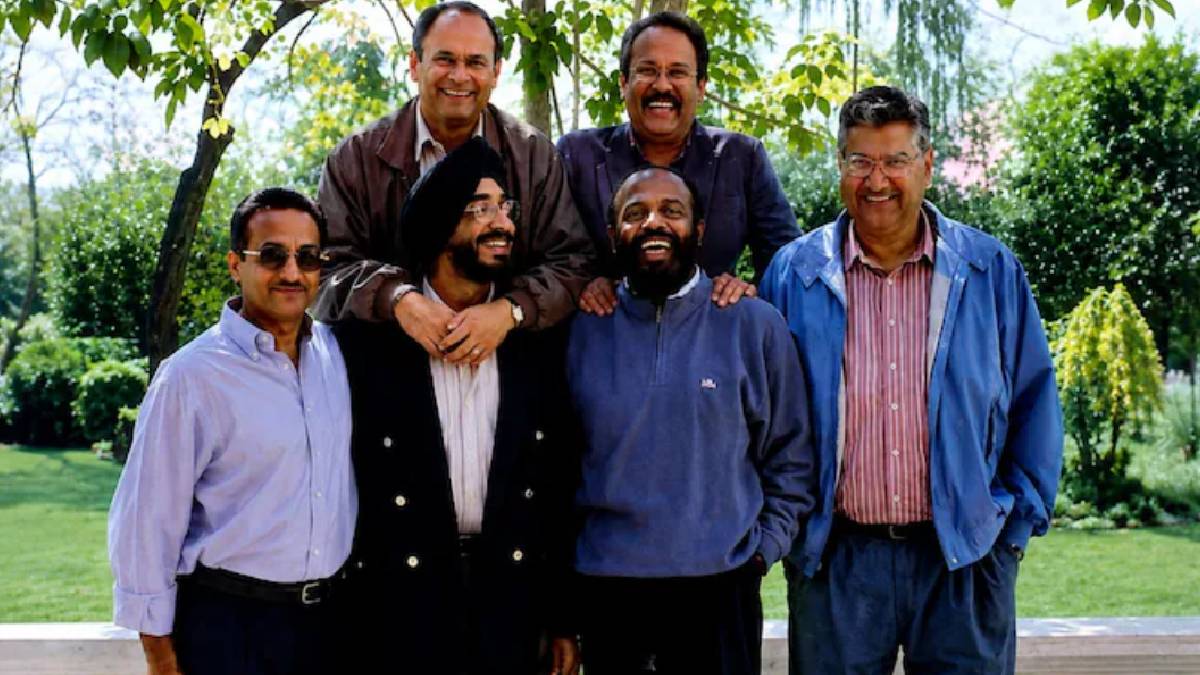
HCL’s 50th anniversary is coming up in 2027, and Ajai Chowdhry, the company’s co-founder and fellow founder, has touched upon the early days as he recalls how a small group of engineers turned an ambitious idea into one of India’s largest technology companies.
The founding team included Shiv Nadar, Arjun Malhotra, Yogesh Vaidya, Subhash Arora, D.S. Puri and Ajai Chowdhry. The six engineers pooled their savings, borrowed money and even sold a car to raise the initial capital required to start the business.
Their first workplace was a small barsati in Delhi's Golf Links. The company was founded under the name Microcomp with the dream of developing an Indian computer, but at that time the domestic technology ecosystem was still in its infancy.
I can build a computer without a manufacturing licence
The bulk of the challenges for the founders was that they didn’t have a manufacturing licence. Instead of cancelling the business, they did, they looked for a strategic partnership.
The team collaborated with UP Electronics Corporation, which had the licence, and HCL founders came to the team for the technology expertise. This partnership was central in the formation of Hindustan Computers Limited.
Interestingly, HCL's early sales strategy was partly based on believing in a product that was still being developed. According to Chowdhry's recollection, the company began approaching potential customers with a brochure and a mock-up of the proposed computer even before the final machine had been completely designed.
Sales teams traveled across the country trying to persuade businesses and institutions to invest in a technology that was still relatively new to India.
IITs among the first customers
Some of HCL's early orders were from prestigious institutions like IIT Kharagpur and IIT Madras. These early successes helped secure confidence in the young company’s technology.
The founders also had to compete against much larger and better-established companies. Chowdhry recalled an early sales contest in Coimbatore where HCL competed against DCM Data Products at Premier Mills.
After watching the rival company’s presentation, the HCL team made its own pitch. HCL secured the order, the smaller and newer player.
That victory was very important. It was the first order, followed by five more, then another 10 orders. With such early wins, it showed that an Indian technology company could compete with established names.
Taking Indian technology global
HCL’s success was based on its willingness to take risks and look for new opportunities. The founders encouraged employees to develop what they termed a “cowboy” attitude, and were very much about making technology practical and accessible.
The company soon looked beyond the Indian market. Within four years of its inception, HCL entered Singapore, starting a journey which would see it grow into a worldwide technology business.
HCL’s product development over the years took it well beyond its hardware ambitions. It had a significant presence in software, IT services, engineering and digital technology and was selling to clients worldwide.
This is pretty big wealth creation for shareholders
HCL’s transformation from a small startup to a global technology company has also created a lot of value for investors.
Since the company's listing in January 2000, HCL shares have gained about 1,285%, highlighting the enormous scale of shareholder value created over the past two-and-a-half decades.
The company’s 50-year journey is thus not just a technology growth story. It is also an entrepreneurship, risk-taking and persistence story.
From six engineers pooling Rs. 1.87 lakh to a global technology organisation, HCL’s history is evidence of the way that an ambitious idea can evolve through strategic partnerships, early customer confidence and international expansion.
The start-up of the company was rather modest: a small Delhi office with limited capital and a computer that was just a brochure and mock-up. Five decades later, that vision has become a big Indian technology success story.






Comments
Please to leave a comment on this article.