
The central government has officially launched the EPF Scheme, 2026, replacing the long-standing Employees' Provident Fund Scheme, 1952, in a major change to India's provident fund system. The new scheme published as part of the Code on Social Security, 2020, will launch on July 1 and will simplify the administration of EPF but will still serve the basic formula of retirement savings.
For most salaried employees, the transition will be seamless with the existing members automatically migrating to the new scheme without any impact on their accumulated balances. But the revised framework introduces important changes to partial withdrawals, voluntary contributions, and withdrawal procedures which are expected to make the system more user-friendly while maintaining retirement savings.
The EPF Scheme, 2026 is the biggest reform in terms of partial withdrawal rules. Members can withdraw money from their provident fund account for a number of purposes, each with different eligibility criteria. Now the new scheme puts them into three broad categories which are essential needs, housing, and special circumstances. Essential needs are for illness, education, and marriage.
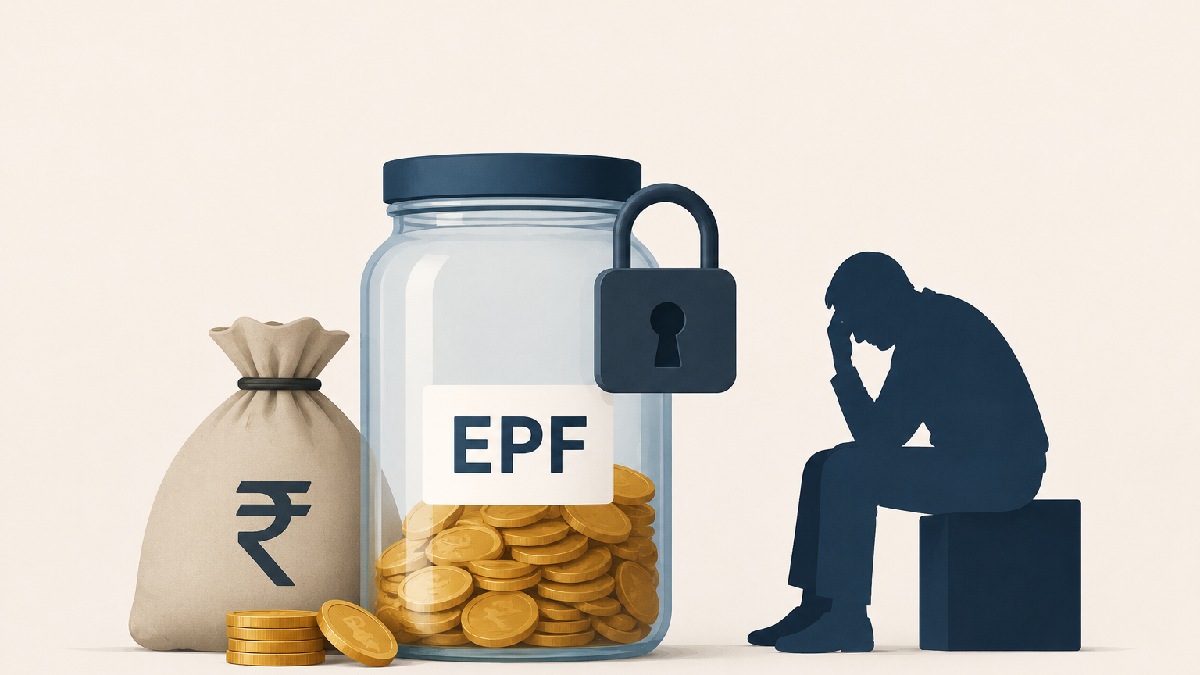
Under the new rules, a member having at least 12 months of EPF membership can claim up to 100 per cent of his/her eligible balance for essential needs. However, a key safeguard (to avoid retirement savings emptying out) has now been introduced by the government. At least 25 per cent of an employee's total contributions have to be kept in the EPF account for a partial withdrawal. In layman’s terms, subscribers can withdraw up to 75 per cent of their eligible corpus through partial claims and keep a minimum balance for retirement.
The scheme also provides more clarity on the number of withdrawals for different purposes. Members can now make up to ten withdrawals for education-related expenses, five withdrawals for marriage, five withdrawals for housing, and two withdrawals under special circumstances in a financial year. All claims must be submitted through the EPFO's online portal, with the minimum withdrawal amount fixed at ₹1,000.
With the withdrawal process simplified, the conditions for a full withdrawal will still apply. Employees will still be able to withdraw their EPF balance after retirement if they reach 55 years of age, have permanent disability, migrate permanently abroad, are retrenched, and are not ready to retire. Similarly, new employees will still be subject to the 12-month waiting period before they can withdraw their EPF balance, but women who leave employment due to marriage will be granted the same exemption.
The government also said there will be no change to the contributions made by employees earning above the statutory wage ceiling of ₹15,000 per month. Membership in EPF is only mandatory for employees earning wages up to this limit. People earning more than ₹15,000 can still join the EPF if both the employer and employee agree. Contributions will still be calculated on wages up to ₹15,000 unless employees are willing to make a contribution on higher wages.
The government official has said that the new scheme does not require higher-paid employees to make any mandatory contributions. The employees can still make voluntary contributions above the statutory wage ceiling, and employers can match those contributions. Both parties can also withdraw or terminate those voluntary contributions later (as they did with the previous regime).
The EPF Scheme, 2026 also simplifies the process for making these voluntary higher contributions. Under Paragraph 19, employees can opt to contribute on wages above the statutory ceiling through the Electronic Challan-cum-Returns (ECR) system, making the process more streamlined and digitally accessible.
For existing EPF subscribers, the change requires no action. All existing employees in the Employees' Provident Fund Scheme, 1952 automatically become members in the EPF Scheme, 2026 and all their savings and retirement benefits are protected. Employees joining up with eligible establishments will be enrolled in the EPF in the same way and will continue to receive social security coverage.
All in all, the EPF Scheme, 2026 modernises India’s provident fund framework without changing its fundamental structure. It proposes to simplify the withdrawal process, set a minimum balance requirement, digitise voluntary contributions, and keep existing members on board in order to make the EPF system more efficient and more secure for millions of employees across the country.





Comments
Please to leave a comment on this article.