
The Criminal Investigation Department (CID) is investigating the alleged irregularities in the JPSC preliminary examination and three more middlemen have been arrested for recruitment fraud. With the latest arrests, 14 suspects are now in custody in what investigators describe as an organized network which manipulated the recruitment process in exchange for money.
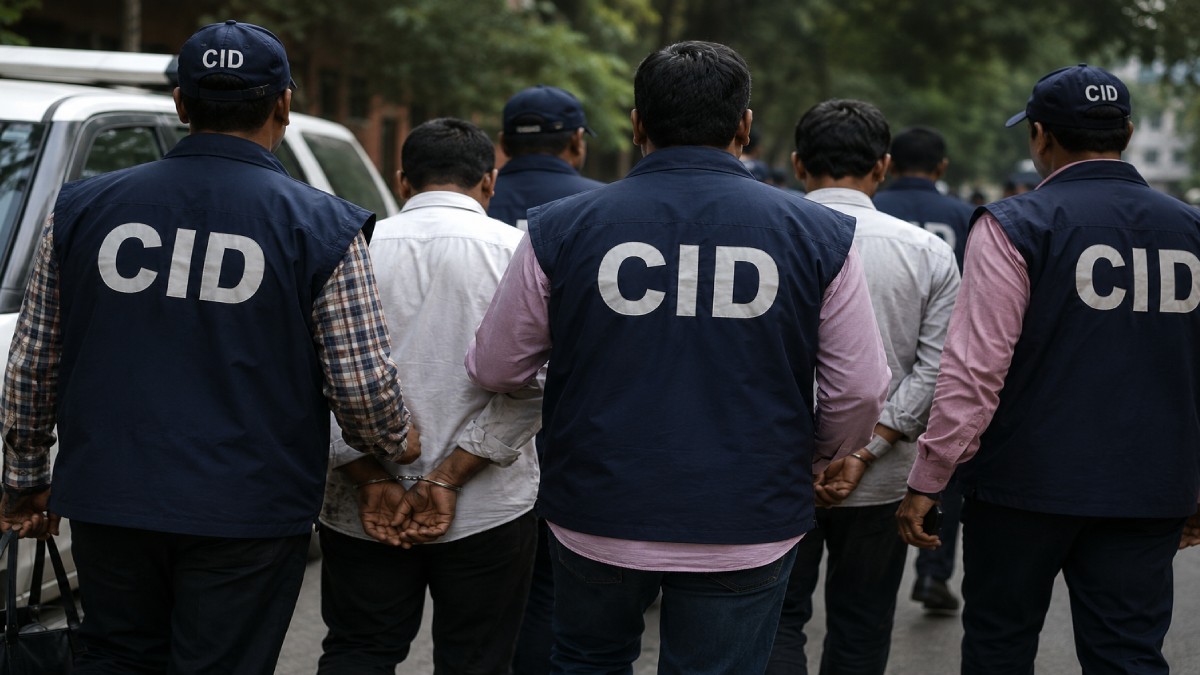
The newly arrested men are Umesh Kumar, Budheshwar Bhagat and Ramesh Kumar. CID officials said they have identified the accused as the three as intermediaries between candidates and the accused of the alleged network that were involved in illegal payments and coordination of the examination process, and are now in custody. The investigators believe that the accused played a key role in connecting aspirants to those who promised success in the competitive examination through illegal means.
The investigation is still open and more arrests can’t be ruled out as new evidence surfaces, the officials said.
The CID also questioned three key accused who were recently arrested after court-approved remand. They include Ramveer Singh, Director of TSR Data Processing Private Limited, which conducted the examination, Marketing Manager Abhay Kumar Tiwari alias Manoj Kumar Tiwari and Programmer Mohammad Usman. Investigators asked them about the conduct of the examination, the handling of OMR answer sheets, technical processes and allegations of manipulation of examination records.
One of the main objectives of the investigation is to establish whether OMR sheets were tampered with after the examination, how such manipulation might have been carried out, and whether the alleged irregularities influenced the final merit list and examination results.
The CID is at the same time looking at the financial aspects of the alleged scam. Bank transactions, digital payments, cash movements and other financial records are used to estimate how much money was collected from candidates and how the money was dispersed among those suspected of being involved in the conspiracy.
Investigators say so far the evidence suggests a well-organized network involving people connected with the examination-conducting agency, coaching institute operators, middlemen and other associates. The CID alleged a number of candidates were guaranteed to be selected in the preliminary examination after making substantial financial payments.
In fact, one particularly interesting allegation is that the original educational certificates, mark sheets and admit cards of the candidates were retained by network members as security until payment was made after the declaration of examination results. They believe this process helped candidates to remain financially invested in the alleged arrangement.
Earlier in the investigation, CID teams conducted simultaneous raids at 18 locations in Ranchi, Palamu, Hazaribagh, Bokaro and Dhanbad. During these coordinated search operations, officials recovered numerous documents, electronic devices, storage media, and several blank signed cheques.
These blank cheques were collected from candidates as financial guarantees and intended to enable recovery of the agreed payments once successful candidates received their results. The seized documents and electronic devices have since been sent for forensic examination.
Technical experts are currently analyzing mobile phones, computers, hard drives, digital storage devices, server logs, and OMR-related electronic data recovered during the raids. The forensic analysis will help establish communication links between the accused, reveal digital evidence of the alleged conspiracy, and identify other people who may have been involved in the recruitment racket, authorities hope.
The alleged scam has raised new questions about the transparency, fairness and credibility of recruitment for public sector jobs in Jharkhand. Competitive exams have been a major route into government employment and at least some of the allegations of organized manipulation have been raised, as well as the need for better precautions and monitoring mechanisms.
The investigators are also looking at whether similar methods may have been used in other recruitment examinations in the state. If evidence suggests a wider pattern of manipulation, the scope of the investigation may be extended further.
Legal experts say examination fraud cases frequently involve criminal conspiracy, cheating, forgery, breach of public trust and corruption. This would involve forensic examination of digital records, financial transactions, communication data and documentary evidence before charges are formally made.
CID said that the investigation is still ongoing and further arrests and additional charges are likely to be made as forensic reports and financial analysis are completed. All those responsible for compromising the integrity of the recruitment process will be dealt with according to the law, they said.






Comments
Please to leave a comment on this article.