
The Crime Branch-Crime Investigation Department (CB-CID) has made huge progress in the high-profile ₹100 crore Palani Mutt land scam with the arrest of suspended Sub-Registrar Justin Manikandan, who is accused of playing a crucial role in the alleged illegal transfer and registration of valuable temple property in Tamil Nadu.
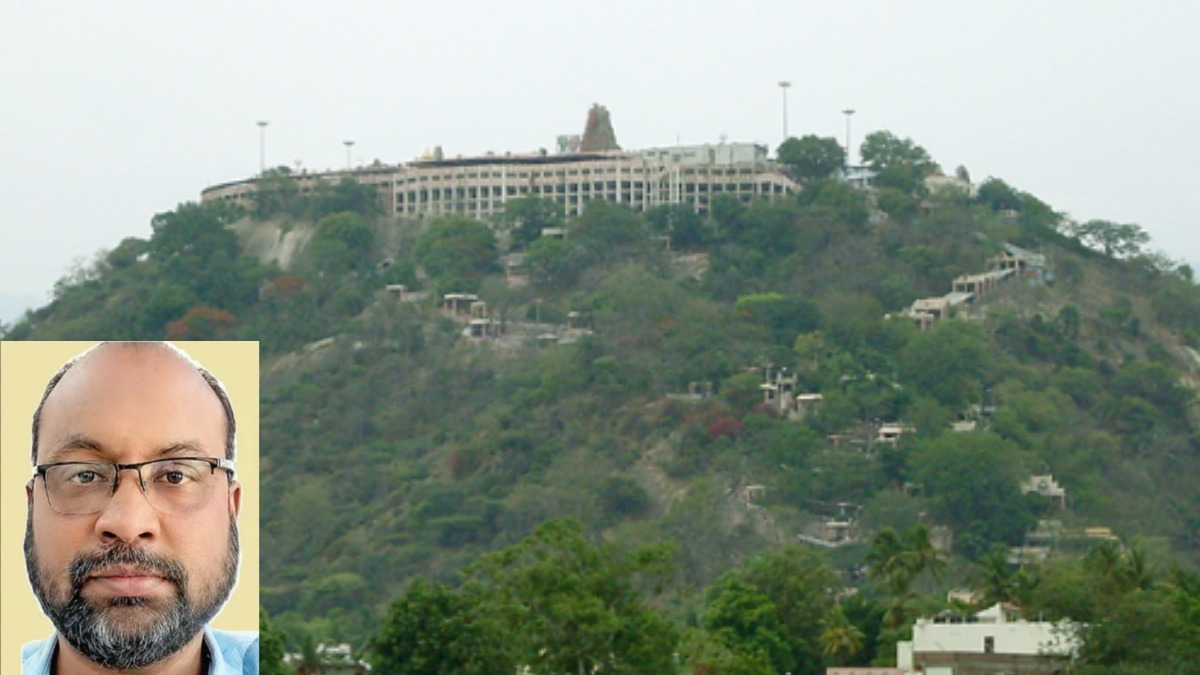
Manikandan was arrested near Silver Cascade Falls in Kodaikanal, Dindigul district, after a search by the CB-CID. This arrest will definitely be of great help to the investigators in finding out if anyone is behind the fake registration of 1.40 acres of land that belongs to Dhandapani Swami Mutt in Palani which is estimated to be about ₹100 crore.
The registration was carried out despite repeated objections of HR&CE Department which is very worrying about the security of temple and the integrity of land registration in the state.
The investigation of the case began on July 13 when HR&CE Department filed a complaint with the Palani Adivaram Police Station. The complaint alleged that the mutt's land was sold to two private persons despite the department repeatedly blocking the sale process.
The property had been officially connected to the HR&CE Department on September 25, 2025, and was used as a temporary parking facility for thousands of devotees visiting the famous Lord Dhandayudapani Temple in Palani. The land belonged to a religious institution so the transfer of the land should be in accordance with the legal provisions on Hindu temples. But investigators say the process was bypassed so that the land was registered in favour of private persons.
The conspiracy may have been influenced by D. Murugadas, elder brother of former Dhandapani Swami Mutt trustee Dhandapani Ayya, who is alleged to be behind the land deal, said one source. Murugadas was working closely with Justin Manikandan (Sub-Registrar at that time) who was also the registrar and the HR&CE Department, who tried to prevent the registration due to objections from the HR&CE Department.
The Registration Department has suspended Manikandan and the case became very serious and local police shifted the investigation to CB-CID. The government had decided to conduct a full investigation into the alleged misuse of power and the involvement of many people in the fraud.
CB-CID officially registered the case on July 16 and took on a much wider investigation. Four people were arrested on July 29 for their role in the transaction. Those arrested are alleged buyers K. Vellaithurai and Sethupathi, the purported seller D. Murugadas and the purported property broker S. Anwardeen, who is accused of facilitating the deal.
The investigators are now looking at land ownership records, registration files, financial transactions, communication records, and other documentary evidence to determine exactly what went wrong with the registration. They are also looking into whether forged documents, false declarations or procedural violations were used to complete the sale of the valuable temple land.
Justin Manikandan has also been in the news and his legal case has attracted a lot of attention. On July 17, the Madurai Bench of the Madras High Court granted him interim bail until August 4, which provided him with some temporary protection from arrest while the investigation was going on.
As the interim relief deadline was close, Manikandan came to court again and pleaded for anticipatory bail. But after considering the submissions by both sides the High Court dismissed his plea and cleared the way for his arrest. CB-CID officers quickly followed him to Kodaikanal and arrested him. He is expected to be questioned about his role in registration, ownership document verification, internal approval and relations with the other accused.
Many of the government records and official registration documents are still crucial to understanding the full extent of the fraud, investigators say. Revenue records, survey maps, title documents, digital registration logs and financial transactions related to the land deal are among those being studied by the CB-CID.
The officials are still trying to verify whether the alleged fraudulent registration was the result of individual misconduct or a bigger conspiracy of public officials, middlemen and private beneficiaries. They are also trying to find out whether similar fraud has occurred in other temple property transactions across Tamil Nadu. Forensic examination of electronic records and communication data is also on track to find evidence of the same.
The case has revived the debate over the safety and management of temple lands managed by HR&CE Department. Tamil Nadu is home to thousands of temples and religious institutions that collectively own huge land assets acquired through royal grants, donations, and endowments over a period of centuries. There have been many complaints over encroachments, illegal occupation, fake ownership claims, and fraudulent registration of temple properties over the years.
Digital land records need to be strengthened, stronger verification mechanisms should be put in place, more transparency in property registration should be introduced in the process of property registration and government departments need to be in the know for the protection of religious assets from fraudulent transactions.
The investigation is not over yet and more arrests are likely to follow, investigators have said. The CB-CID is interviewing those accused of the illegal seizure and reviewing documentary evidence to see if there was a larger conspiracy behind the alleged illegal transfer of the Palani Mutt land.
The government officials or private individuals who were involved in the transaction or who might have been involved in it are being examined and if new evidence emerges, further legal action is expected against those found responsible.
And while Justin Manikandan’s arrest was a significant step in the investigation, the authorities believe that the case is far from over. If the CB-CID is able to reconstruct the chain of events of the alleged ₹100 crore land fraud, the investigation will be under close judicial and public assessment. The result would have implications for temple property protection, land registration and public officials involved in managing valuable religious assets in Tamil Nadu.






Comments
Please to leave a comment on this article.