
In yet another case of cyber fraud, a 58-year-old man from Badlapur in Maharashtra lost ₹86.49 lakh after getting stuck in a sophisticated fake National Investigation Agency (NIA) “digital arrest” scam. It is a case of cybercriminals who exploit fear and fake law enforcement agencies to collect money from unsuspecting victims.
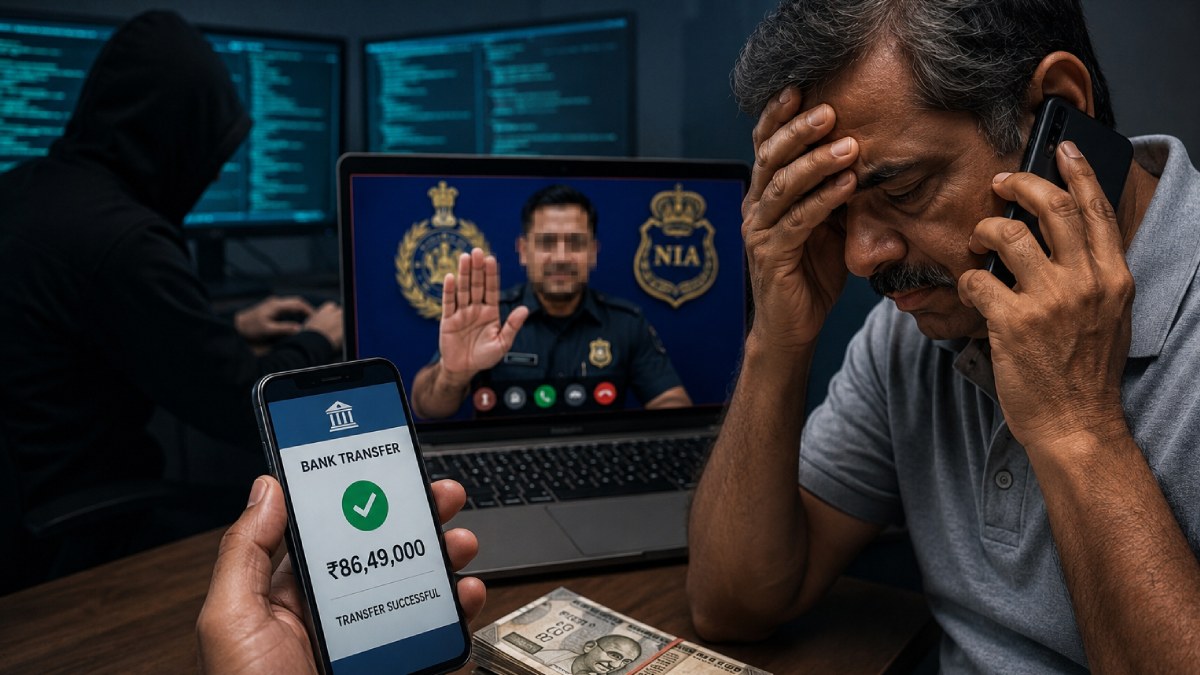
According to police reports, the victim received calls from officials acting like senior officials from the National Investigation Agency (NIA). The fraudsters said the man was linked to serious financial crimes and national security crimes and warned he would be arrested if he did not cooperate with their “investigation.”
To make their claims appear genuine, the scammers reportedly used official-sounding language, fake identification details, forged documents, and video calls resembling official proceedings. The victim was told not to disclose the ongoing “investigation” to family members, friends, or colleagues, as it would constitute obstruction of justice.
The fraudsters kept the victim under constant psychological pressure through frequent phone calls and online communication. They used such a “digital arrest” scam to tell the victim that they were under constant surveillance by law enforcement authorities and must follow every instruction given to avoid criminal prosecution.
The victim, who seemed to be convinced that the threats were genuine, transferred ₹86.49 lakh to various bank accounts provided by the fraudsters. The scammers assured him that the money was being deposited into a “secure government verification account” and would be returned after the investigation was completed.
It was only after the communication with the so-called officials stopped and no refund was received that the victim realized he had fallen prey to an elaborate cyber fraud. He went to the local police, after which a case was registered and an investigation was initiated.
Investigators are now working to track the bank accounts that received the money, and they are investigating the transaction records and trying to find the people who are behind it. Police believe that the scam may be linked to an interstate or international cybercrime network that targets victims with fake phone numbers, fake digital identities, and sophisticated social engineering techniques.
The “digital arrest” scam has emerged as one of the fastest-growing cyber fraud methods in India over the past year. Fraudsters impersonate agencies like the NIA, CBI, Enforcement Directorate (ED), Mumbai Police, Delhi Police, or other government departments to create fear and pressure victims into transferring large sums of money.
These scams are based on psychological manipulation rather than technical hacking, cybersecurity experts say. That is the way that criminals take advantage of people’s trust in government institutions. Most victims are encouraged to accept the calls without independent verification of the authenticity of the calls.
Law enforcement agencies have repeatedly indicated that no legitimate investigating agency makes arrests, investigations, or financial verification through video calls or demands money transfers to avoid legal action. Genuine officials follow established legal procedures and do not ask individuals to transfer funds to “safe” or “verification” accounts.
Fellow citizens should remain calm if they get threatening calls from people saying they are working for government agencies. People should independently verify such claims by contacting the relevant department through official channels and should never share banking credentials, OTPs, passwords, or transfer money based on phone instructions.
Authorities also recommend disconnecting suspicious calls, informing family members, and reporting incidents through the National Cyber Crime Reporting Portal or by contacting the 1930 Cyber Crime Helpline as quickly as possible. Reporting early increases the chances of freezing fraudulent transactions before the money is withdrawn.
Banks have also advised customers to be cautious in responding to unexpected financial transaction requests. Increasing public awareness is one of the most effective methods to fight the growing number of fraud cases happening across the country.
The Badlapur incident is another reminder of how sophisticated cybercriminals have become in exploiting technology and human psychology. Police are trying to catch those responsible and recover the stolen money, and the community should be vigilant against fake law enforcement calls and digital arrest scams.






Comments
Please to leave a comment on this article.