
Economists generally define recession as a period of declining economic activity in the country.
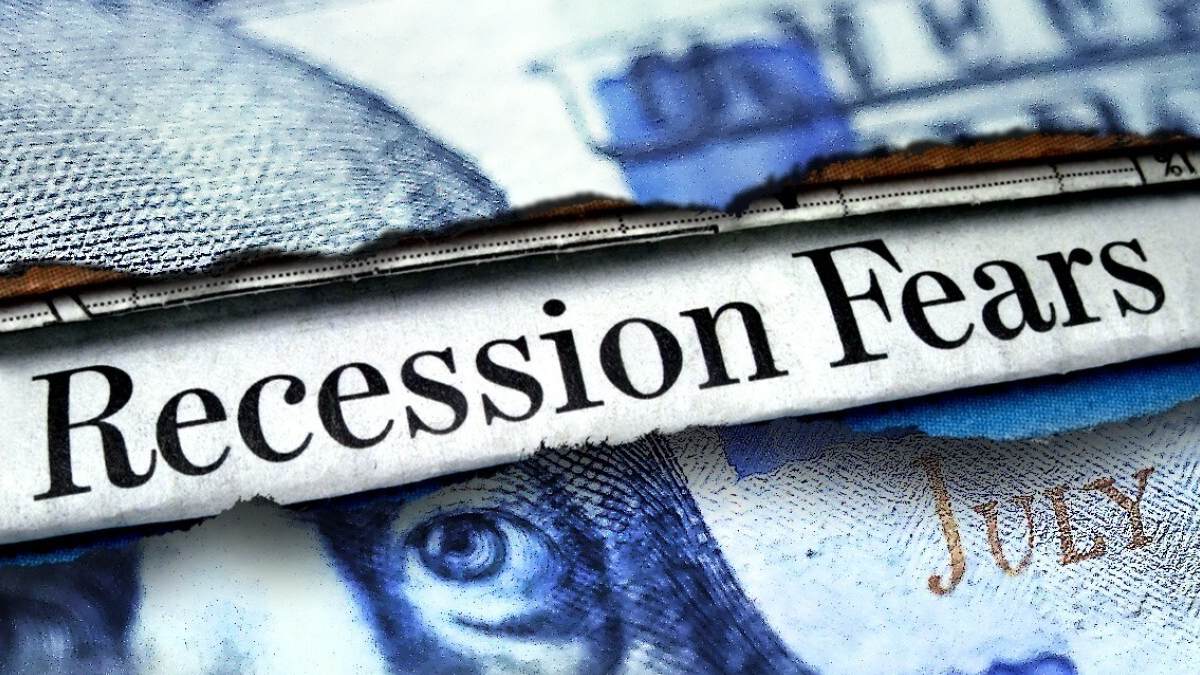
While two consecutive quarters of negative GDP growth are common indicators of recession, experts look at employment levels, industrial production, retail sales, and consumer confidence, and if it is not in recession we look at employment and industrial production, retail sales and consumer confidence first and how much we have a recession.
What are the causes of recession
One of the biggest causes of recession is a decline in consumer spending. Consumer spending accounts for a large percentage of economic activity, and lower consumption can cause companies to cut production and lay off workers; hence, less spending and recession.
Higher inflation is also one reason that central banks are raising interest rates in order to control inflation. If prices of products and services go up rapidly, central banks increase interest rates to limit inflation.
Higher interest rates have also led to investment and consumer spending falling and economic growth falling.
Other factors could be financial crises, global conflicts, supply chain breakdowns, pandemics, decreasing exports and sudden market crashes.
At this stage in time, such events lead businesses and consumers to spend less and create uncertainty and will make companies and consumers become less.
How much does a recession affect people
A recession can have a very immediate effect on households and businesses. Companies can cut jobs, lay people off, cut the number of workers or pay less or reduce wages to keep costs low.
Job seekers are faced with fewer job opportunities, and those already employed will find that they are paid less or won’t be promoted.
Consumers might also see less buying power as inflation is so high, especially if the economy is bad. Small businesses may see lower sales and investors could also see stock markets become more volatile.
Small businesses are the most vulnerable in times of recession because they often depend on a stable customer base and easier access to credit.
How can a recession be prevented
Governments and central banks deal with recession with different kinds of tools lowering interest rates, boosting public spending, tax relief, stimulus packages to get people to spend more money and invest.
Recessions can never be prevented, but at the very early stage they can be curtailed by policy measures to help the economy recover.
How can we prepare
It’s best to build an emergency fund to cover three to six months of costs. It's best to avoid high levels of debt, diversify your investments, learn new skills, and never panic during a market crisis.
Cash flow is important and long-term financial goals should be the focus and not emotions related to short-term market fluctuations.
The Bottom Line
Recessions are a natural part of the economic cycle and have been so for centuries. While they can bring financial challenges to businesses and households, they also encourage policy change, innovation and economic restructuring.
Knowing how recessions work allows people to make informed financial decisions and prepare for uncertainty and protect their long-term financial well-being.





Comments
Please to leave a comment on this article.