
An online post showing how a first-time ITR filer was late by 2.5 hours and forced to pay ₹5,000 for filing a tax return has led to a wider debate on tax compliance in India. The story has resonated with thousands of people online, some of whom called for the tax system to extend a grace period for legitimate mistakes, and others argued that statutory deadlines need to be uniform in such a way as to ensure fairness and compliance.
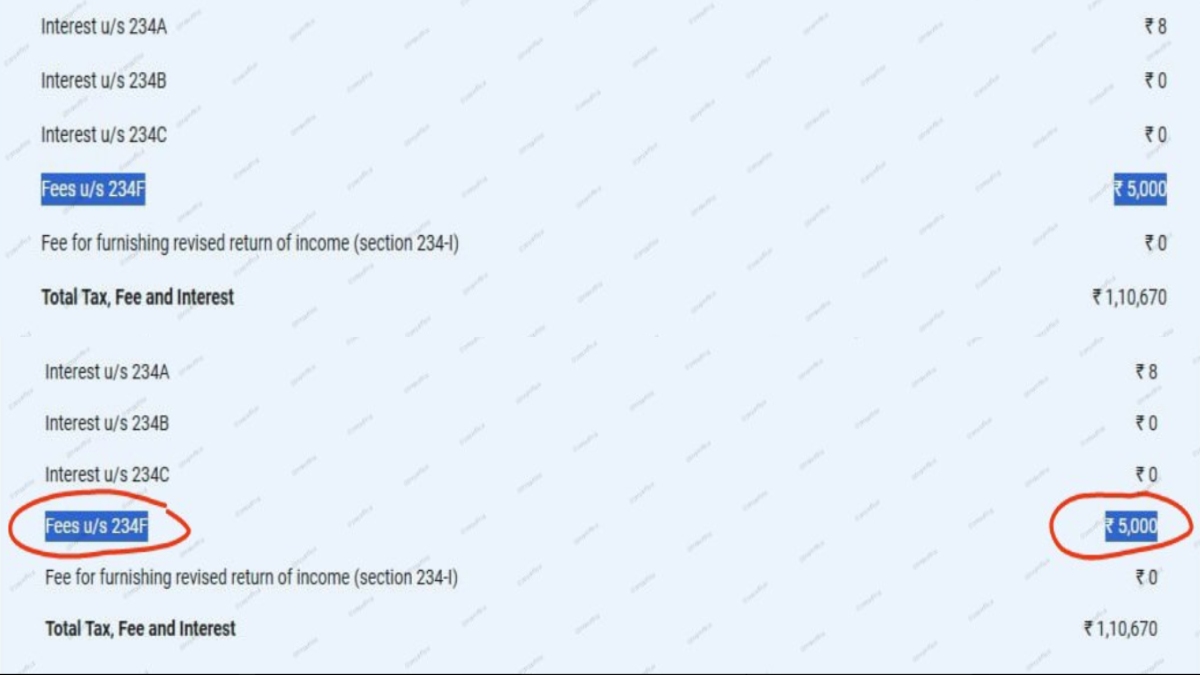
According to the viral post, the individual was filing his mother’s Income Tax Return for the first time. Because all the financial information was correct, he waited for a relevant document to be completed before submitting the return. But by the time he was on the income tax portal to do so, he said, the statutory deadline had already passed by approximately two and a half hours.
The post states the outstanding tax liability was only ₹850 but because the return was filed after the prescribed deadline, the system automatically imposed a ₹5,000 late filing fee, increasing the total amount payable to ₹5,850. We saw this one get a lot of attention on social media and people were shocked that such a small delay would result in a penalty much larger than the actual tax due.
One thing that stood out was the claim that there was no grace period despite the delay being only a few hours. It was the taxpayer’s first time filing an Income Tax Return and the system did not recognize genuine human errors or exceptional circumstances, the post stated.
The incident triggered an online debate. Many users empathized with the taxpayer and suggested that digital tax systems should have very little flexibility in the case of minor delays. Some suggested a grace period of hours or even a day or two in the case of technical glitches, documentation delays, internet failures, problems with internet or simply oversight to help taxpayers.
But others defended the existing framework, saying tax deadlines are announced well in advance and that regular enforcement is required to maintain the integrity of the tax system. In their view, discretionary grace periods could lead to uncertainty, administrative complexity, and delay in compliance.
Tax professionals also stressed that although the story has generated significant public discussion, penalties for late filing are governed by the provisions of the Income-tax Act and depend on factors including the appropriate assessment year, the taxpayer's total income, and statutory requirements. In many cases, late filing fees are automatically calculated by the online system based on the legal provisions in force, with little room for manual discretion once the deadline has expired.
Financial advisors generally recommend taxpayers to stop filing late because issues with documents, technical glitches, traffic on a website, or internet breakdown can happen well before the deadline. Filing returns well before the due date not only prevents penalties, but also allows time to correct errors, verify financial information, and deal with any portal issues.
It has also opened up discussions on whether digital governance systems may offer more user-friendly features especially for first-time taxpayers. Reminders, countdown alerts, and educational guidance, for example, could help to get people to comply with the law and may be more user-friendly.
Others noted that while compassion is understandable for genuine mistakes, tax administration is based on predictable and uniformly applied rules. They were worried that it might not be consistent and enforcement more difficult if exceptions are provided on a case-by-case basis.
Just a 2.5 hour delay
— Pooja (@poojaofficial5) August 4, 2026
and an ₹850 tax bill turned into ₹5,850.
A guy was filing his mother's Income Tax Return (ITR) for the very first time.
To ensure everything was accurate,
he waited for an important document before submitting the return.
But fate had other plans.
By… pic.twitter.com/UJmVhOaAFX
This incident is a reminder of the importance of timely tax compliance and sound financial planning. The more people who file returns online, the more the deadlines, documentation requirements, and penalties are to be taken into account.
Whether policymakers will consider some degree of flexibility in future tax filing frameworks remains to be seen. But the debate highlights the delicate balance between strict compliance standards and the need to accommodate genuine human errors in a new digital tax system.






Comments
Please to leave a comment on this article.