
The newly introduced Viksit Bharat-Guarantee for Rozgar and Ajeevika Mission (Gramin), which is also known as VB-G RAM G, has seen a sharp decline in rural employment growth in the first month of implementation, according to the figures.
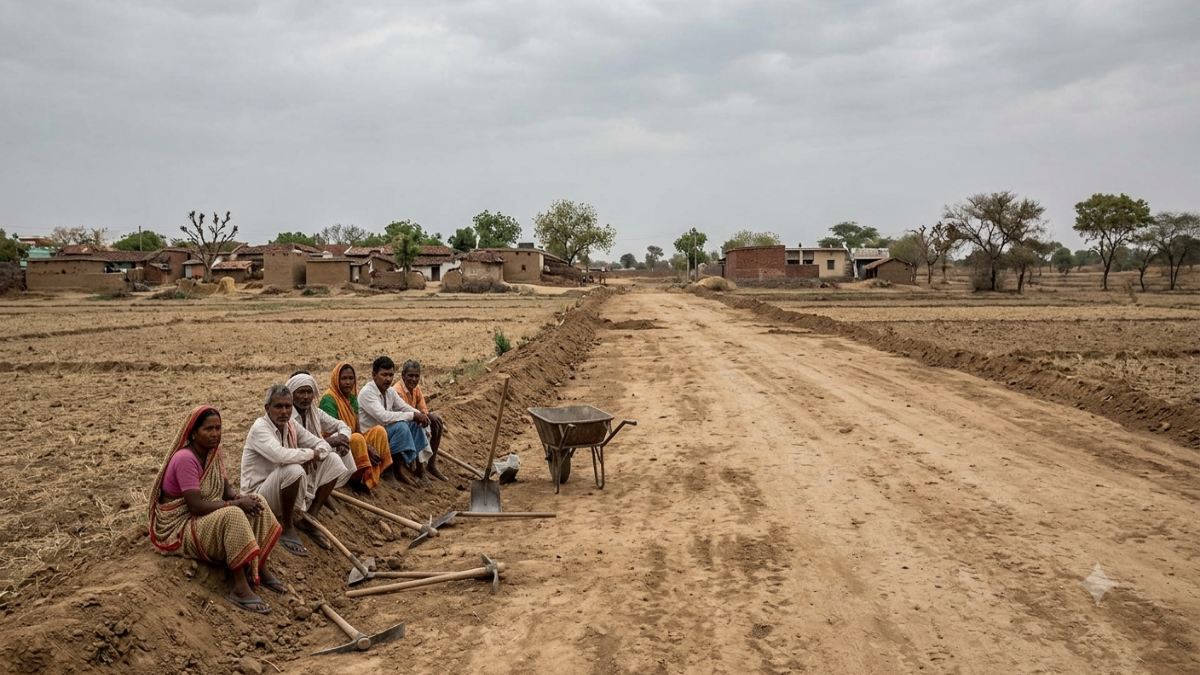
The scheme generated 7.67 crore person-days of employment in July compared to 15.33 crore person-days generated under the Mahatma Gandhi National Rural Employment Guarantee Scheme (MGNREGS) in the same month a year ago.
The year-on-year decline of about 49.94 per cent was a strong indication of a sharp reduction in rural employment in the first month under the new framework. The development is likely to make people pay attention as rural employment programmes play a big part in providing income for families with seasonal and agricultural employment.
The VB-G RAM G scheme is based on the wider agenda to expand employment opportunities and livelihoods in rural India. And this is as policymakers are focusing on rural infrastructure development, income security and livelihoods generation in villages.
Person-days are an important measure used to assess employment generated under rural job programmes. One person-day generally represents one person being provided employment for one day. Hence, the 7.67 crore person-days we are seeing in July is the total employment that the programme produced in July, not the number of people working.
The comparison with the previous year’s 15.33 crore person-days under MGNREGS indicates the magnitude of the decline. However, a year-on-year comparison of one month might not capture the whole picture of the performance of a new programme. The employment demand and availability of employment could vary greatly depending on agricultural activity, monsoon conditions, local requirements and the timing of project approvals.
Rural employment schemes are generally seasonally diverse and fluctuate. Agricultural activities in many parts of India affect the availability of workers and their demand for government-supported jobs. In times of intensive farm activity, some workers may prefer or be able to find employment in agriculture rather than seek work through public employment programmes.
The transition from MGNREGS to the VB-G RAM G framework also makes the July figures particularly important. The first month gives a first indication of how the new system is functioning, but more data for several months will be needed to determine whether the decline is a temporary transition-related trend or a sustained reduction in rural employment generation.
The reported figures might also raise questions about implementation capacity, project availability and the speed at which opportunities for employment are being created under the new scheme. For rural households that rely on public employment when agricultural jobs are scarce, timely access to jobs can be especially important.
At the same time, employment generation should not only be measured by person-day numbers. The kind of work being done, wages provided, the duration of employment, completion of rural infrastructure projects and the reach of the programme among vulnerable households are also important indicators.
The government may therefore need to monitor the implementation of VB-G RAM G closely as the programme progresses. If employment demand increases in the following months, authorities will have to ensure that sufficient projects and funds are available to accommodate eligible rural workers.
With the decline also occurring at a time when agricultural income, weather conditions and economic opportunities are very much in hand and rural livelihoods are still closely linked. Public employment programmes can be a safety net when agricultural work is seasonal or uncertain.
For now, the July figures provide a snapshot of the new programme. The nearly 50 per cent decline, compared with July last year, is significant but future monthly data will play a crucial role in determining the longer-term trajectory of rural employment through VB-G RAM G.
As the scheme moves beyond the initial implementation phase of the programme, there will probably be a focus on employment generation, how quickly projects get funded and whether rural households have access to work when they need it.
And so the next few months will be crucial to see how effective the new rural employment framework is. A sustained increase in person-days would indicate that the policy is working and low numbers would raise more questions about employment availability and programme delivery.
The July data has already put a spotlight on the transition to VB-G RAM G. But for millions of rural households, the most important measure will ultimately be whether the scheme provides reliable employment, timely wages and meaningful livelihood support when rural workers need it most.






Comments
Please to leave a comment on this article.