PM POSHAN (Pradhan Mantri Poshan Shakti Nirman) Scheme is one of India’s largest school nutrition programs aimed at improving health and nutrition and education of kids in Government and Government-aided schools. The scheme is run by the Department of School Education and Literacy under the Ministry of Education and provides free hot cooked meals to eligible school children in India.
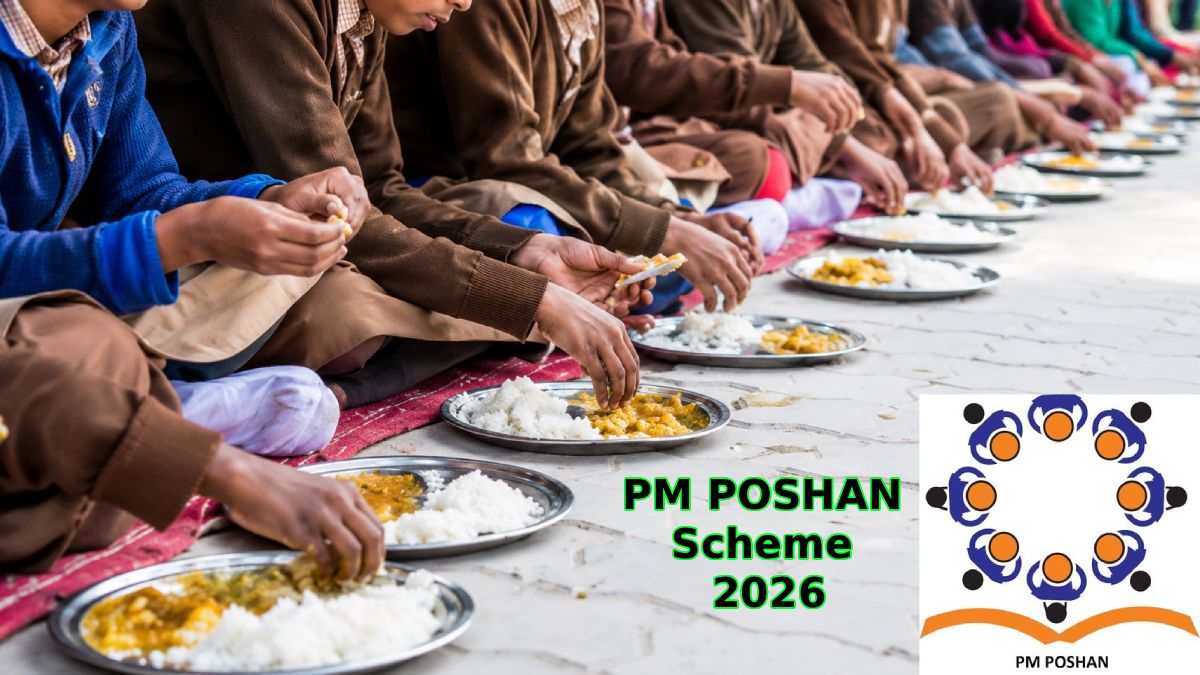
The initiative is important in bringing about a solution to two major problems for many children in India: hunger and lack of education. By providing children with healthy meals and enough food in school, the government aims to improve the quality of education for kids (at school and during school hours) so they can attend school and work with them to increase participation rates, reduce dropout rates, and improve learning.
What is the PM POSHAN scheme?
PM POSHAN is a centrally sponsored scheme where hot cooked meals are provided to students studying in Government and Government-aided schools. The program covers children from Classes I to VIII and also children enrolled in pre-schools or Bal Vatika classes attached to primary schools.
The scheme is implemented uniformly across India without discrimination based on caste, class, religion, social status, or economic status.
The program is for 11.80 crore children who are in almost 11.20 lakh schools across the country, making it one of the world's largest school feeding programs.
PM POSHAN Scheme: Objectives
The primary objectives of the PM POSHAN Abhiyaan include:
1. Advancing Nutritional Status
Many children of economically weaker backgrounds have nutritional deficiencies. The scheme provides healthy diets that promote growth and development.
2. Higher Student Attendance
Free meals cause children from disadvantaged families, particularly those from poor families, to get to school regularly.
3. Reducing Dropout Rates
Food is good for kids and children in schools, and preventing early dropouts.
4. Enhancing Learning Outcomes
A well-nourished child is more likely to concentrate better in classrooms, be active in them, and do well in school.
5. Promoting Social Equality
Children from different backgrounds sit together and share meals, fostering social harmony and inclusiveness.
Nutrition Standards Under PM POSHAN
The scheme has nutrition guidelines in place to ensure children receive sufficient calories and protein daily, and it is based on a daily diet and routine.
Primary Classes (I to V)
- Calories: 450 kcal.
- Protein: 12 grams.
Upper Primary Classes (VI to VIII)
- Calories: 700 kcal.
- Protein: 20 grams.
These nutritional requirements are intended to support children’s physical and mental development during their school years.
Food Norms Per Child Per Day
Primary Students (Classes I to V)
- Food Grains: 100 grams.
- Pulses: 20 grams.
- Vegetables: 50 grams.
- Oil and Fat: 5 grams.
- Salt and condiments: As required.
Upper Primary Students (Classes VI to VIII)
- Food Grains: 150 grams
- Pulses: 30 grams.
- Vegetables: 75 grams.
- Oil and fat: 7.5 grams.
- Salt and condiments: as required.
The food norms we are set up with are such that we are in good nutritional balance and food diversity.
Including Bal Vatika and Pre-School Children
A major feature of PM POSHAN is children enrolled in Bal Vatika or pre-school classes operating in primary schools.
This expansion provides nutritional support to children at the most important early childhood development stage and complements the government’s wider child welfare efforts.
PM POSHAN and ICDS
PM POSHAN works alongside several other child welfare programs under India's broader nutrition and development framework.
The scheme is connected with the Integrated Child Development Services (ICDS) ecosystem in which:
- Anganwadi Services Scheme
- Pradhan Mantri Matru Vandana Yojana (PMMVY).
- Scheme for Adolescent Girls. POSHAN Abhiyaan.
- All these measures will enhance maternal and child nutrition across different age groups.
Eligibility Criteria
Children are eligible for benefits under PM POSHAN if they meet the following conditions:
- Must be a citizen of India.
- Must be studying in Classes I to VIII.
- Must be enrolled in a Government school.
- Must be in a Government-aided school.
- Children in Bal Vatika or pre-school classes attached to primary schools are also covered.
The scheme is universal for eligible students and does not require income-based eligibility verification.
Application Process
- No Application Required
- One of the most convenient aspects of PM POSHAN is that there is no separate application process.
- All eligible students studying in Government and Government-aided schools automatically receive benefits under the scheme.
- Parents and students do not need to submit forms or register separately.
Documents Required
- No documents are required to receive benefits under PM POSHAN.
- Enrollment in an eligible Government or Government-aided school automatically qualifies students for the scheme.
PM POSHAN impact on education
School meal programs have been a significant component of:
- Increased enrollment rates.
- Better classroom attendance.
- Better concentration of students.
- Better nutritional outcomes.
- Greater participation of girls in education.
- Reduced social disparities among students.
The scheme is still very much an important help mechanism for lakhs of India’s families.
PM POSHAN is much more than a school meal program; it is a social welfare programme that is good for nutrition and education. By providing free, nutritious hot cooked meals to crores of children, the scheme promotes healthy growth; it helps to boost school attendance; it boosts learning, and it promotes social equality.
On the side of India’s push to improve child health and education, PM POSHAN remains a foundational initiative for making sure that no child has to choose between hunger and education.
Frequently Asked Questions (FAQs).
1. What is the PM POSHAN Scheme?
PM POSHAN is a centrally sponsored scheme that provides free hot cooked meals to children studying in Government and Government-aided schools across India.
2. Who implements PM POSHAN?
The scheme is implemented by the Department of School Education and Literacy under the Ministry of Education, Government of India.
3. Who is eligible for PM POSHAN?
Students studying in Classes I to VIII in Government and Government-aided schools are eligible. Bal Vatika and pre-school children in primary schools are also covered.
4. Is there any application process for PM POSHAN?
No. Eligible students automatically receive benefits through their schools.
5. Are any documents required to avail the scheme?
No documents are needed.
6. What nutritional support is provided to primary students?
Primary students are fed 450 calories and 12 grams of protein per day.
7. What nutritional support is given to upper primary students?
Upper primary students receive meals containing 700 calories and 20 grams of protein per day.
8. How many children benefit from PM POSHAN?
About 11.80 crore children in 11.20 lakh schools benefit from the scheme.
9. Does the scheme cover pre-school children?
Yes. Children enrolled in Bal Vatika and pre-school classes attached to primary schools are covered.
10. What is the main goal of PM POSHAN?
The programme aims to improve child nutrition, increase school attendance, reduce dropout rates, and enhance educational outcomes.



Comments
Please to leave a comment on this article.