
India’s transformation from the physical to the digital payments economy has been one of the biggest financial changes in this decade. The quick spread of UPI, mobile banking and digital wallets has made cashless transactions more common. Yet, in spite of this digital revolution, physical currency remains in India’s economy.
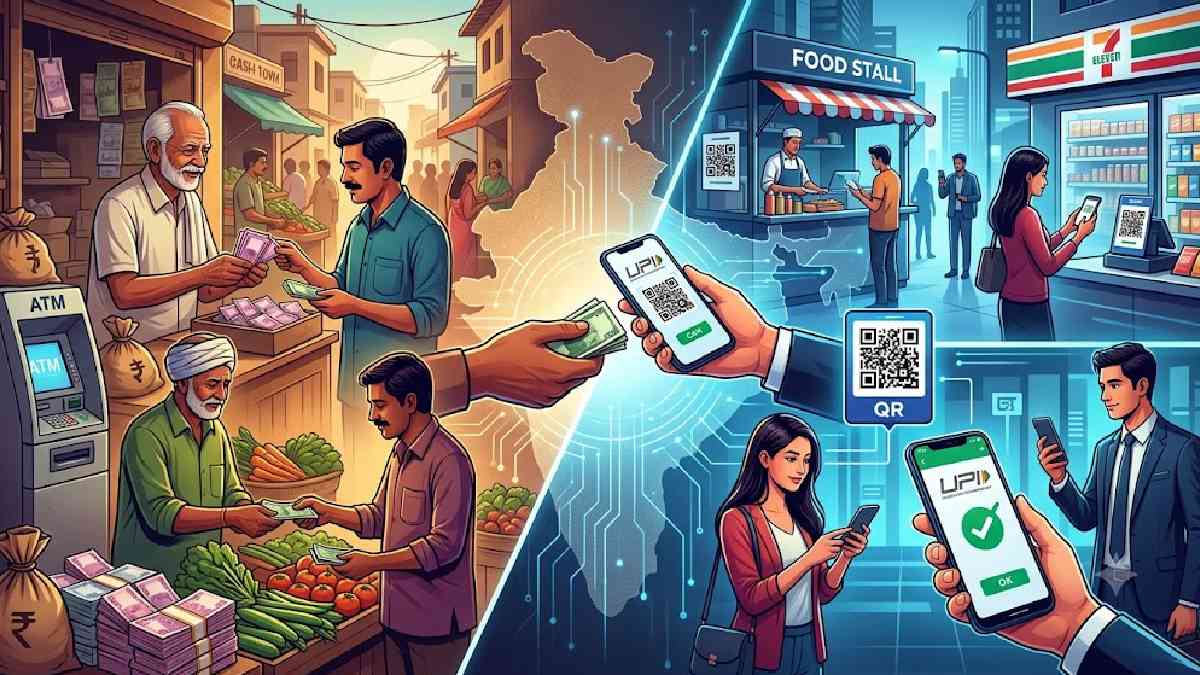
According to RBI Deputy Governor Swaminathan J, also referred to as Shirish Chandra Murmu in the supplied information, currency in circulation (CIC) continues to grow at a double-digit rate. This trend illustrates a significant aspect of India's payments system: digital payments are growing quickly, but cash demand is not going away.
The Reserve Bank of India currently has around 17,600 crore banknotes in circulation. The central bank prints approximately 2,800-3,000 crore banknotes every year, while nearly 2,100 crore notes are disposed of annually.
Currency in circulation has more than doubled
The scale of India’s cash economy becomes clearer looking at the long-term numbers.
Currency in circulation had reached around ₹42.43 lakh crore as of August 7, compared to about ₹37.24 lakh crore in FY25 and ₹41.65 lakh crore in FY26.
CIC was much lower a decade ago. It was about ₹16.63 lakh crore in FY16 and was about ₹24.47 lakh crore in FY20.
The increase means that the amount of currency circulating through the economy has more than doubled over the past decade.
This seems surprising at a time in which India is one of the world’s largest digital payments markets. But the increase in cash doesn’t mean consumers are rejecting digital payments. Rather, different payment methods are being used more and more for different purposes.
Why Cash Remains Important
Cash is still important outside India’s largest metropolitan regions.
According to the RBI official, non-Tier-I cities, low-income groups, older consumers and small businesses remain more dependent on physical currency.
Cash is easy for consumers and businesses and settles the matter quickly without a cellphone, internet connection or digital payment infrastructure.
Small businesses focusing on thin margins may also prefer cash because it does not have the same digital payment economics as some merchant transactions.
Another factor is increased consumption outside the big cities. As incomes and spending capacity increase in rural and semi-urban India, demand for currency can increase alongside overall economic activity.
Rural Consumption Is Rising
Data from the Ministry of Statistics and Programme Implementation is another important piece of the puzzle.
Rural monthly per capita consumption expenditure, or MPCE, has increased considerably over the past decade. The data released indicates that rural MPCE grew by about 164% in this time.
Higher consumption means more transactions in all kinds of areas of consumption such as groceries, transportation, local services, and everyday items. A growing share of these transactions can be made online, but cash remains the most common method of payment.
Thus, the increasing cash circulation may be a function of economic growth and higher consumption, not just digital adoption.
ATM Withdrawals Show Continued Cash Demand
There is also evidence of ATM usage to show physical currency is still relevant.
Average monthly cash dispensation through ATMs stood at ₹1.30 crore in calendar 2025, according to the information provided.
While digital payment infrastructure has grown significantly, consumers still withdraw cash for transactions where physical currency is preferred, or digital payments are less practical.
And it is especially relevant to markets where small merchants, local service providers, or consumers continue to depend on cash.
UPI Has Not Eliminated Cash
India’s UPI ecosystem has revolutionized everyday payments. Consumers can transfer money instantly using smartphones and merchants can accept payments through QR codes without traditional card terminals.
However, the rise of UPI has not led to a corresponding decrease in cash usage.
Instead, India seems to be developing a dual payment ecosystem. Consumers could use UPI for online purchases, bills, transfers, and payments to digitally enabled merchants while continuing to use cash for local transactions and businesses that prefer physical currency.
Such coexistence is an important distinction in assessing India's transition toward a digital economy.
The MDR Question
Merchant economics also may influence the continued popularity of cash.
Small retailers and small businesses with low profit margins may find the cost of accepting digital payments to be an important consideration. Merchant Discount Rate (MDR) charges on UPI transactions may make cash relatively attractive for some businesses.
While UPI's widespread adoption has drastically reduced friction in digital payments, merchant economics is still an important part of the overall payments landscape.
Cash and Digital Payments Can Grow Together
The Indian experience challenges the assumption that digital payment growth automatically leads to a proportional decline in cash usage.
Instead, both systems are growing and more and more are serving different parts of the economy and consumer needs.
UPI has made digital payments easier and faster, while cash is still available for convenience, familiarity and universal acceptance in many parts of the country.
So the fact that currency circulation is still rising in India does not indicate a failure of digital payments transformation. Rather, it demonstrates the complexity of a large and diverse economy in which new financial technology and old payment methods can coexist.
Cash will remain an important part of the Indian economy in the future as digital infrastructure expands in rural areas, small businesses, and populations that still prefer physical currency.





Comments
Please to leave a comment on this article.