
The US Treasury bought back $2 billion more of its own debt yesterday, the total amount of Treasury buybacks this month was $8 billion. The deal comes just as the US government is still using debt buybacks as part of its broader strategy to navigate the huge Treasury securities market.
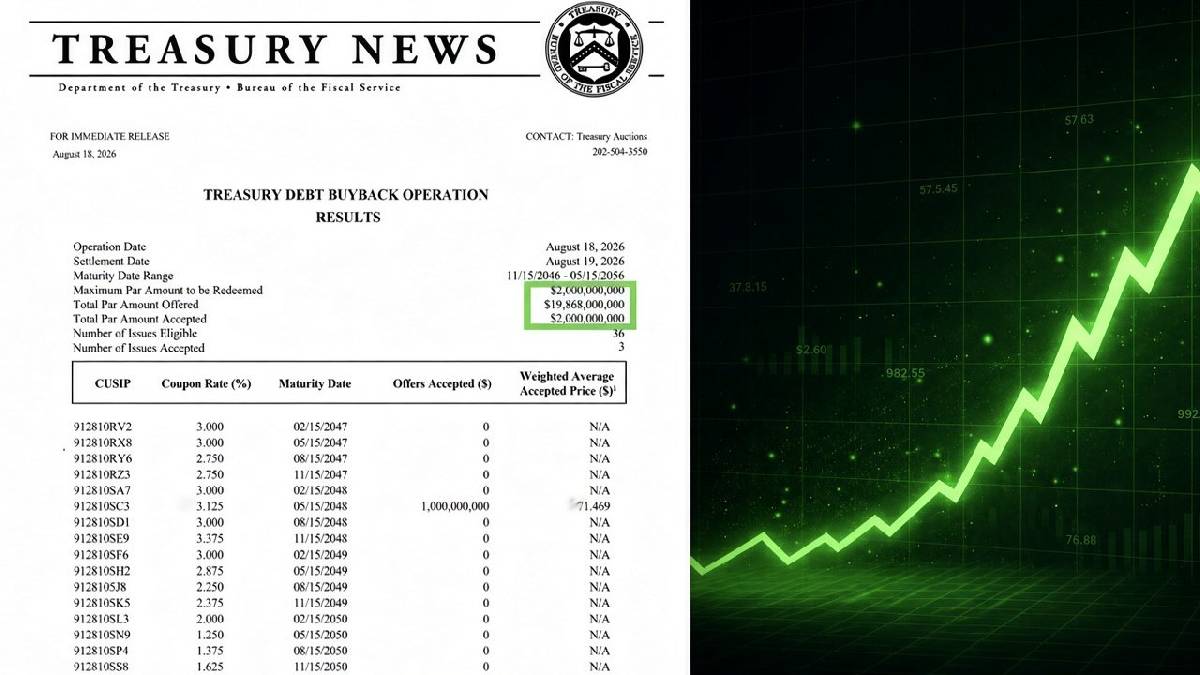
And the development is getting some attention at a time in which the US bond market has been under increasing scrutiny. Treasury yields have soared and investors have been thinking about inflation, government borrowing needs, fiscal deficits and the market’s ability to absorb more issuance.
The US Treasury's buyback program is not the same as the Fed's quantitative easing. Treasury buybacks are conducted by the Department of the Treasury as a debt-management operation and are primarily to improve liquidity in older, less actively traded Treasury securities and help manage the government's outstanding debt portfolio.
The Treasury has been expanding its buyback program. In its August 2026 quarterly refunding plan, the department said it would purchase up to $38 billion of off-the-run securities for liquidity support in the quarter and another $25 billion of securities in the 1-month to 2-year maturity range for cash-management purposes.
The latest reported $2 billion purchase therefore needs to be seen in the context of an already existing program rather than as an emergency intervention.
Treasury buybacks can serve many purposes. Older Treasury securities (sometimes referred to as off-the-run securities) may become less liquid than newer benchmark issues. The Treasury can purchase such securities to increase market liquidity and make them easier for investors to trade.
The government can also use buybacks as part of its cash-management plan. The Treasury can repurchase some chosen securities and still offer new debt at regular auctions through the official framework.
It comes at a very difficult time for the US government debt. The national debt is nearing $40 trillion and the federal government is running huge budget deficits. By July 2026, the US fiscal-year-to-date deficit had already surpassed the full-year deficit in fiscal 2025, Reuters reported.
At the same time, investors have asked for higher yields for holding longer-term US government securities. Recent Treasury auctions have produced dramatically higher borrowing costs; the 10-year Treasury yield reached levels not seen in many years, and the 30-year bond yield rose to above 5%.
Another important factor is foreign demand. Private foreign purchases of US government debt have fallen for the first time in three years and central banks have also reduced their Treasury holdings, according to recent data. In the prior year, private foreign investors’ net purchase of US Treasuries had fallen by more than 40 percent year-on-year on the back of a changing demand environment, it said.
So Treasury buybacks could support liquidity in certain parts of the bond market. But a buyback does not mean the United States is paying down its total debt by the same amount. The Treasury can issue new securities to pay for government spending and refinance maturing obligations simultaneously.
This distinction is important because the US government's overall borrowing requirement is still extremely large. A $2 billion buyback is relatively small compared to the size of the Treasury market and government's annual financing needs.
But the recent operation shows Treasury is in fact managing the structure and liquidity of its debt. Government official records show that the department has already done tens of billions of dollars in buybacks during the current refunding quarter.
The bigger question in financial markets is how Treasury buybacks are related to ongoing issuance. If the government buys less-liquid older securities and issues new benchmark bonds, the Treasury market could change the composition of the Treasury market but not necessarily reduce the overall debt weight.
Investors also want to see if buybacks can boost liquidity enough to reduce market volatility. Treasury securities are the bedrock of financial markets in the world and so changes in liquidity, yield and demand can affect everything from mortgage rates to corporate borrowing costs and emerging-market capital flows.
The latest $2 billion purchase, therefore, comes at a crucial time. US borrowing costs are high, the federal deficit is growing and world demand for Treasuries is weakening.
For now, the $8 billion announced monthly buyback total is evidence of the Treasury’s increasingly active ways of dealing with its huge debt market. But the program should not be seen as a reversal of America’s wider borrowing trend. The US government is still issuing huge quantities of new debt when it buys back selected existing securities.
The key takeaway for markets is that Treasury is using buybacks primarily as a debt-management and liquidity tool, while broader questions surrounding America’s fiscal deficit, debt levels and investor demand remain unresolved.






Comments
Please to leave a comment on this article.