
Tata Consultancy Services Ltd. (TCS) faced pressure Tuesday on the merits and demerits of its acquisition of MHP Management, a unit of German luxury automaker Porsche. Brokerages said the strategic value of that deal, but also the near-term financial impact and the weakness of the European automotive sector, were not welcomed.
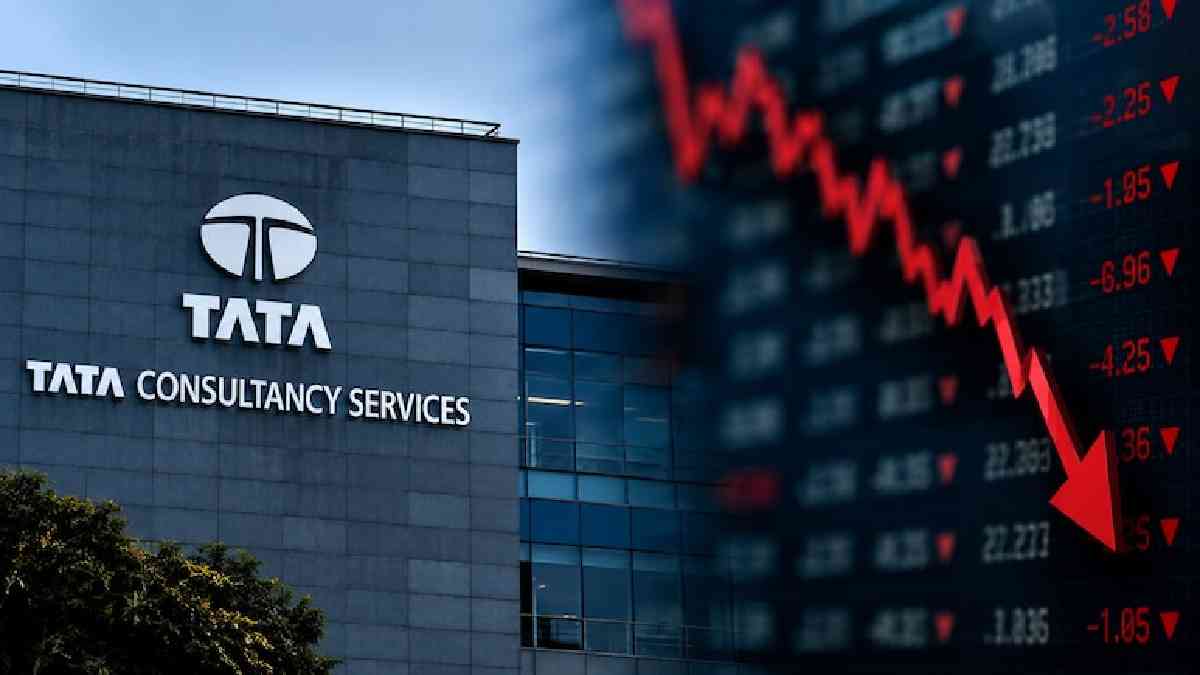
TCS shares fell as much as 0.7 per cent to ₹2,268.90 yesterday in Tuesday’s market action. The decline was also accompanied by a drop in other major Indian IT stocks including Hexaware Technologies, HCLTech, Oracle Financial Services, Birlasoft, Persistent Systems, Tech Mahindra, Wipro, Infosys and Tata Elxsi.
The deal is being watched closely since it will allow TCS to grow in automotive technology and consulting as well as in its relationship with Porsche. But analysts are not confident that, from a financial perspective, the deal would be a real driver for TCS’ earnings in the near term.
The TCS Porsche deal is focused on AI and Automotive Technology
TCS will acquire MHP Management in the transaction for ₹3,575 crore.
TCS’s partnership with Porsche will be centered on AI-led transformation in engineering, manufacturing, operations, customer experience and enterprise transformation, it said.
The companies are also planning to collaborate on next-generation automotive technology services and software-defined mobility platforms in what is increasingly important as automakers move toward connected vehicles and software-driven automotive ecosystems.
The transaction is subject to regulatory approval in the European Union and Germany.
If completed as expected, the acquisition will enhance TCS’ automotive consulting capabilities and increase the company’s entry into the European automotive market.
CLSA Sees Strategic Upside
CLSA retained its Hold rating on TCS and set a target price of ₹2,326.
In CLSA's view, the deal could be reflected on TCS' order book during the second quarter, and the acquisition itself would take around three to four months to close.
One of the benefits of the brokerage is that TCS could improve MHP’s profitability by offering an offshore delivery model. More offshore resources could help the acquired business improve operating efficiency.
CLSA also believes the transaction fills some gaps in TCS' automotive consulting portfolio and expands its exposure to European automotive customers.
Morgan Stanley: It should have a small financial impact
Morgan Stanley maintained an Equal-weight rating on TCS with a target price of ₹2,200.
The brokerage described the acquisition as complementary to TCS’ existing business and said the Porsche relationship could develop into a significant long-term strategic partnership.
Morgan Stanley expects that the immediate financial impact of the acquisition to be relatively small, however.
The brokerage says that the transaction may add up to 3% to revenue growth and less than 1% to profit after tax, assuming mid-single-digit margins.
Morgan Stanley also mentioned that TCS has increasingly relied on acquisitions to fill gaps in capabilities and geographic markets. As such, the MHP transaction could be seen as a medium-term positive rather than an immediate earnings catalyst.
At the same time, the brokerage highlighted the slowdown in the automotive industry and MHP's declining revenue profile as important risks for investors.
Citi Remains Cautious on TCS
Citi took a more cautious approach and maintained its Sell rating on TCS with a target price of ₹1,825.
The brokerage admits the acquisition could help to develop a long-term relationship between TCS and Porsche. But Citi is still concerned about the revenue outlook of the acquired business.
Assuming MHP achieves a EUR 600 million to EUR 700 million revenue run rate in FY28 and EBIT margins of around 7% to 9%, Citi estimates the transaction at around 5 to 8 times enterprise value to EBIT.
Citi sees the valuation as relatively low, but it pointed to the possibility of further revenue declines at MHP. European IT companies, too, are at similar levels of valuation, the brokerage stated.
What the acquisition means for TCS Investors?
The TCS-MHP transaction is indicative of the changing needs of Indian IT companies to grow beyond outsourcing.
It is clear that automotive technology is undergoing a transformation as artificial intelligence, connected vehicles, cloud computing, software-defined vehicles and digital manufacturing are all at the forefront of the automotive industry. TCS’ growing exposure to these fields may allow for longer-term expansion.
But the deal also carries execution risks. The integration of MHP in TCS' global delivery model, improving margins, and recovering any revenue weakness will be important in assessing whether or not the acquisition creates value for shareholders.
The mixed brokerage views also demonstrate the difference between strategic value and immediate financial value. TCS could get new clients, capabilities and European automotive opportunities, but contribution to revenue and earnings may be modest initially.
With regard to investors, the key things to monitor will be regulatory approvals, MHP's revenue growth, margin growth, Porsche deals and the growth outlook of TCS.
Citi’s more general cautious view on Indian IT stocks also suggests that the acquisition alone may not be enough to alleviate concerns over slower technology spending and weakness in some overseas markets.
On the whole, the acquisition strengthens TCS’s position in automotive consulting and AI-led transformation, but how successful the company will be in the long run will ultimately depend on whether it can convert the strategic relationship with Porsche and MHP into recurring revenue growth and improved profitability.



Comments
Please to leave a comment on this article.