
A Gurugram woman who is looking for a life partner has lost ₹2.31 lakh after a man she met on a matrimonial app introduced himself and married her to a stranger through a cyber fraud, she said.
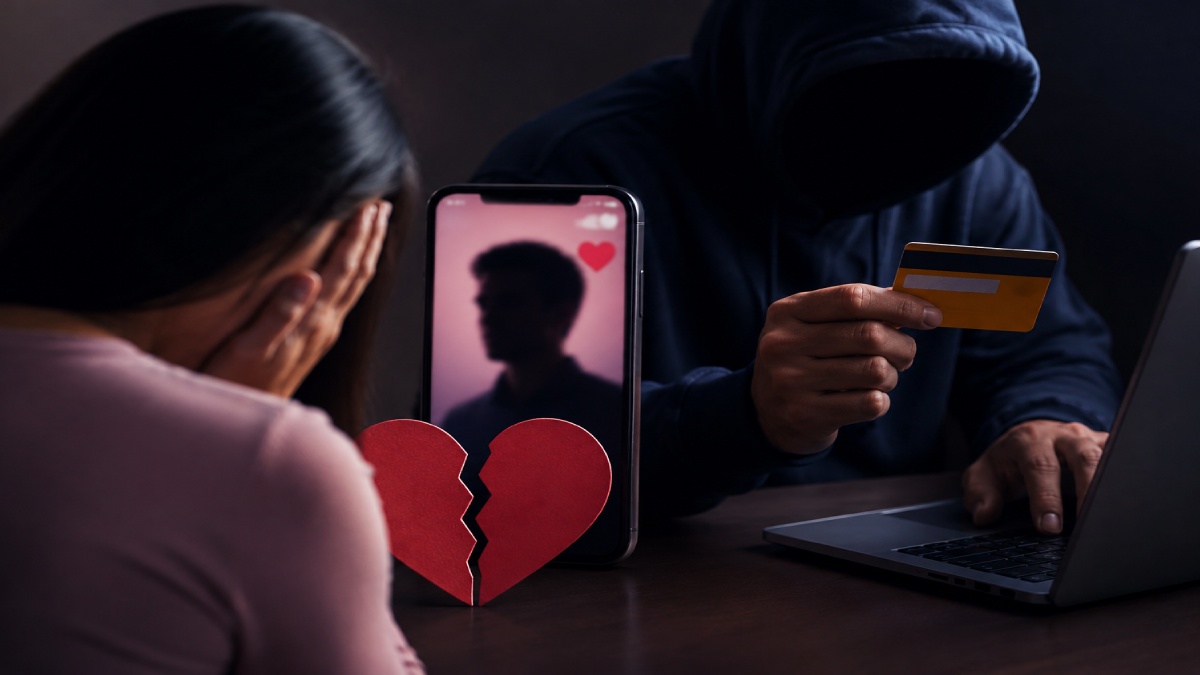
The unidentified man had come at first to her as a prospective marriage partner and gradually gained the woman’s confidence over a series of conversations and took her credit card number and used it for unauthorized transactions. She only realized the fraud once she received a message from her bank that the transactions were fake and after that, she was told about the fraud.
Dating and logistics are a major risk to security and the security of the website that the victim is using. This is being investigated by Cyber South police from Badshahpur in Gurugram.
According to the woman’s complaint, she had developed her profile on a matrimonial website and been searching for a suitable life partner. A couple of days later, she says an unidentified man came up to her through the platform and said that he was interested in marriage. Their chat was “ordinary,” but the guy continued to message her and gradually they developed a good connection.
But investigators suspect that the alleged fraudster may have spent time building trust before asking for sensitive financial information. A gradual process can arise in which a person first establishes an apparently genuine relationship before asking for money or asking someone for someone’s private information. In this case, he asked the woman for information about her credit card.
The woman shared the card information because she was not aware at first that the person contacting her might be attempting to defraud her. Two days later, transactions of ₹2.31 lakh were carried out using the credit card. The woman came to know about the transactions when transaction alerts started showing up on her mobile phone.
After checking her account, she realized that the transactions were not authorized by her. She attempted to contact the man through the matrimonial platform and other channels of communication, but by then she had already realized that she had been deceived. She wrote a letter to the cybercrime authorities and filed a formal complaint.
The Cyber South police have filed a case against the accused and have commenced an investigation and will conduct a phone call and video chat of the woman using the phone number the alleged guy has been using to contact her and the digital conversations on the phone. These records might help detectives find out who is behind the alleged fraud.
The financial trail is also of great interest to investigators. Police will now look at the transactions on the woman's credit card and how ₹2.31 lakh was used or transferred. Merchants, accounts, or other entities involved in the alleged fraud can be identified by transaction records, and this information can be used by investigators to track the suspect.
The case is a case study in the problem of matrimonial fraud online. Unlike traditional financial scams (in which the client might feel the need to immediately ask for money), matrimonial fraud is one where there are relationships and trust. A fraudster might present himself as a potential partner/lover, be regularly talking with them, and at a certain point show it too by introducing himself/herself to the victim.
The security experts and law enforcement officials at matrimonial sites and other matrimonial platforms often advise users to be cautious in sharing personal or financial information online. A person who meets on an internet platform will not necessarily be who they are, even after there is a long-term conversation, even if they maintain contact for over a period of time. Online trust will not substitute for independent verification.
Financial data need protection. Credit card numbers, passwords, PINs, one-time passwords, and other banking credentials do not belong to strangers or online friends. Legitimate people or organizations do not require a person's confidential banking credentials for everyday communication or matrimonial conversations.
The Gurugram case also demonstrates why transaction alerts should be carefully monitored. If the victim is aware of an unauthorized transaction immediately, she can contact the bank and report suspicious activity. Early reporting is critical when trying to curtail losses and preserve evidence that can help in an investigation.
Matrimonial and social networking sites should also be cautious about requests for money, investments, banking information, identity documents, or urgent financial problems from clients. A prospective partner who claims to be a prospective partner will use emotional pressure to encourage a victim to make decisions without proper checks. Any unusual request should be independently checked before information is shared or a transaction is made.
Police are also looking to see if the accused may have used the same identity, mobile number, or approach to contact other potential victims. If investigators find similar complaints, the case could serve to expose a wider pattern and not only one case of matrimonial fraud.
The incident shows that cyber fraud is evolving in several forms and can involve social engineering and technical methods as well. Rather than building up their technical skills, criminals will be more likely to use emotions, trust, and relationships.
A prospective partner's identity can be verified via reliable and independent sources for people using matrimonial platforms, and the right and trustworthy source of information for many of the most serious risks in doing so is the best way to protect oneself. So I don't want to share someone else's money with them even if they feel like they are really connected with them online. Banks or credit cards are to be taken with extreme caution.
The investigation of the Gurugram woman's alleged ₹2.31 lakh loss is ongoing, and the police will take further action if they find evidence. They are going to examine communication records, platform details, mobile numbers, and financial transactions to identify the suspect.
In this case, it is also an indication of how online relationships can be exploited for financial gain. What would at first seem to be a genuine search for companionship might be just a way to make money out of it when someone intentionally starts building trust and then seeks to obtain private information. Gurugram and the Gurugram case demonstrate that we should guard our financial credentials and verify who we meet via matrimonial websites.
As Cyber South police continue to investigate, they will continue to pursue the alleged accused, retrieve relevant digital evidence, and determine if other people may have been targeted. For matrimonial app users, it’s an obvious but important lesson: emotional trust should never be used to give away private financial information.






Comments
Please to leave a comment on this article.