
South Korean battery giant LG Energy Solution Ltd. is considering sending batteries to the U.S. and major American defense contractors for drones and other unmanned weapons systems. That comes as demand for electric vehicle batteries has deteriorated compared to earlier expectations, and battery manufacturers are looking for new markets to expand their production capacity.
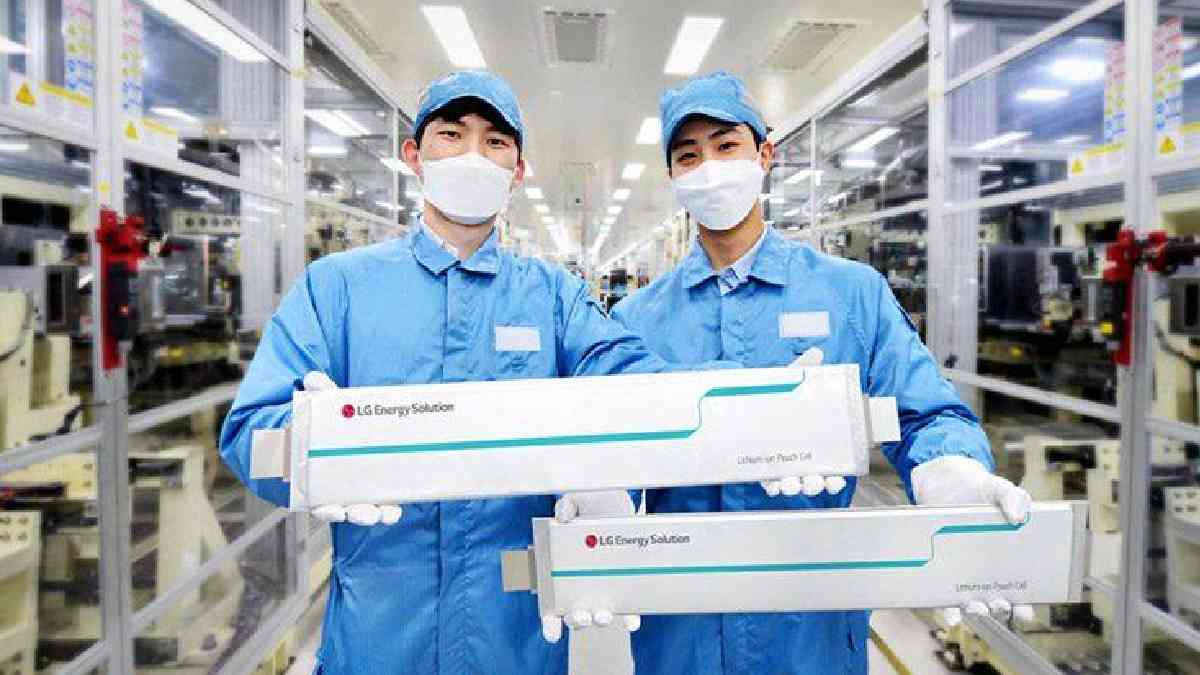
LG Energy Solution’s North American operations president Bob Lee said the company has already received several requests from potential U.S. partners for defense-related business development opportunities, and discussions are still in the early stages, a big deal for LG, which has no business in the defense industry in the past.
Lee said defense is now an important source of business opportunities, but LG is carefully investigating how it is going to approach the sector.
The potential expansion into defense is in the back of a larger push by the U.S. government to increase domestic production of drones, military equipment and other strategic weapons. Washington is also looking to rebuild military inventories after weapons markets were bloated by the Ukraine and Iran conflicts, and to lessen reliance on foreign suppliers.
LG Energy Solution’s possible defense business comes as it restructures its North American operations. The battery maker had previously expanded its US manufacturing footprint ahead of accelerating electric vehicle use. But slower-than-expected EV demand has meant that the industry has changed course and shifted production capacity.
Energy storage is now the bulk of LG Energy Solution's US business, according to Lee, though electric vehicle batteries continue to be a bigger part of the company's operations outside of the USA.
In the energy storage industry, the company is expanding at a rapid pace, driven by expanding electricity infrastructure and the increased power demand from artificial intelligence data centers. LG has already repurposed five of its eight North American plants that were initially designed to support EV battery production to produce energy storage.
LG expects its energy storage business in the US to become profitable by the end of this year, according to Lee.
The company recently opened its Lansing, Michigan, battery plant, which is to be located in cooperation with General Motors, which is expected to be able to produce about $4.3 billion worth of lithium-iron-phosphate battery cells for Tesla’s Megapack energy storage systems starting in 2027.
Lansing will also manufacture nickel-based battery cells for Toyota cars after a $1.5 billion order is transferred from another LG plant in Holland, Michigan. The Holland facility is expected to shift toward producing energy storage cells for Michigan utility DTE Energy.
LG's Lansing plant will eventually have an annual production capacity of about 35 gigawatt-hours by the end of next year, which will further strengthen the US manufacturing presence.
That defense expansion also comes at a time when US concerns about China’s role in critical supply chains are increasing. The Trump administration recently announced tariffs of up to 100% on imported drones and their components– potentially speeding up construction of US-based drone supply chains.
China is also a major competitor in the worldwide energy storage battery industry. Lee has argued that Chinese battery access to the US energy storage market deserves greater scrutiny, describing battery supply chain dependence as a national security concern.
LG’s move is reflective of a larger trend among South Korean battery manufacturers. Samsung SDI is acquiring General Motors’ shares in an Indiana battery business and converting the facility into energy storage production. SK On, the battery unit of SK Innovation, plans to use a Tennessee plant for stationary battery production after its previously planned partnership with Ford ended.
Industry analysts do not expect any major US battery glut in the near term, however, because of concerns over excess battery manufacturing capacity. As Michael Sanders, senior adviser at Avicenne Energy, said, there is very little likelihood of significant excess capacity in the US battery market through 2035 or even 2040.
The question, however, is how long the current surge in data-center electricity demand will persist. Even if demand from AI data centers eventually cools down, the combination of energy storage systems and EV demand could still be enough to create sufficient demand for US battery production.
For LG Energy Solution, entering into the defense drone market might become another way of leveraging its battery technology and diversifying away from an EV market that is still uncertain. If discussions with US defense contractors progress, the company could benefit from a fast-growing market where battery performance, reliability, and domestic supply are increasingly viewed as strategic priorities.





Comments
Please to leave a comment on this article.