
India’s plan to add 100 new vessels to its merchant fleet over the next five years has put the country’s shipping and shipbuilding industry in the spotlight. The government wants to reduce India’s dependence on foreign shipping companies and hold on to a greater share of the money paid overseas to transport critical cargo.
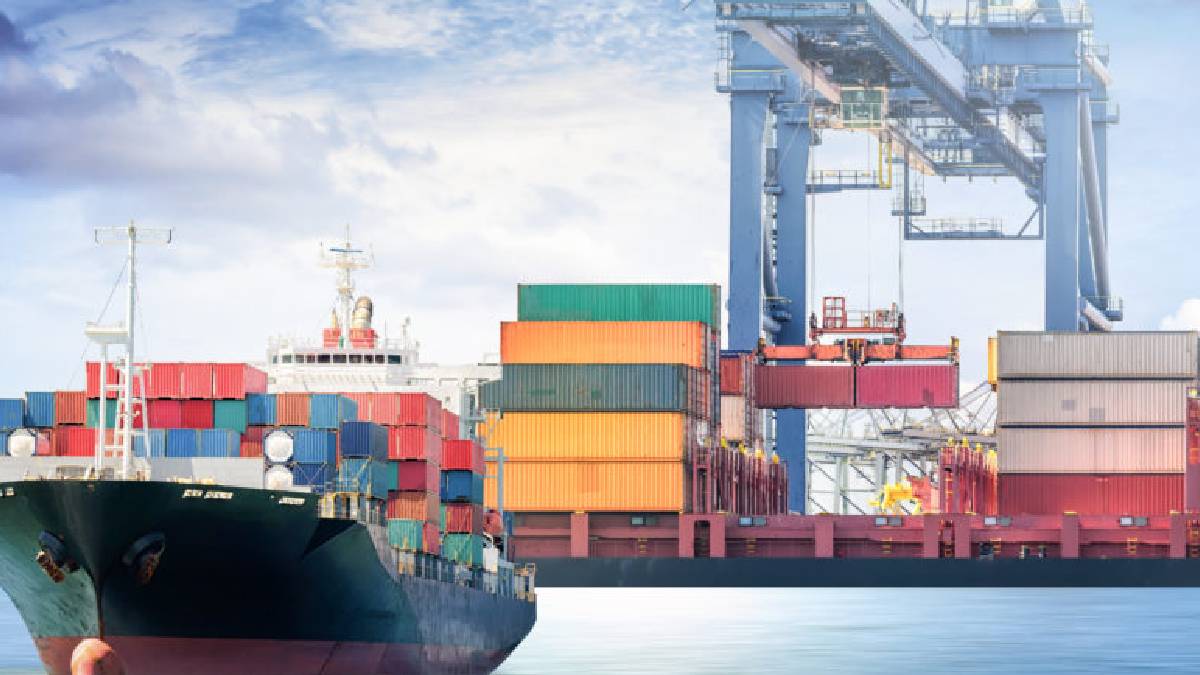
Union Minister for Ports, Shipping and Waterways Sarbananda Sonowal also announced the 100-vessel target at the National Shipping Board’s first “Sagar Samvad” event. India spends about $75 billion annually on foreign shipping lines for international shipping services for crude oil, gas, coal and urea, the government’s annual forecast shows.
The proposed fleet expansion is part of a larger strategy that is to better develop the Indian-flagged shipping industry and increase maritime self-reliance. The National Shipping Board has laid out a five-pillar roadmap of fiscal reform, cargo support, competitive financing, regulatory reforms and easy business for all.
For investors, the development has brought a number of listed maritime companies into focus. Shipping Corporation of India (SCI), Great Eastern Shipping, Cochin Shipyard, Mazagon Dock Shipbuilders and Garden Reach Shipbuilders & Engineers (GRSE) are among the companies being watched as potential beneficiaries of India’s maritime expansion.
1. Shipping Corporation of India.
Shipping Corporation of India is one of the most direct listed plays on the government’s push to strengthen Indian-flagged shipping. The company operates vessels in crude oil tankers, product tankers, bulk carriers and other specialist shipping categories.
More emphasis on Indian-flagged vessels could create opportunities for existing domestic operators as the government wants to expand the country’s merchant fleet. SCI has also been highlighted by the government for specialized vessels, such as transport of commodities like ammonia.
2. Great Eastern Shipping.
Great Eastern Shipping is another Indian shipping company which investors may follow closely as the industry expands. It does tanker and dry-bulk shipping and is likely to see some demand for offshore maritime infrastructure provided by India.
But shipping stocks are cyclical and the earnings for shipping can vary depending on freight rates, vessel prices, fuel costs and trade conditions globally. The government’s policy push is therefore a potential catalyst for long-term revenue growth and not a boon to earnings that can be immediately taken.
3. Cochin Shipyard.
Cochin Shipyard is the shipbuilding side of the opportunity. With the government’s plan to expand the merchant fleet, more vessels will be built, bought or financed and that could create opportunities for domestic shipyards.
The government has already approved a comprehensive ₹69,725 crore package to strengthen India’s shipbuilding capacity, maritime financing and skills. The package includes a ₹24,736 crore Shipbuilding Financial Assistance Scheme and a ₹25,000 crore Maritime Development Fund.
4. Mazagon Dock Shipbuilders.
Mazagon Dock is another prominent shipbuilding company that can attract investors as part of India’s larger maritime manufacturing push. The company has been associated with defence shipbuilding (and the government’s emphasis on building local shipbuilding capabilities) but we think that kind of emphasis might give the sector a good future.
India’s maritime strategy is increasingly linking defence capabilities, commercial shipbuilding, port infrastructure and domestic manufacturing as part of the larger “Make in India” and self-reliance agenda.
5. Garden Reach Shipbuilders & Engineers.
Garden Reach Shipbuilders & Engineers or GRSE is also in the spotlight. India is investing in capacity and modernization, as well as in the development of India as a global shipbuilding center.
Rajnath Singh, Defence Minister recently highlighted India’s potential to become a global centre for ship design and shipbuilding. Five expansion projects of GRSE and Yantra India were launched in West Bengal at a cost of close to ₹3,500 crore to enhance shipbuilding, ship repair, metallurgy and manufacturing capacities.
What is the 100-ship plan?
And the government’s problem is not just about adding vessels. Indian-flagged ships are 16%-20% more expensive to operate than foreign-flagged vessels, according to the National Shipping Board. And the higher costs have been attributed to taxes, ship-import and maintenance costs, financing costs and other regulatory disadvantages.
If India wants to make the 100 vessels expansion commercially sustainable, it would have to take into account those disadvantages.
The initiative is also a part of the country’s longer-term Maritime Amrit Kaal Vision 2047, under which India aims to become one of the world’s top five ship-owning nations. The government is also working to expand port capacity, strengthen maritime financing and develop domestic manufacturing of containers and vessels.
As for investors, the maritime theme extends well beyond shipping companies. Shipbuilders, port operators, logistics companies, marine equipment manufacturers and financing institutions might all benefit if the policy is sustained with capital expenditures.
At the same time, investors should distinguish policy announcements from actual order flow. The 100-vessel target is a five-year goal, so how companies will benefit from it will depend on contracts, fleet additions, capacity utilization, financing conditions and industry freight rates.
But India’s $75 billion annual foreign freight outflow nevertheless underscores the scale of the opportunity. If domestic shipping capacity can capture even a fraction of that business, it could create a substantial long-term market for Indian shipowners and shipbuilders.
With the government looking to develop a bigger, more competitive and self-reliant maritime industry, SCI, Great Eastern Shipping, Cochin Shipyard, Mazagon Dock and GRSE are likely to remain among the key stocks on investors’ radar as India’s 100-ship strategy moves from policy ambition to implementation.
This is only an informative (not investment) note and not investment advice. Investors should have a good understanding of valuation and financial performance, risks and market conditions before making investment.






Comments
Please to leave a comment on this article.